Another big day awaited us on the Jordan agenda.
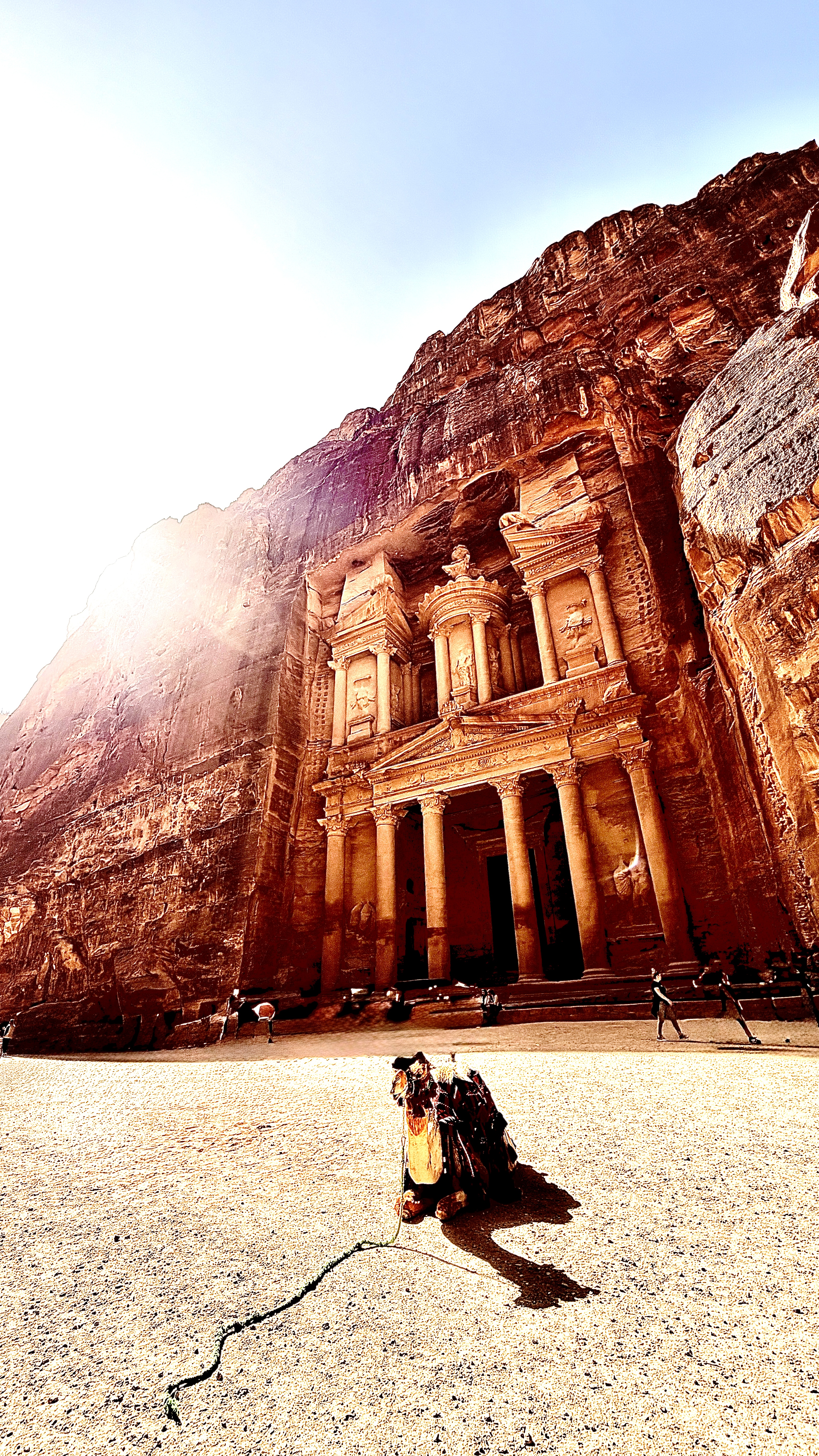
Today we would leave Petra, where we’d spent two nights at the Mövenpick, and finish our Jordan journey in Amman, staying at the Fairmont. It was going to be a long one.
After a quick breakfast, we departed at 7:30 am. The plan was a four-hour drive north to Jerash, one of the best-preserved Roman cities outside Italy, located about an hour north of Amman.
We made a brief stop at a roadside café along the Desert Highway, the same one we’d visited earlier in the trip. Overpriced souvenirs, but a welcome comfort stop and a chance to stretch our legs.
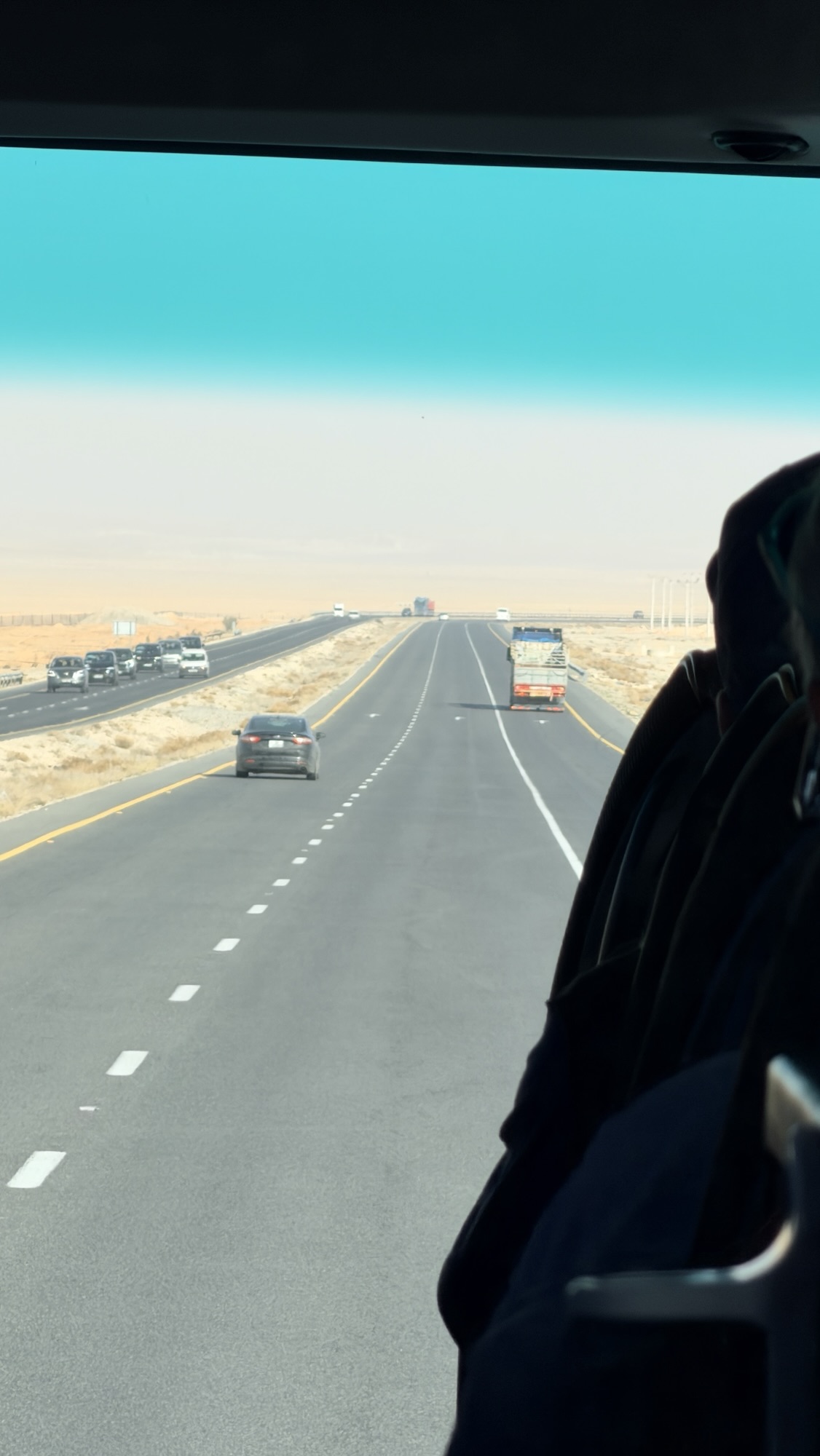
Back on the road, we passed through Amman before continuing north. By the time we arrived at Jerash, it was a beautiful 20°C, sunny, still, and ideal for walking.
Our entry point was Hadrian’s Gate, a monumental triumphal arch built in 129 AD to honour Emperor Hadrian’s visit to the city. Even this “gateway” alone hints at the scale of what lies beyond.
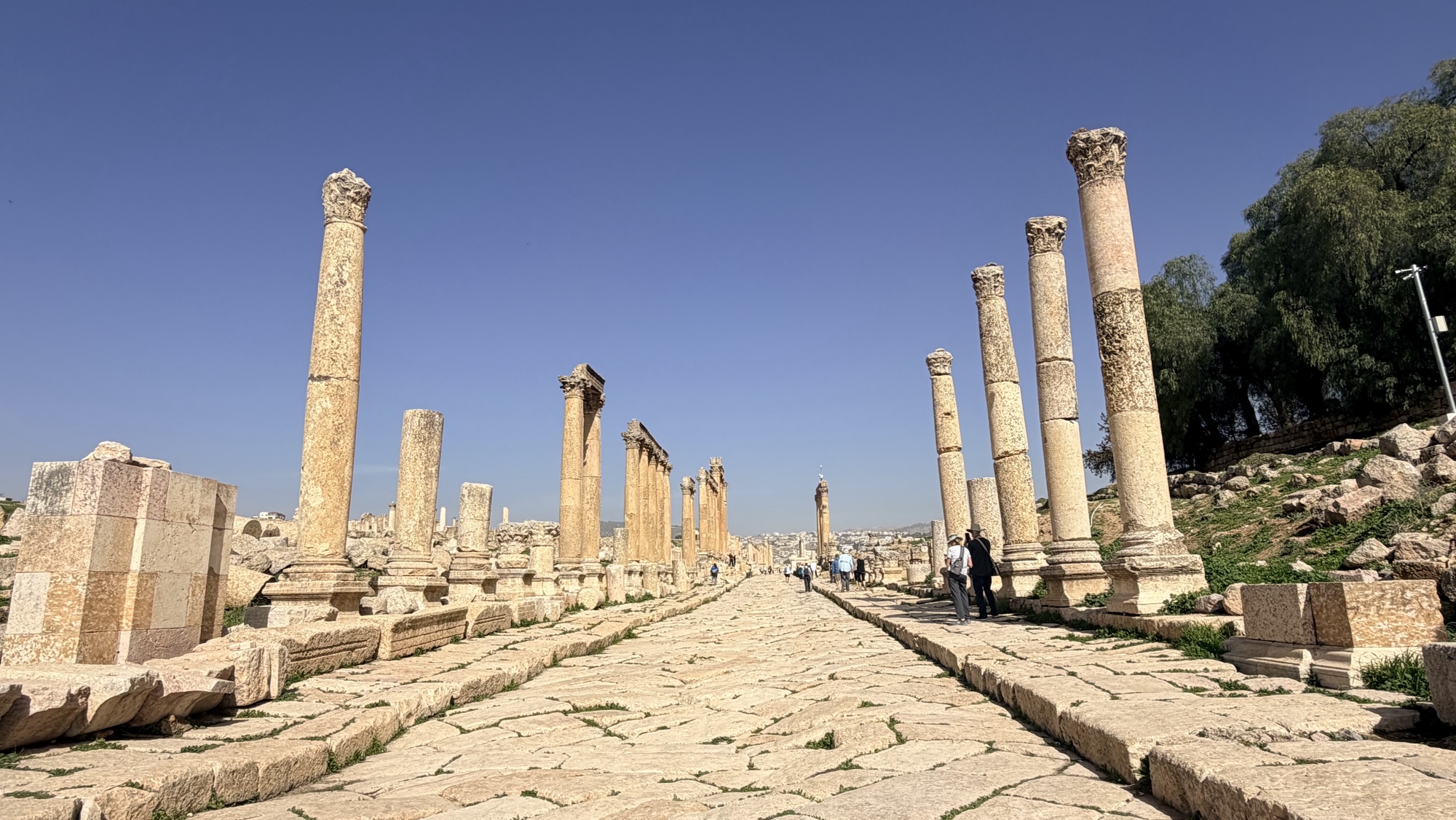
Jerash, known in Roman times as Gerasa, was part of the Decapolis, a league of ten cities that represented the eastern frontier of Roman power. What makes Jerash so remarkable is not just its size, but how intact it is.

From the gate, we moved through the hippodrome, once used for chariot racing and public spectacles, capable of seating 15,000 spectators. Nearby were the horse stables, reminders that this city was not just ceremonial but functional, engineered for movement, logistics, and entertainment.
We then entered the heart of the city, walking along the Cardo Maximus, a colonnaded street stretching nearly 800 metres, still paved with original stones. You can see the grooves worn into the stone by centuries of cart wheels. A simple, human detail that connects you directly to daily life nearly two thousand years ago.
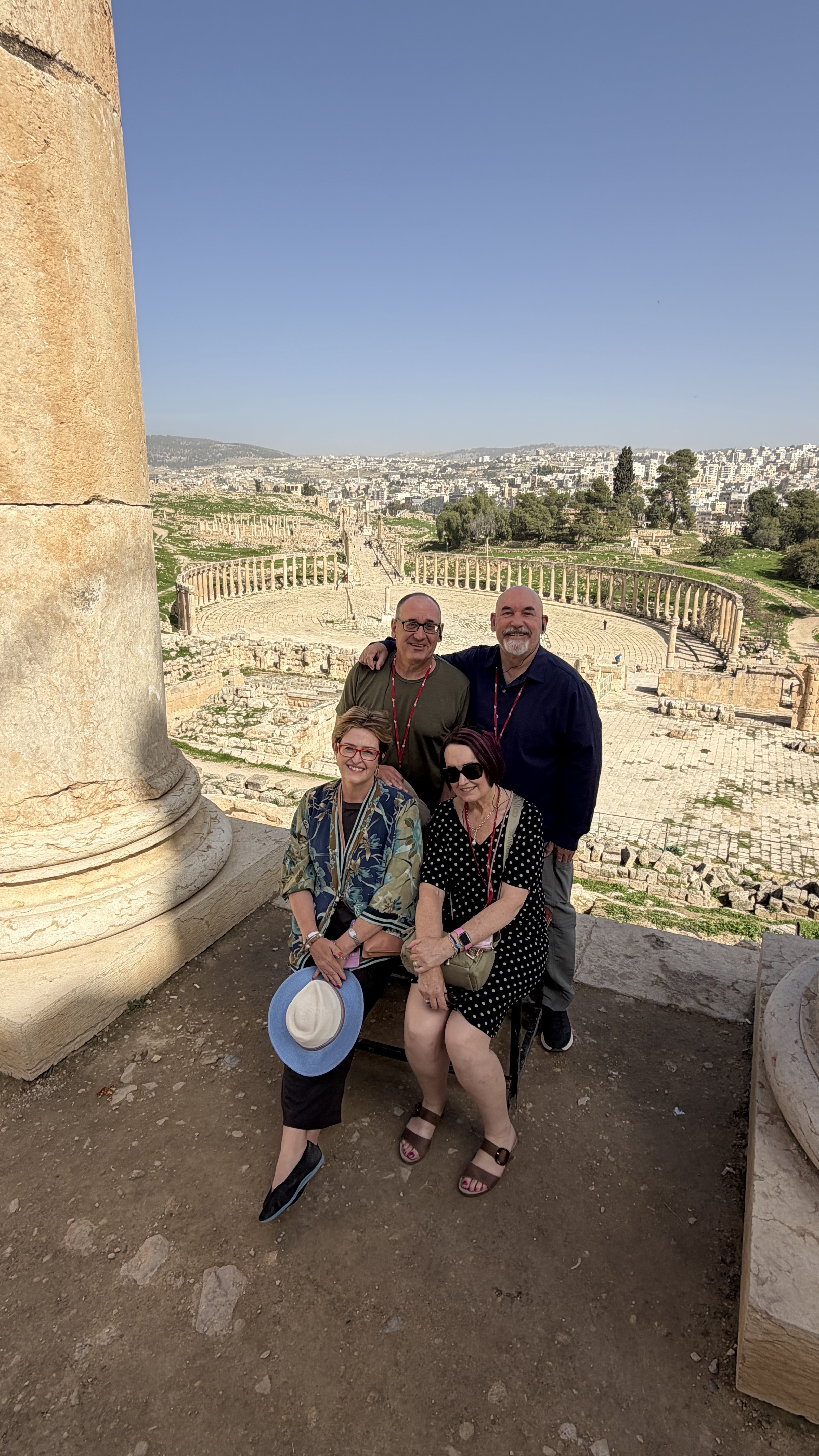
One of the most striking spaces is the Oval Forum, a vast open plaza framed by columns, unlike anything else in the Roman world. Its unusual shape suggests careful adaptation to the terrain rather than rigid Roman planning. From here, the city unfolds in all directions.
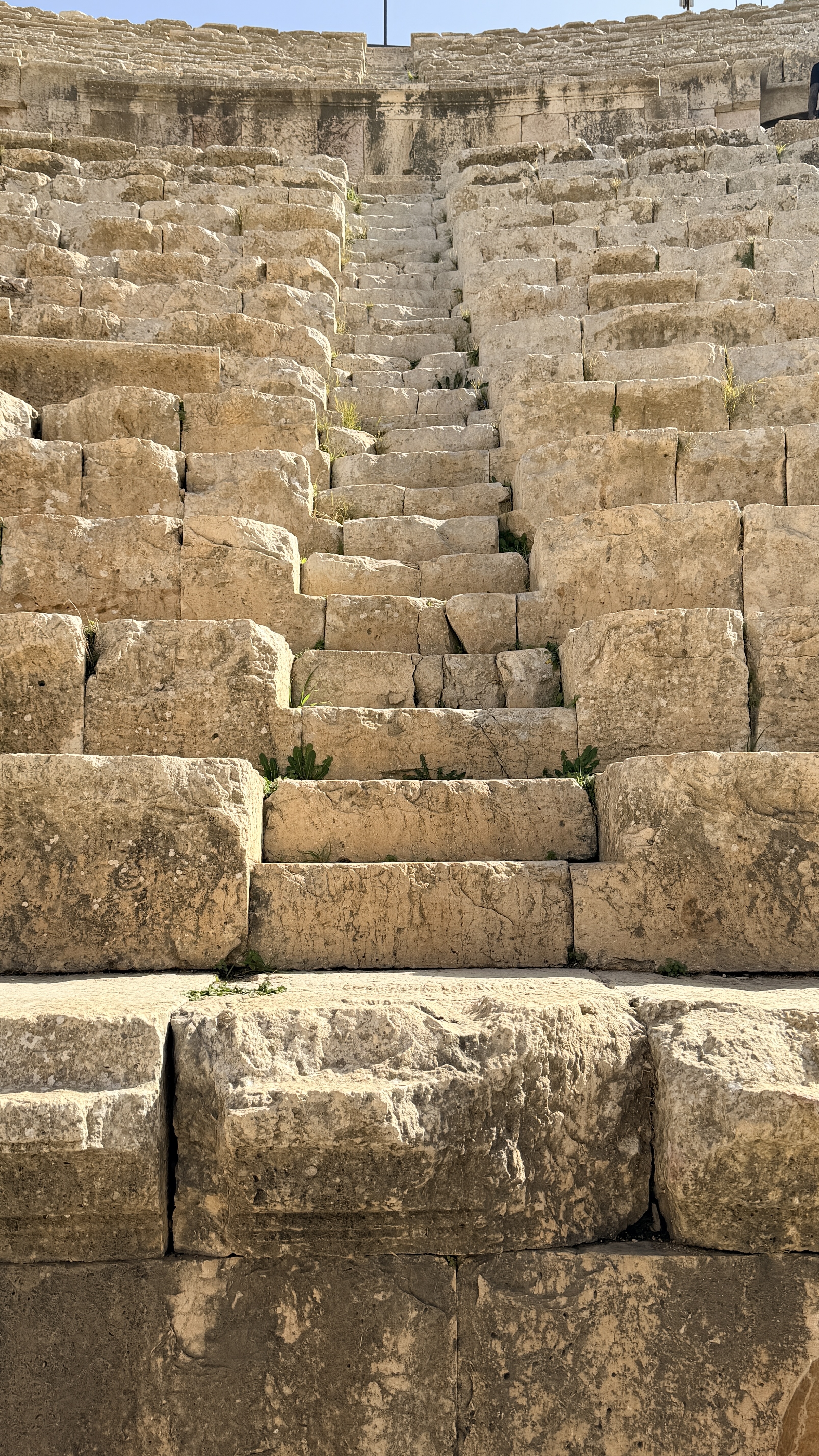
We visited the North and South Theatres, both beautifully preserved. The South Theatre, built in the 2nd century AD, still has exceptional acoustics. Even today, a single voice can carry across the stone seating.
Temples, bathhouses, public latrines, fountains, and an advanced drainage and water management system reveal a city designed for comfort, hygiene, and civic life. Jerash wasn’t just impressive. It was liveable.
Walking through it, you can’t help but admire the ambition of Rome and its ability to impose order, infrastructure, and culture far from its centre.
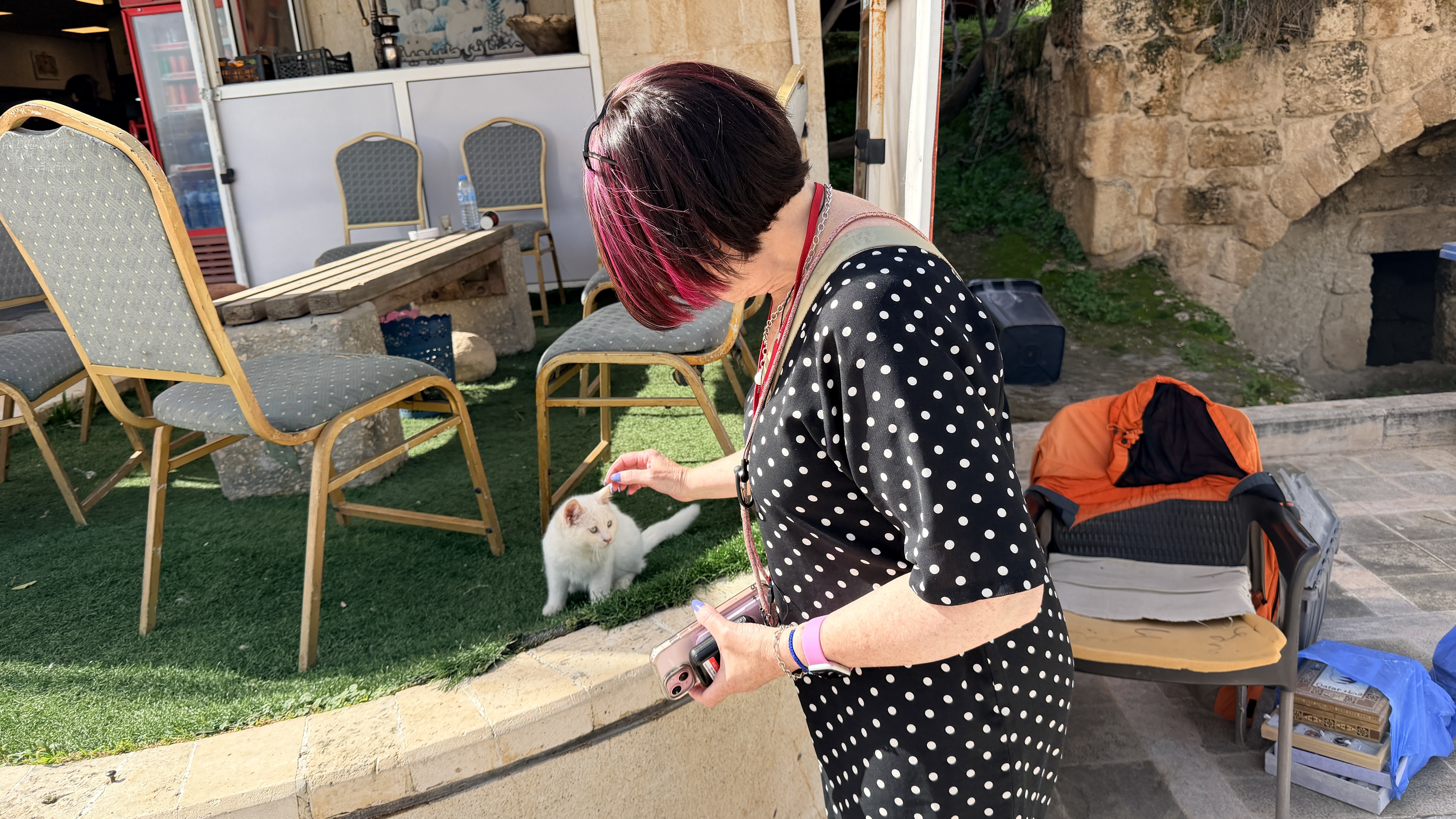
As we made our way back, we stopped for a deliciously refreshing pomegranate and orange juice with sat in the shade for a few minutes taking in our surroundings As always Mardi find a cat.
We then wandered back through the marketplace. The traders here were eager, but noticeably less aggressive than in Egypt. Still persistent, still hopeful.
Lunch followed at a lovely restaurant serving traditional Lebanese fare. We began with a generous spread of dips, the hummus particularly memorable. The lamb was rich and strongly flavoured, closer to mutton, while the chicken was tender and juicy.
Dessert was outstanding: a milk pudding topped with pistachio crunch, delicate and not overly sweet.
As we were leaving, some of our group were invited to try shisha (also called hookah or hubble-bubble). Our guide explained that smoking is widespread in Jordan. She mentioned, matter-of-factly, that many people believe their God will take them when it is their time, regardless of habits like smoking. It’s a perspective rooted in faith. One I personally find places a lot of responsibility outside human agency.
After lunch, we drove back toward Amman, passing through what Oria described as the city’s “Beverly Hills” district. Large villas, embassies, wide streets. Property prices here hover around US$500,000, which in Sydney terms would translate into many millions in suburbs like Point Piper. Context matters.
We arrived at the Fairmont Amman around 5:00 pm.
The hotel is superb. Elegant, calm, refined. A large room. A beautiful bathroom. A massive king-sized bed. After nearly three weeks of early mornings, desert dust, long drives, and relentless stimulation, this felt like a true oasis.
And with that, the Middle East portion of our journey gently came to a close.
Egypt was extraordinary. The pyramids were captivating. The tombs awe-inspiring. Cruising the Nile peaceful. The Grand Egyptian Museum outstanding. Luxor and Karnak magnificent. The roads chaotic. The streets filthy. And yet, we loved every minute.
Jordan wasn’t as overwhelming as Egypt, but it was fascinating in its own way. The Dead Sea, a geological marvel. Petra, another wonder shaped by humans and nature two thousand years ago. And Jerash, revealing just how far the Roman Empire reached, and how sophisticated its cities truly were.
We’ll enjoy about 18 hours at the Fairmont before beginning the journey home, with a short stopover in Dubai.
Thank you, Egypt.
Thank you, Jordan.
You’ve given us memories and experiences that will last a lifetime. And perhaps longer.