21 January
Our adventure shifted gears today as we travelled south to Luxor, with a 4.00am wake-up that felt entirely appropriate given what lay ahead.
At moments on this trip I’ve felt a bit like Indiana Jones or Benjamin Gates. Not because I’m chasing treasure, but because I’m chasing something harder to define: perspective, wonder, enlightenment. These places I’ve read about for decades, places that sat quietly in the background of my imagination, are suddenly real. Tangible. Under my feet.
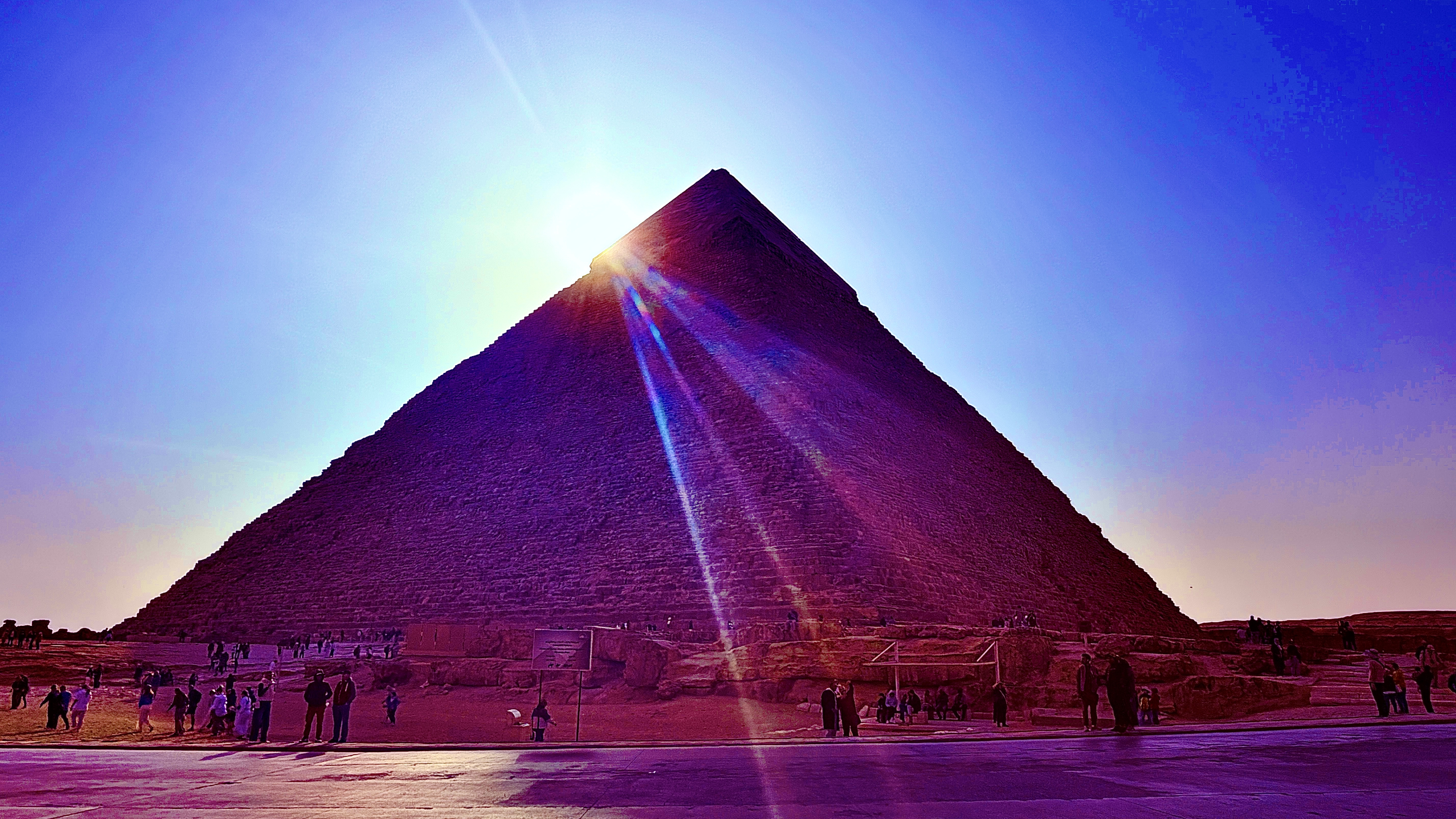
We started in Cairo, trying to make sense of the pyramids and the story of Tutankhamun, detoured north to Alexandria and its ancient struggle for control of the Mediterranean, and today we headed south again, deeper into Egypt’s spine. Luxor isn’t just another city. It feels like the beating heart of ancient Egypt. If Cairo is the head and Alexandria the outstretched hand, Luxor is the chest.
A very early start
The morning unfolded with military precision:
4.00am – Wake up
5.00am – Quick breakfast
5.40am – Check out
6.00am – Depart hotel
6.30am – Cairo Airport
8.30am – Flight to Luxor
Security was thorough. Multiple bag checks, pat-downs, queues, waiting. There’s a slightly sheep-like feeling at times, being herded from point to point, but it’s also reassuring. Viking takes the stress away. No logistics to manage. No transport to negotiate. No language barriers to push through at dawn. This is exactly why we chose this journey. It’s challenging, but manageable. Adventurous, but humane.
And I’m loving it.
Arriving in Luxor
Luxor’s modern name comes from the Arabic al-Uqṣur, meaning “the palaces”. But long before that it was known as Waset, and to the Greeks it became Thebes. For centuries it was the religious and political capital of Egypt during the Middle and New Kingdoms. Pharaohs ruled from here. Gods were worshipped here. Kings were buried just across the river in the Valley of the Kings.
The Nile bends gently through Luxor, and everything about the place feels ancient, deliberate, and layered. You don’t just visit Luxor. You descend into it.

Karnak Temple – overwhelming by design
Our first stop was the Karnak Temple, and nothing prepared me for its scale.
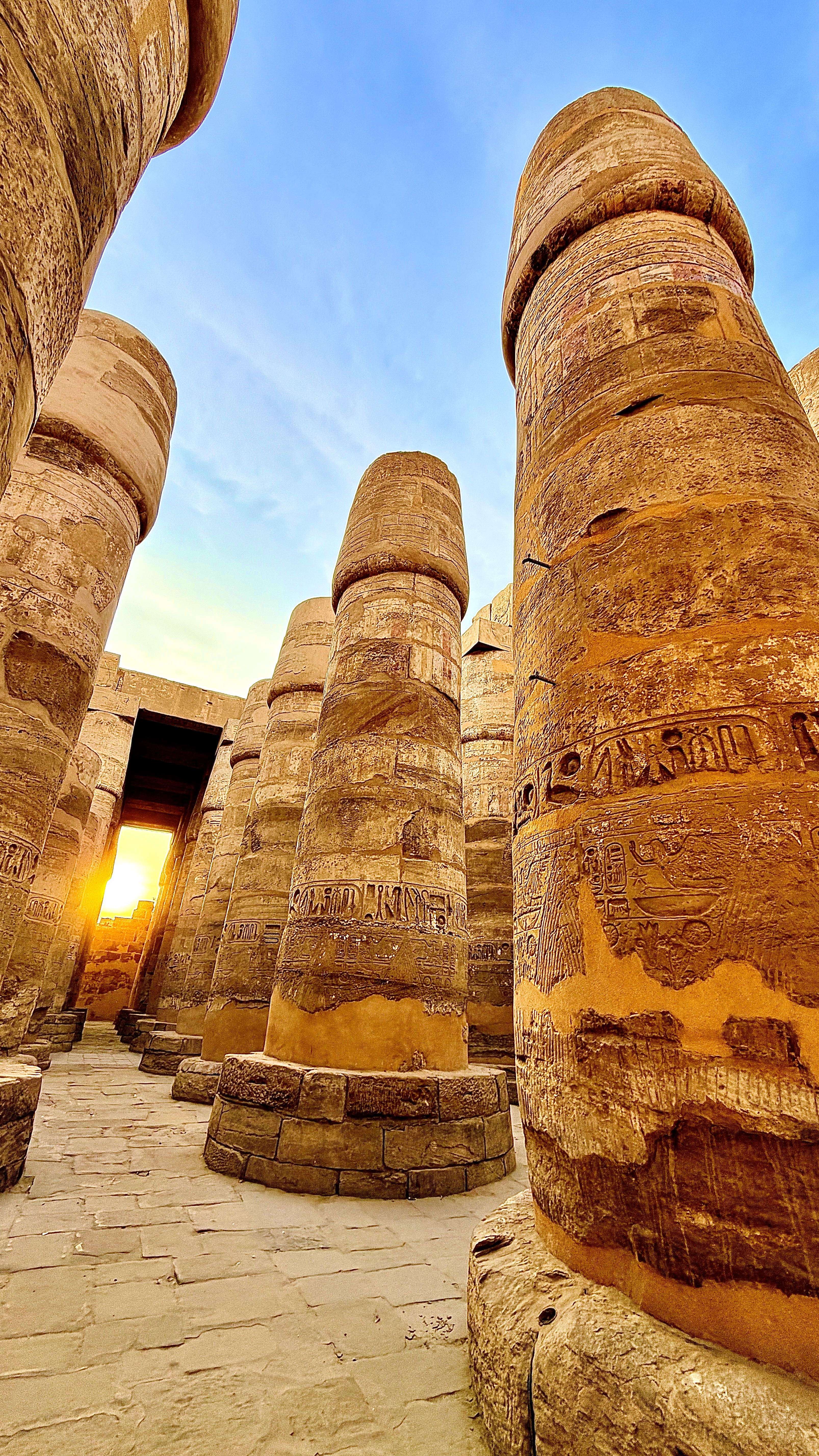
This isn’t a single temple. It’s a vast religious city built, expanded, dismantled, and rebuilt over nearly 2,000 years. Pharaoh after pharaoh added their mark. Columns rise like stone forests. Courtyards stretch beyond sightlines. Walls are thick with hieroglyphs recording victories, prayers, offerings, and propaganda.
The Great Hypostyle Hall alone contains 134 massive columns, some over 20 metres high. Walking among them feels like wandering between skyscrapers laid on their side and stood upright again. You feel small. Intentionally so.
The obelisks here raise the obvious question: how on earth did they do this? The prevailing theories suggest granite quarried at Aswan, shaped using stone tools and copper chisels, transported on barges during Nile floods, hauled upright using sand ramps, ropes, and sheer human coordination. No mystery machines. Just planning, patience, and labour on an unimaginable scale.
And we only saw a fraction of it.
Context before the river
After Karnak, we visited the Luxor Library and interpretation centre, where a short film set the scene for what’s coming: the Valley of the Kings, the Valley of the Queens, temples, tombs, and dynasties layered one on top of another. A reminder that Luxor isn’t about a single highlight. It’s about accumulation.
Boarding the Viking Aton
Finally, we boarded our home for the next stretch: Viking Aton.
Viking is a Norwegian company, and the ship reflects that beautifully. Clean lines. Pale timber. Calm colours. No glitz, no excess. This isn’t a floating resort. It’s a river vessel designed for intimacy and movement. Multiple decks, an open sun deck, understated lounges, and cabins that feel more like boutique hotel rooms than cruise accommodation.
After lunch, we did very little. And that was perfect.
Luxor Temple by night
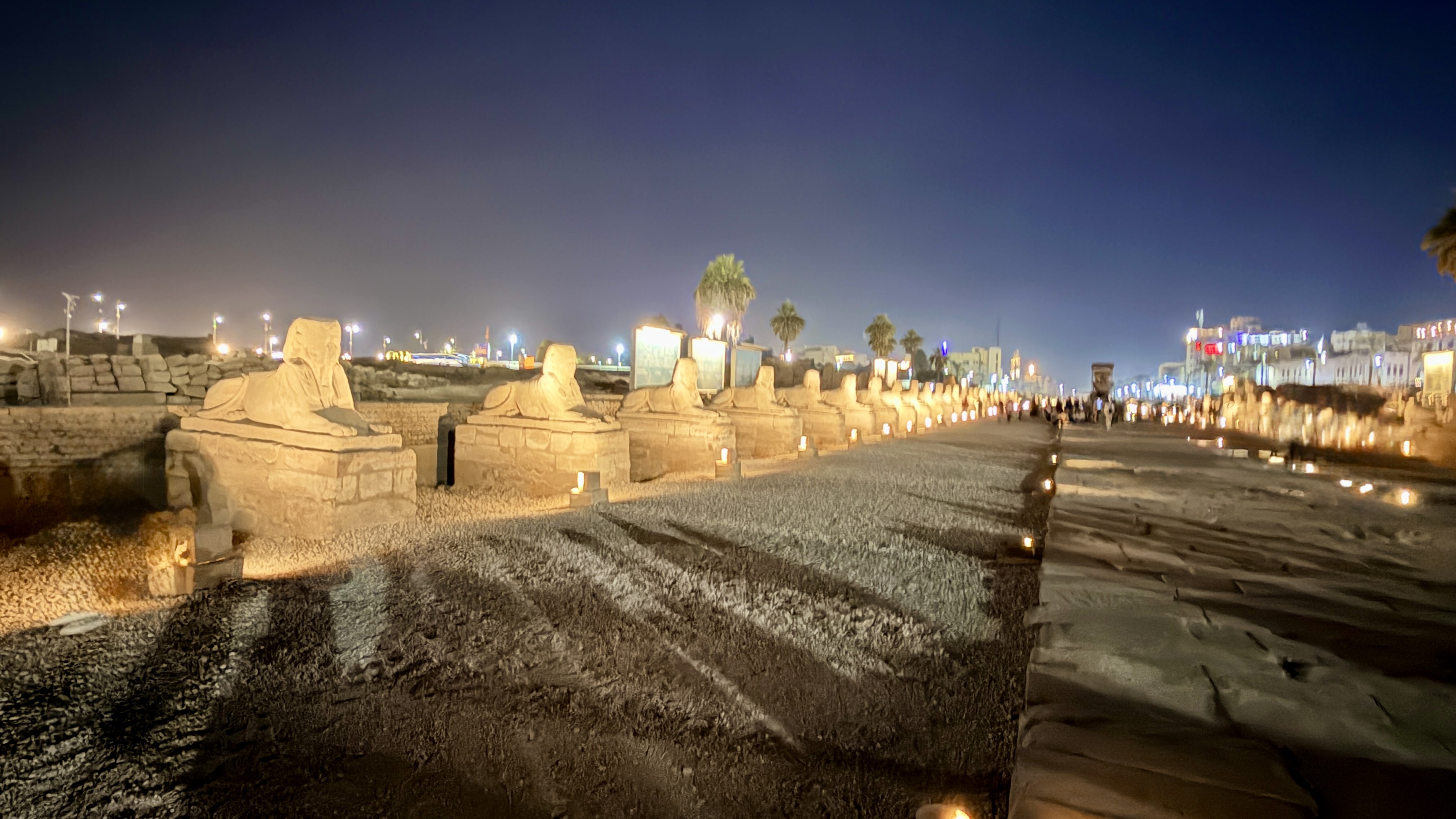
In the early evening we headed out again, this time to Luxor Temple, approached via the Avenue of the Sphinxes.
If Karnak during the day was impressive, Luxor Temple at night is something else entirely.
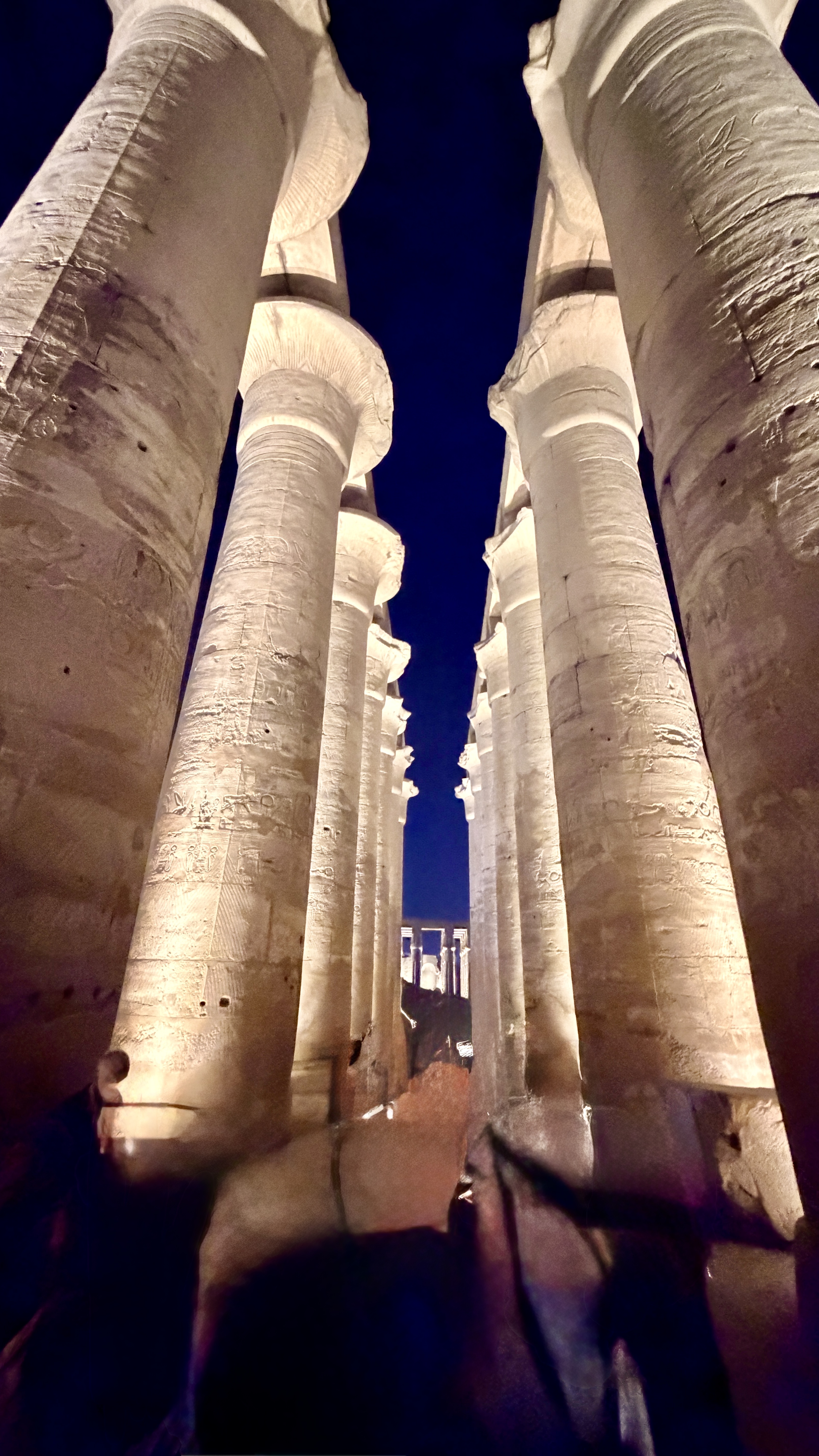
Floodlit columns glow against the dark sky. Shadows stretch and fold across stone floors. You walk beneath structures that feel almost alive. This temple was begun under Amenhotep III, expanded by Ramses II, later adapted by Romans, then layered with Christian chapels and finally Islamic elements. Few places on earth show religious continuity and adaptation so clearly.
Standing there, it feels less like a ruin and more like a conversation across millennia.
End of a very long day
Dinner was brief. Everyone was exhausted. A 4.00am start has a way of catching up with you, especially when tomorrow begins around the same time with a balloon flight over the Valley of the Kings.
We headed back to our state rooms, knowing this journey is only just deepening. Each day peels back another layer. Another century. Another story.
And I can’t wait for what comes next.