Aswan → Philae → Kom Ombo
Today was our final full day in Aswan, and fittingly, it felt different.
Less time on buses. More time on the river. More time sitting within the story of Egypt rather than being transported between its chapters.
Our pickup was 7.45am, which barely left time for breakfast. A late night at the 1902 Restaurant at the Old Cataract Hotel meant we were running on enthusiasm more than sleep, but no one was complaining.
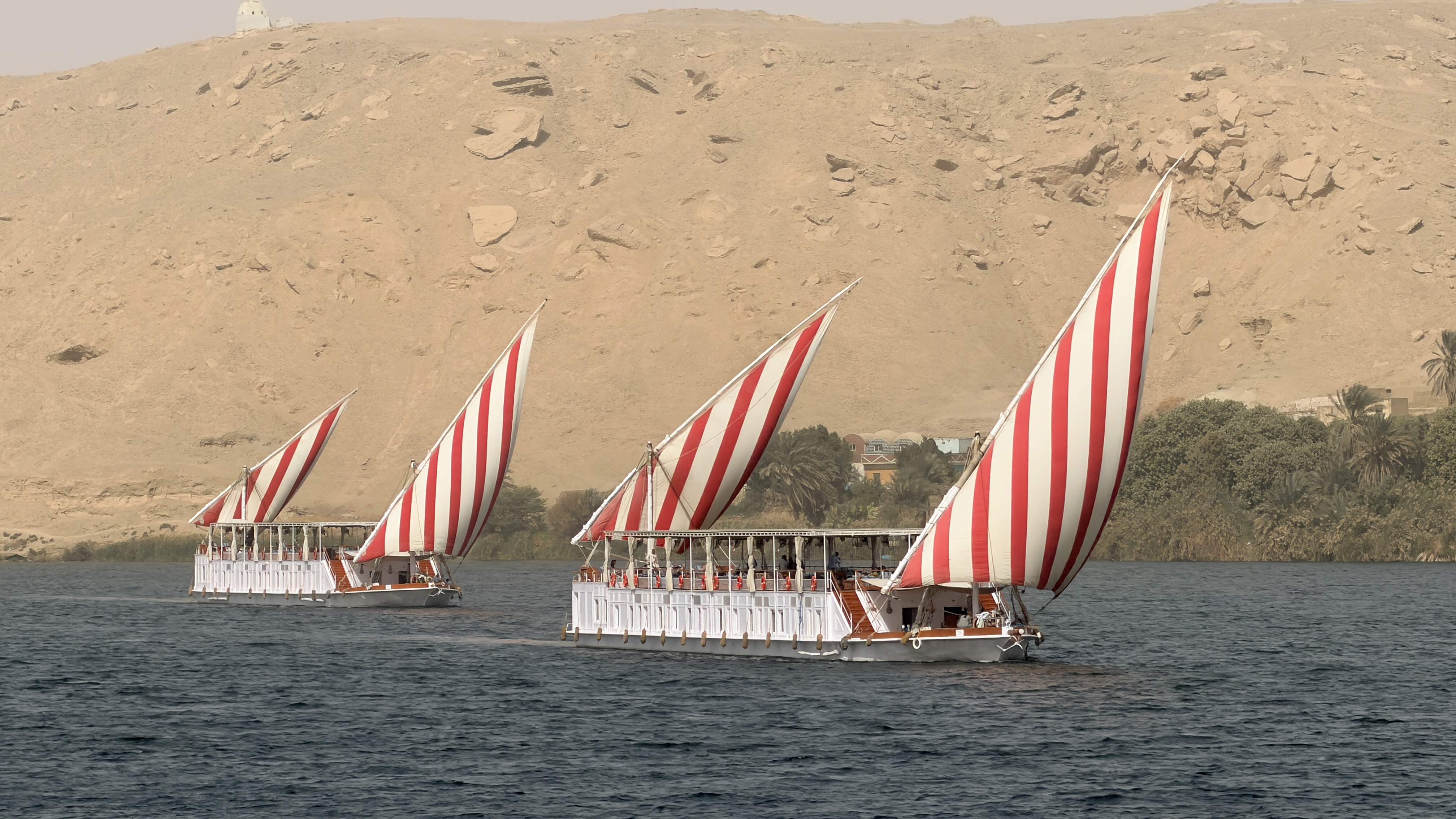
It was only a short walk from the Viking Aton to another pier where we boarded a small local river craft. No polished teak decks or Scandinavian lines today. Just a simple boat, the Nile, and morning light.
A Nubian Village on the River
We travelled south along the river toward a Nubian village, taking about an hour. This part of the Nile lies between the old Aswan Dam and the High Dam, and the water here feels calmer, broader, more reflective.
The visit was intimate. We were welcomed into a family home, opened specifically for Viking guests. The Nubians were displaced when the High Dam was built in the 1960s, and many communities were relocated to this stretch of river.

Life here is simple.
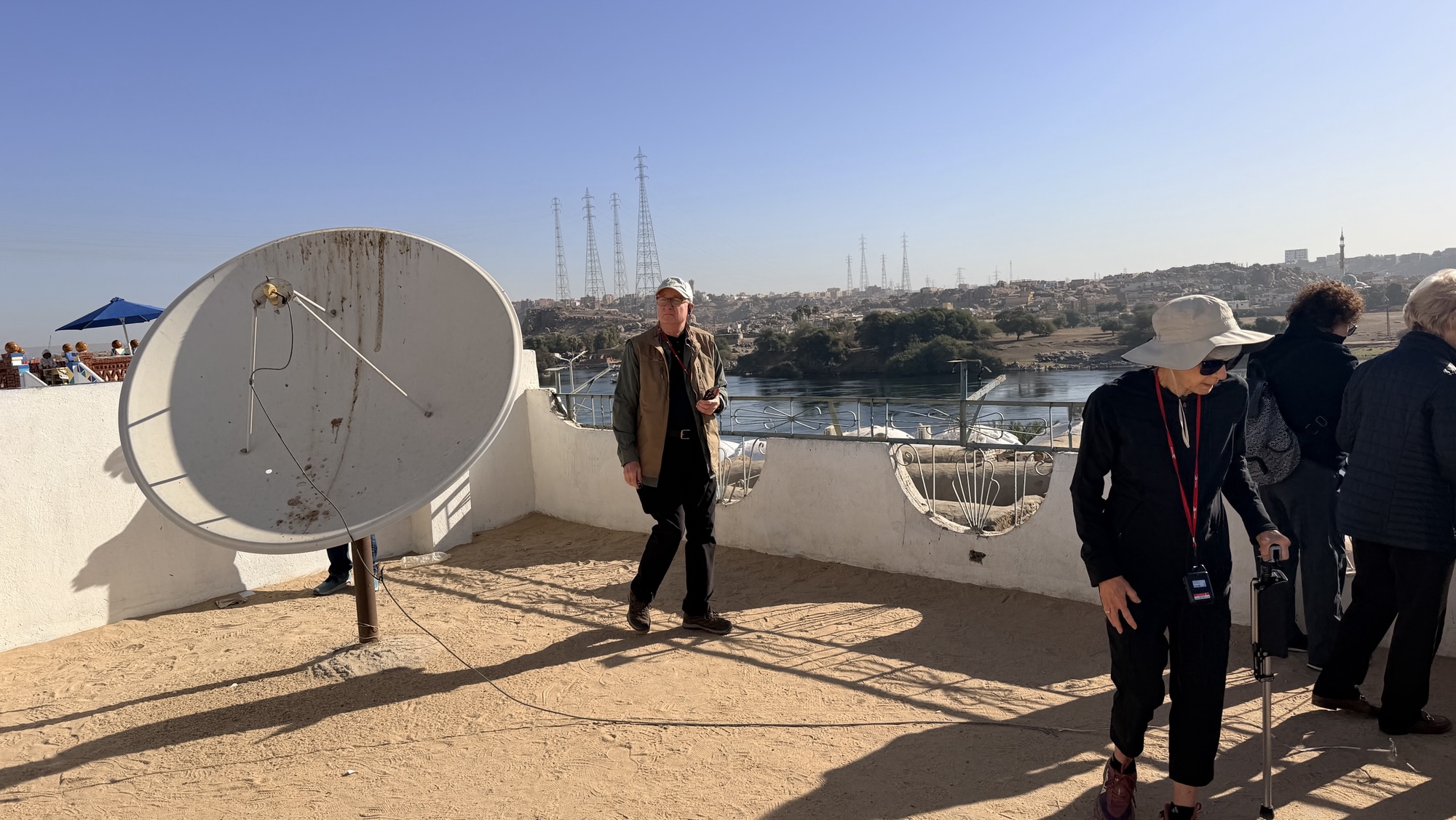
Brightly painted walls instead of framed artwork. Basic furnishings. A central family space. A small kitchen. Bedrooms without excess. What did stand out was a large satellite dish on the roof. As Ibrahim explained, leisure time here is often spent gathered around television, with satellite channels connecting these quiet river villages to the wider world.

One surprise: crocodiles.
This family keeps and breeds Nile crocodiles, now found only south of the High Dam. We saw several up close. Mardi even held one. The father explained they raise them for around ten years before releasing them back into the Nile upstream. The one we held was about a year old. Calm. Cold. Ancient, somehow.
Philae and the End of Ancient Egypt
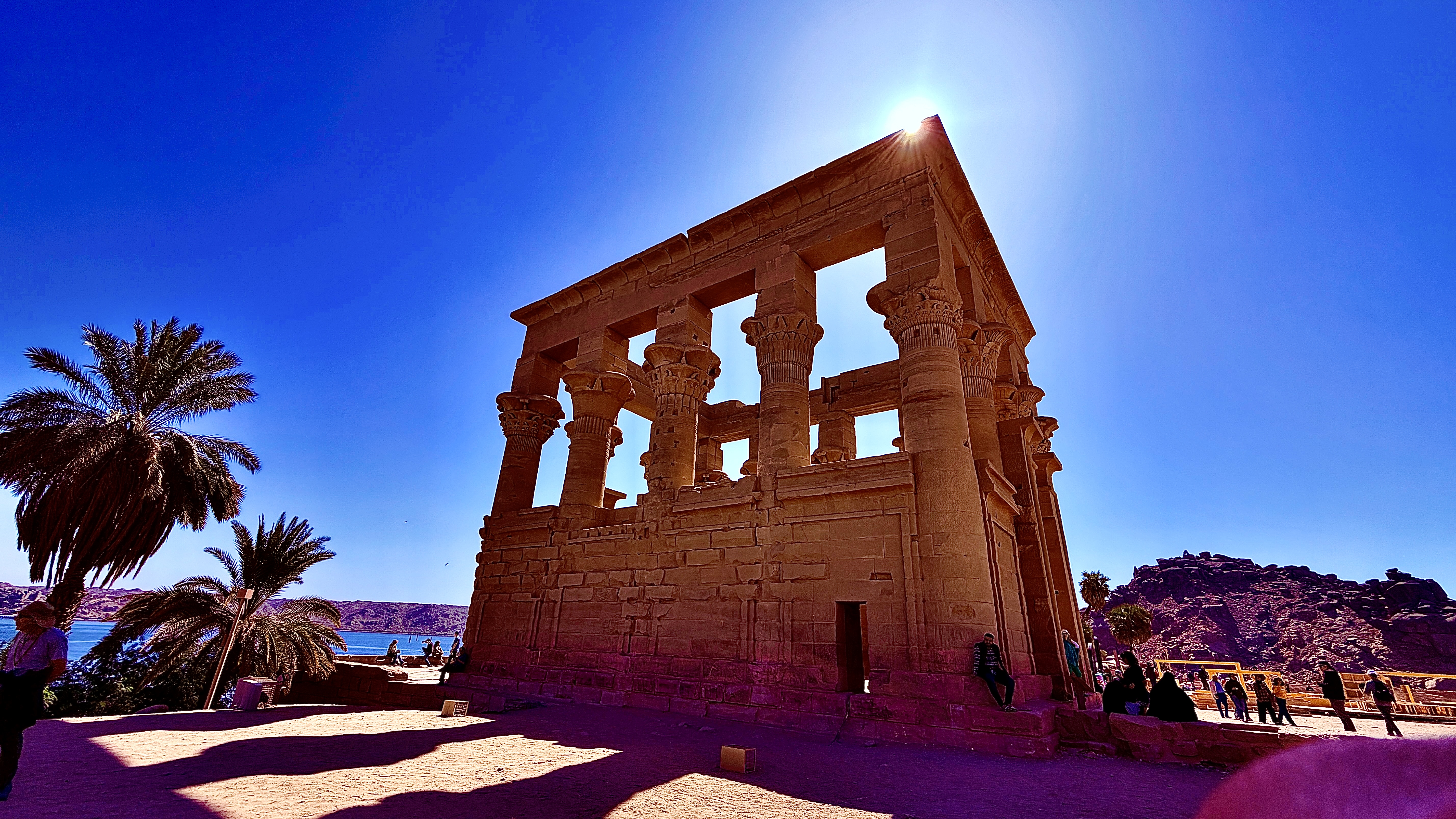
From there, we reboarded our boat and passed Elephantine Island, before arriving at the Temple of Isis at Philae.
This was one of the most emotionally complex sites of the entire journey.
Philae was built just over 2,200 years ago, during the Ptolemaic (Greek) period, and remained in use until around 600 AD. It represents the final chapter of ancient Egyptian religion.
Walking through Philae is unsettling in a quiet way. The carvings are unmistakably Egyptian, familiar now after Saqqara, Luxor, and the Valley of the Kings. But mixed among them are Greek elements, and then unmistakably Christian symbols. Crosses carved into walls. Faces of gods deliberately chiselled away. Ibrahim refers to these as “graffiti”, and that’s exactly what they feel like. Statements of conquest. Of belief replacing belief.
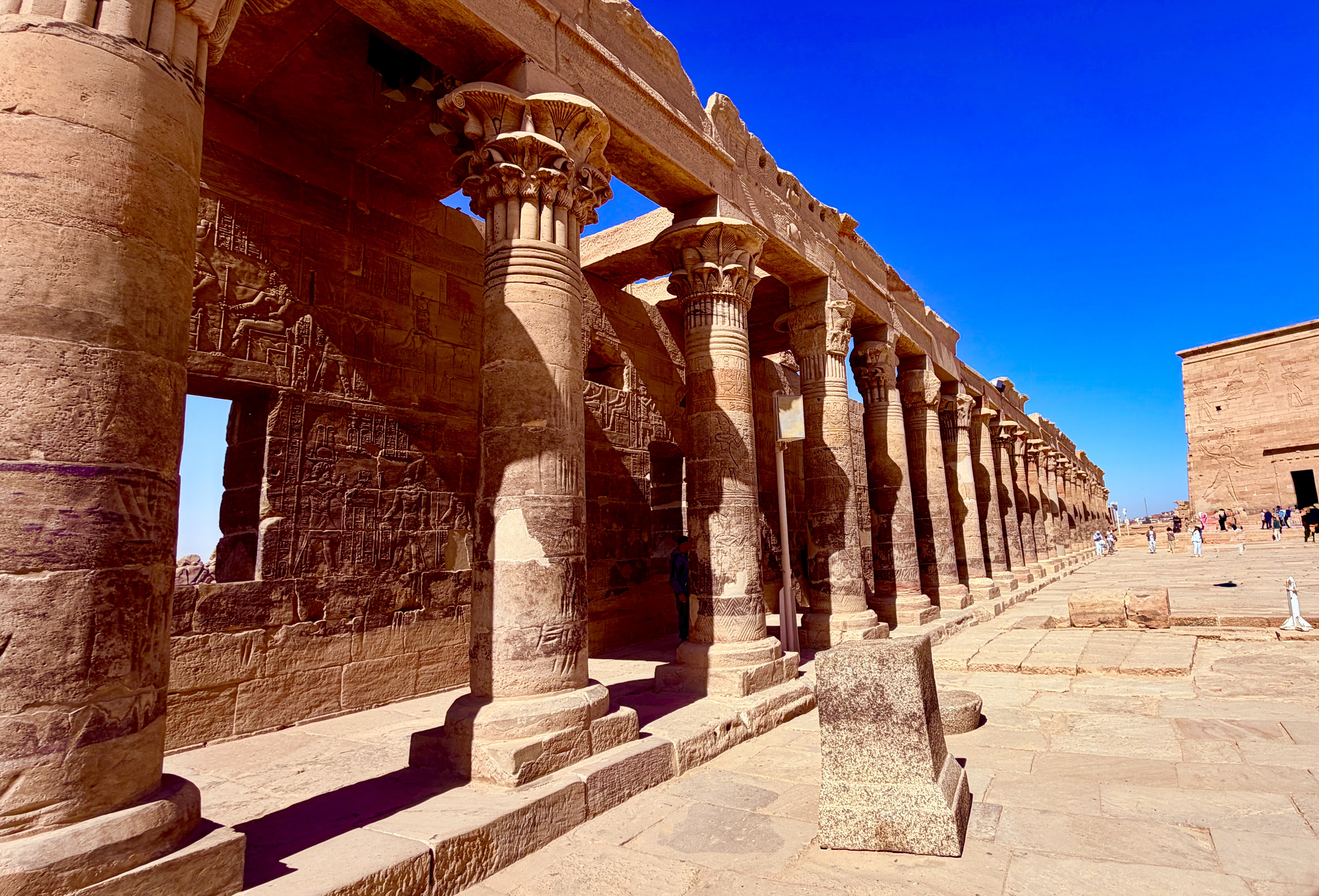
It’s sad, but also honest. Civilisations rise, evolve, fall. Egypt absorbed Persians, Greeks, Romans, Christians, and later Islam. Philae shows that transition carved in stone.
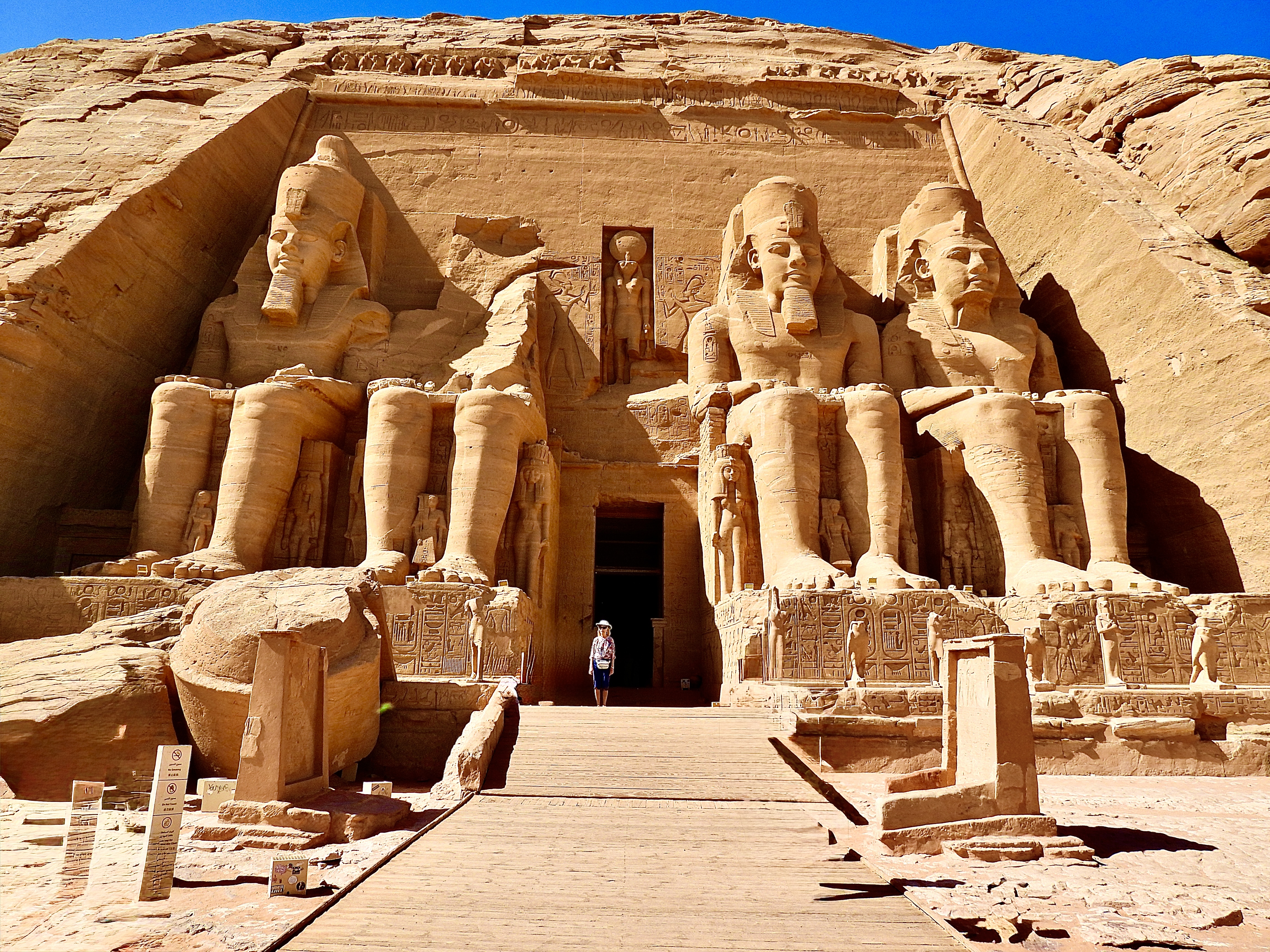
Like Abu Simbel, Philae was also moved in the 1960s to save it from flooding caused by the High Dam. Thanks to a massive UNESCO effort involving more than 50 countries, it survives today. A rescued ending to a very long story.
THE EGYPTIAN CREATION STORY
Before anything existed, there was Nun. Endless dark water. Chaos.
From these waters emerged the first land, a mound rising above the flood. Upon it stood the creator god Atum, who brought forth Shu, the god of air, and Tefnut, the goddess of moisture. Together, air and water made life possible.
From them came Geb, the earth, and Nut, the sky. At first, earth and sky were locked together, until Shu lifted Nut high above Geb, separating them. This created space, balance, and order. The sun could now travel across the sky. Time could begin.
Geb and Nut had four children:
Osiris, Isis, Seth, and Nephthys.
Osiris became king of Egypt, bringing agriculture, law, and civilisation. His brother Seth, god of chaos and disorder, grew jealous and murdered him. Osiris’s body was cut into fourteen pieces and scattered across Egypt.
Isis, wife and sister to Osiris, searched tirelessly for him. She found thirteen of the pieces. The missing one, his male organ, had been thrown into the Nile and eaten by a fish.
Using magic, devotion, and sheer determination, Isis reassembled Osiris and conceived a child: Horus.
Osiris could not return to the living world. Instead, he became ruler of the afterlife, judge of the dead. Horus grew up to challenge Seth, defeating him and restoring order. Every pharaoh after that was considered Horus living on earth, while Osiris ruled the dead.
This story explains everything I’ve seen:
the obsession with burial (Valley of the Kings – Day 8),
the reverence for the Nile (Days 5–11),
the temples devoted to Isis (Philae – Day 11),
and the belief that death was not an end, but a transition.
Markets, Papyrus, and Bastet
After Philae, we navigated our way through markets. Some traders were aggressive, blocking paths and insisting on attention. Others sat quietly with their wares laid out on blankets, saying nothing at all.
Our final stop of the morning was a papyrus store, arranged by Viking. We’d seen papyrus being made earlier in the trip, but some of the pieces here were exceptional. Mardi was drawn, unsurprisingly, to cats. Eventually we chose an antique papyrus depicting Bastet, the goddess of protection, home, fertility, and cats. A fitting symbol.
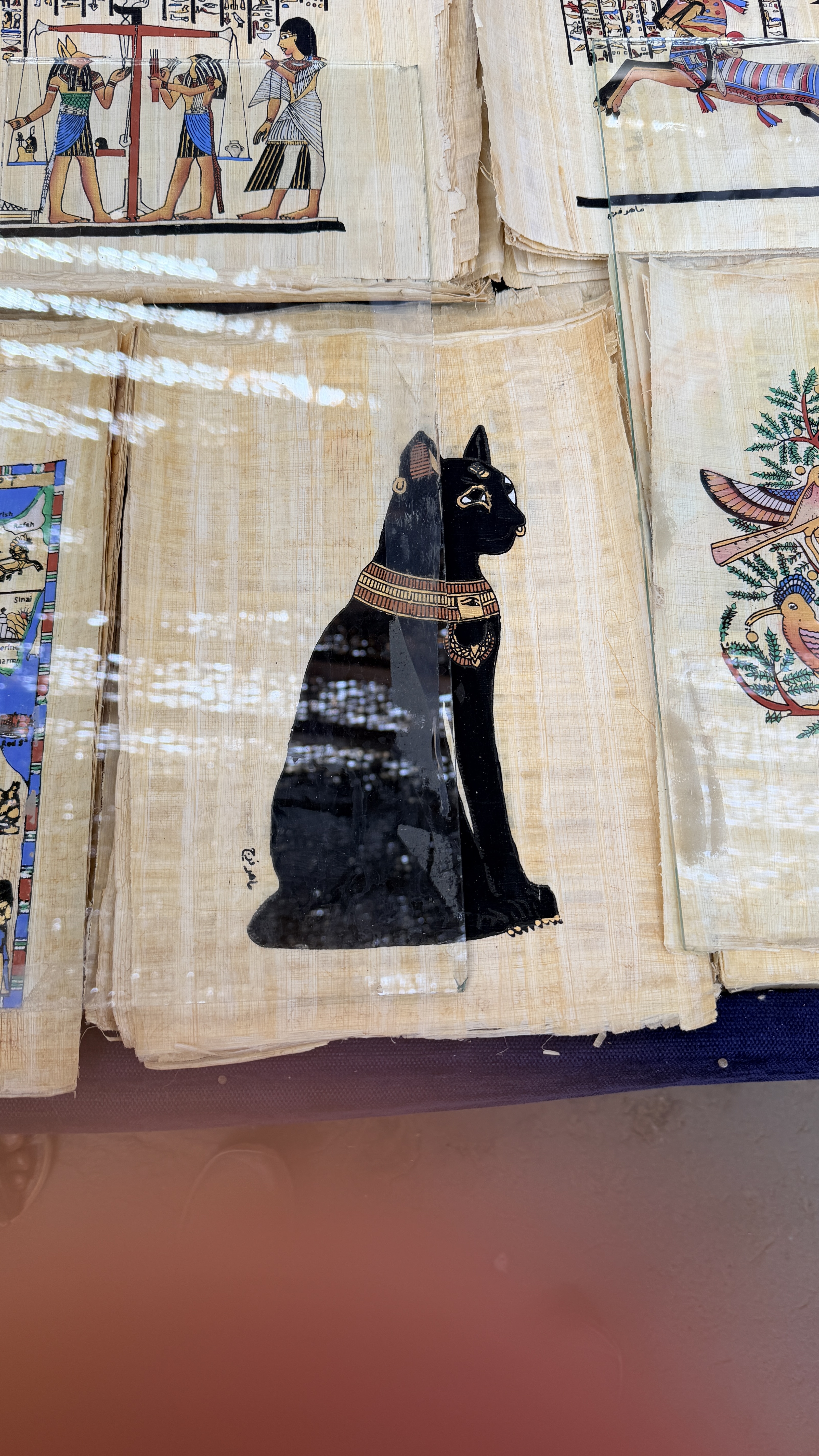
Bastet was gentle but powerful. A protector. A reminder that even in a civilisation obsessed with gods and kings, there was space for domestic life, warmth, and companionship.
Kom Ombo and the River’s Pulse
After lunch back on board, we sailed north and arrived at Kom Ombo around 4.30pm.
The Temple of Kom Ombo is unique in Egypt. It is a double temple, dedicated to two gods:
Sobek, the crocodile god, representing strength and the Nile’s danger Horus the Elder, representing protection and healing
One of the most fascinating features here is the Nilometer, a deep stone well used to measure the river’s height. By tracking water levels, priests could predict floods, plan crops, and determine taxation. The Nile was not just sacred. It was measured, studied, and understood.
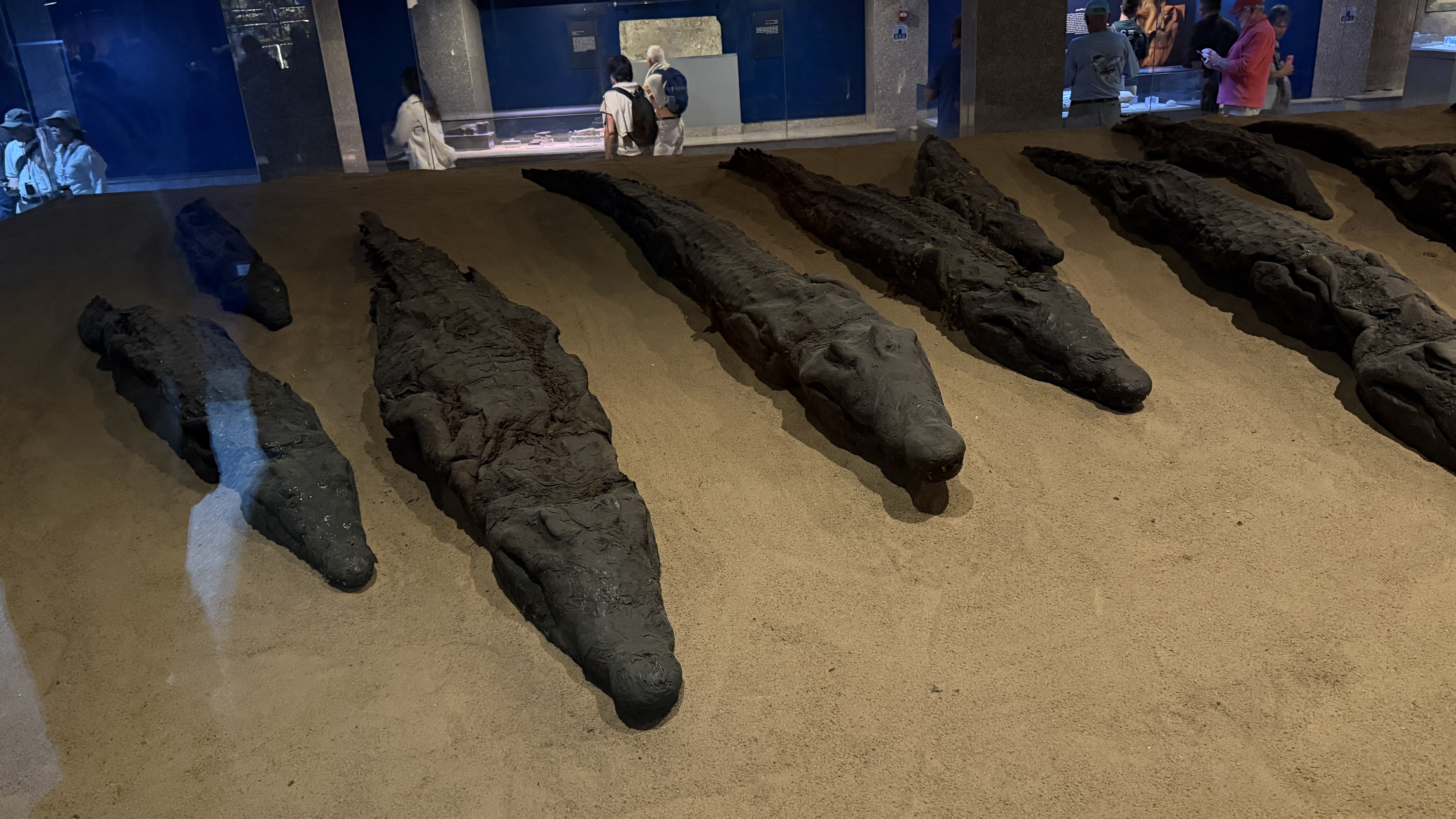
Nearby, the Crocodile Museum displays dozens of mummified crocodiles. Sobek was feared and worshipped in equal measure. Dangerous, powerful, necessary.
Closing the Circle
Back on board, we attended the evening briefing and then dinner. Onion soup. Chateaubriand. Trout. Prawns. Sago. Chocolate brownie. Not all on the same plate.
What struck me most today was the timeline Viking has quietly built for us. From Saqqara to Philae, from the birth of stone architecture to the last temple of ancient Egypt, the story is finally coherent.
Egypt is no longer mysterious in the abstract.
It’s mysterious in the human sense.
And that, somehow, makes it even more remarkable.