We arrived in Edfu at about 9pm last night. Our cabin was dockside, and the area adjacent to the dock felt like the centre of town. Loud music blared well into the night. Cars spun donuts in the street above us. Crowds gathered, yelling and laughing. There was dancing, fireworks, and a general sense that something was being celebrated. Whether it was the arrival of a cruise ship carrying eighty guests or simply a typical Monday night in Edfu, I couldn’t quite tell.
For the first time on this cruise, we shut our balcony door. The noise carried on late, and a security guard stood watch on the dock carrying a long firearm. It was confronting, but also a reminder that this is a very different place, operating under very different rhythms.
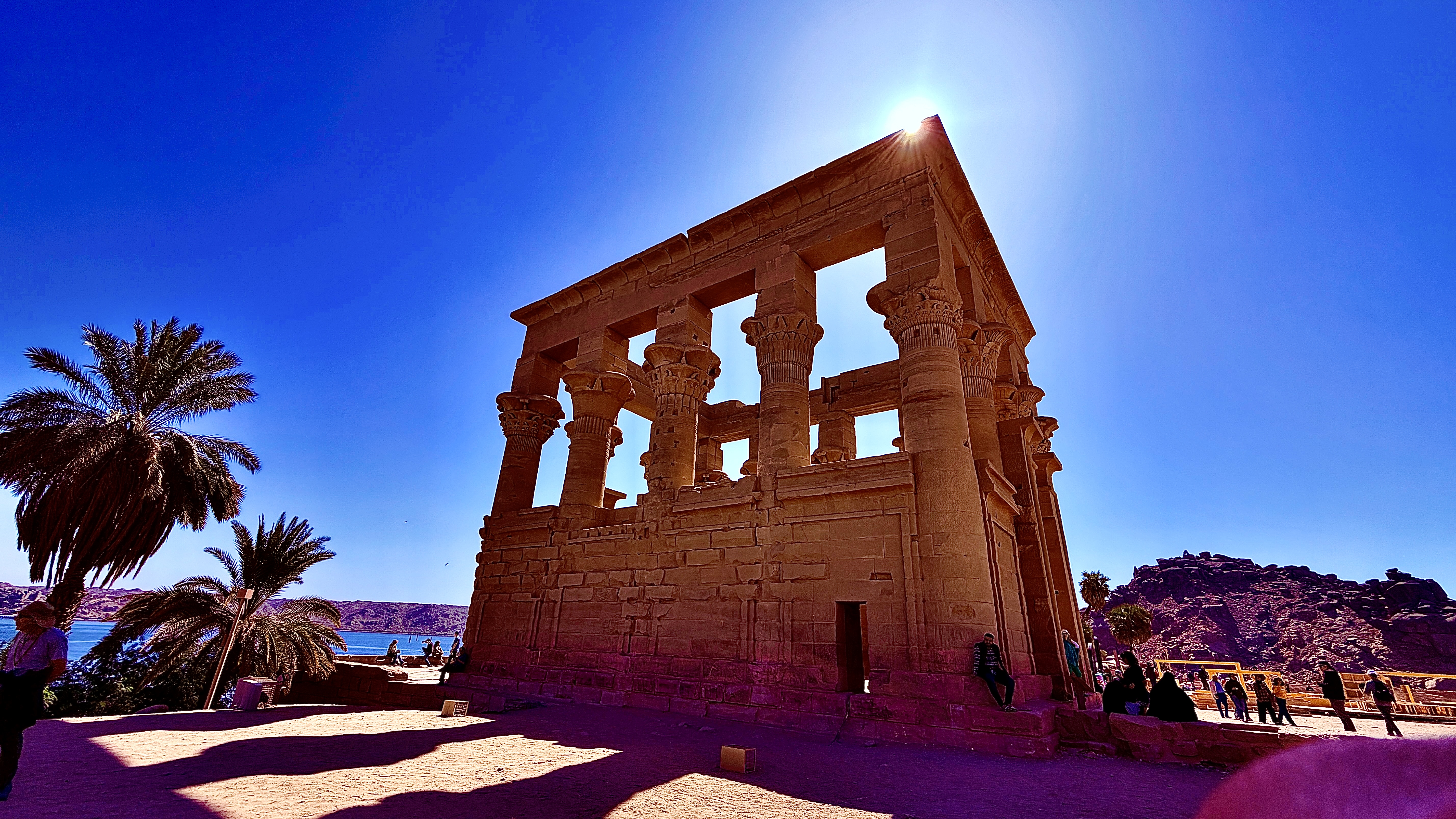
Morning came, as it always does here, with sunshine. We woke to blue skies and warmth, enjoyed a quick breakfast, and boarded the shuttle bus for our final excursion in Egypt. Just a ten-minute drive brought us to the Temple of Edfu, one of the best-preserved temples in the country and a fitting place to end this part of our journey.
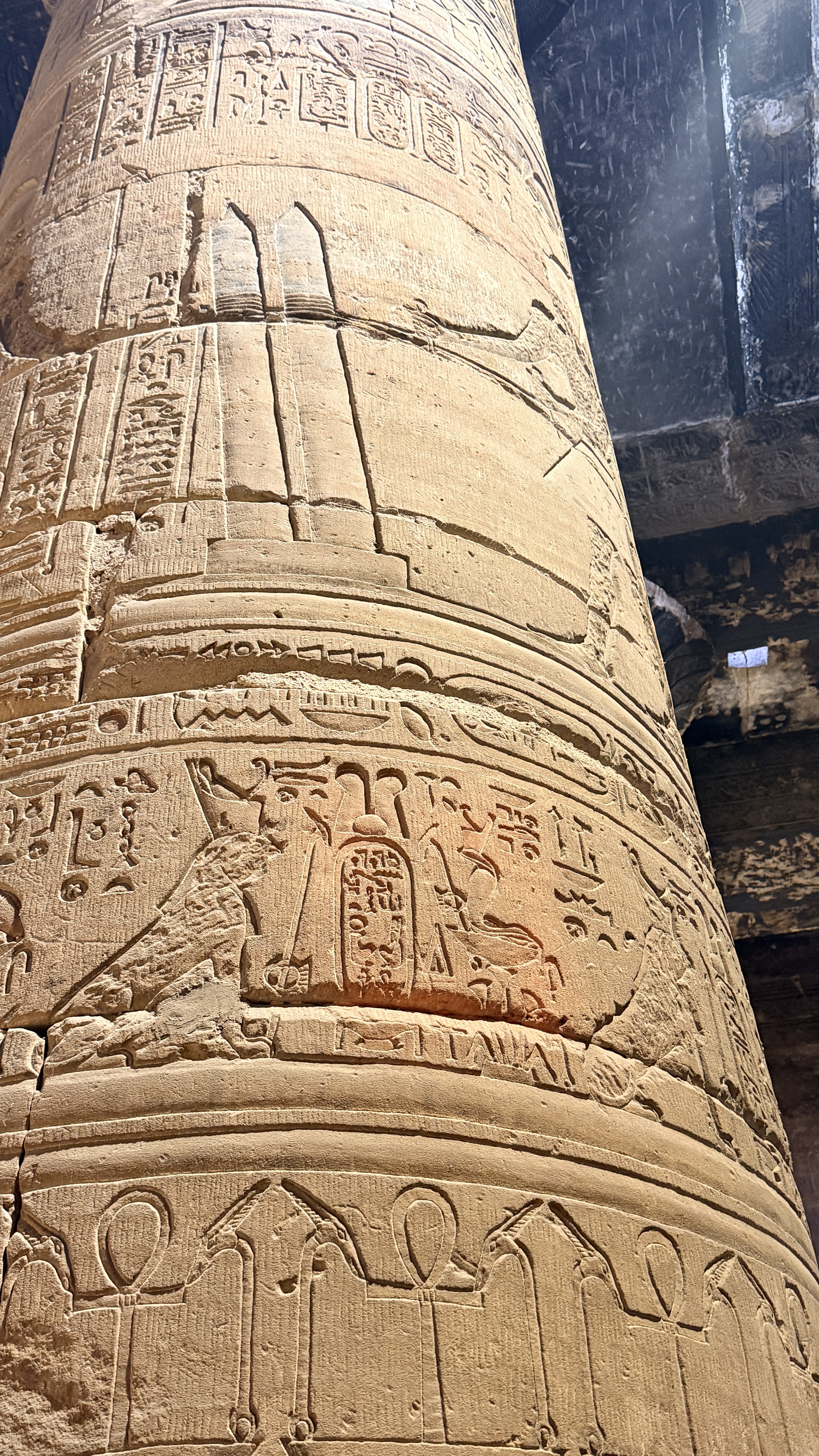
The Temple of Edfu is dedicated to Horus, the falcon-headed god of kingship, protection, and divine order. Built during the Ptolemaic period between 237 and 57 BC, it was commissioned by Greek rulers at a time when Egypt was no longer ruled by pharaohs in the traditional sense. That context matters. While the temple is vast, symmetrical, and imposing, there is an intentional stiffness to parts of it. Some carvings lack the finesse we saw at Saqqara or Seti’s tomb. In places, the workmanship feels rushed or deliberately restrained. Egypt was under foreign rule, and the artisans knew it.
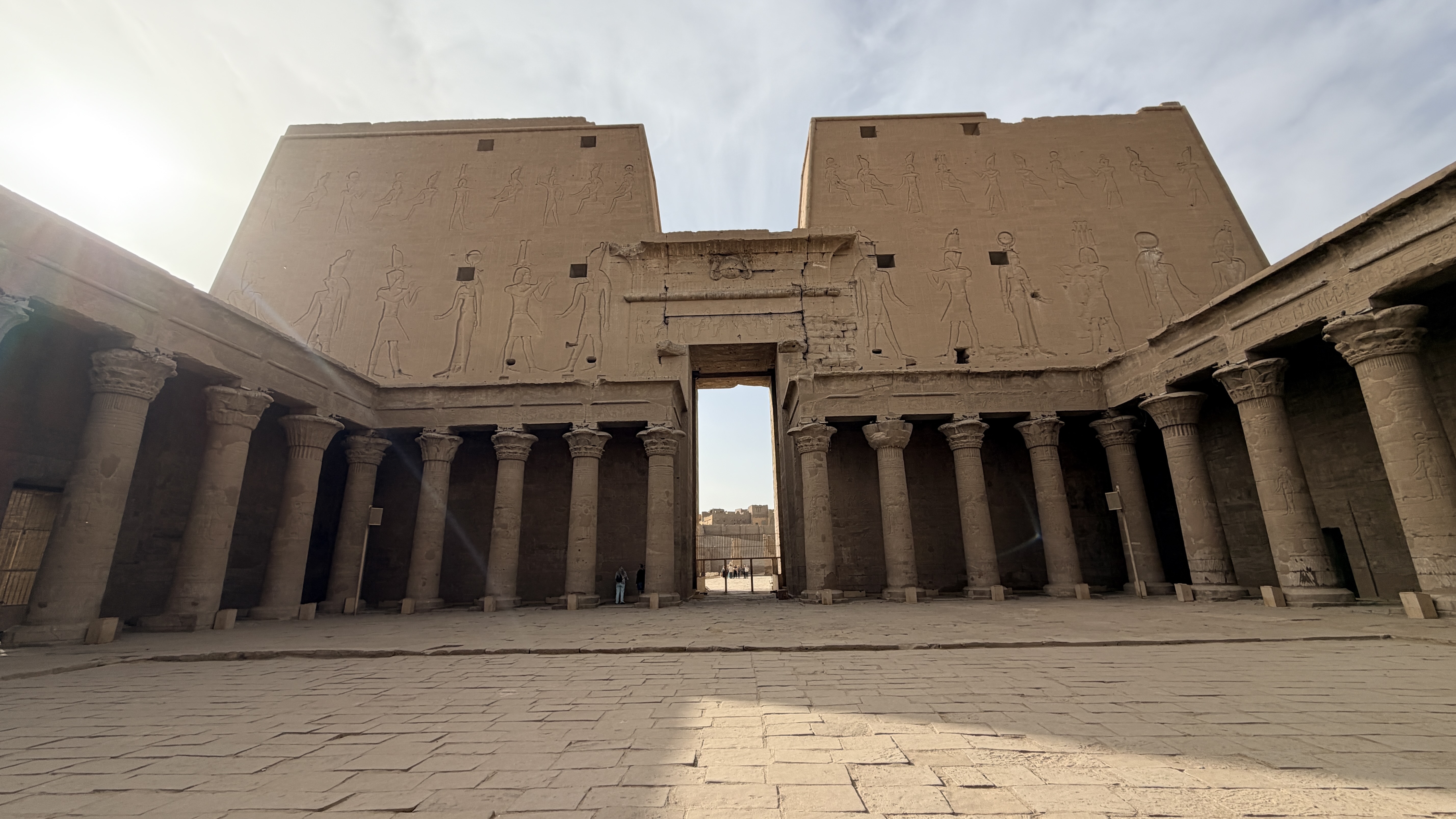
Yet despite this, the temple stands as a masterpiece of communication. One relief in particular stopped us all. Carved clearly into a column is a scene showing workers using ropes to raise massive stone obelisks. This single image has become one of the key pieces of evidence Egyptologists use to understand how ancient Egyptians moved and erected enormous stone structures. Thousands of years later, the message is still clear. This is how we did it. This is how we lived.
At the entrance stands a magnificent black granite statue of Horus, perfectly preserved, calm and commanding. Horus is central to the Egyptian story. Son of Isis and Osiris, born after his father was murdered and dismembered by Seth, Horus represents restoration, legitimacy, and continuity. His long battle with Seth mirrors Egypt’s obsession with balance, order over chaos, and the eternal struggle to maintain harmony. Seeing Horus here, intact and enduring, felt symbolic. This civilisation wanted to be remembered not for its destruction, but for its order.

Mardi chose to return on the earlier shuttle, while David, Kerrie, and I lingered a little longer. We wandered the temple slowly, revisiting details, taking one last look. We spent some time in the official gift store, run under the oversight of the Egyptian Department of Antiquities. The contrast with the street traders outside was stark. Inside, the pace was calm, the items thoughtful, the experience respectful. Outside, cheap imports and aggressive selling waited. Both worlds exist side by side.
Eventually, it was time. We boarded the bus and returned to the ship. Our last temple. Our last excursion in Egypt.
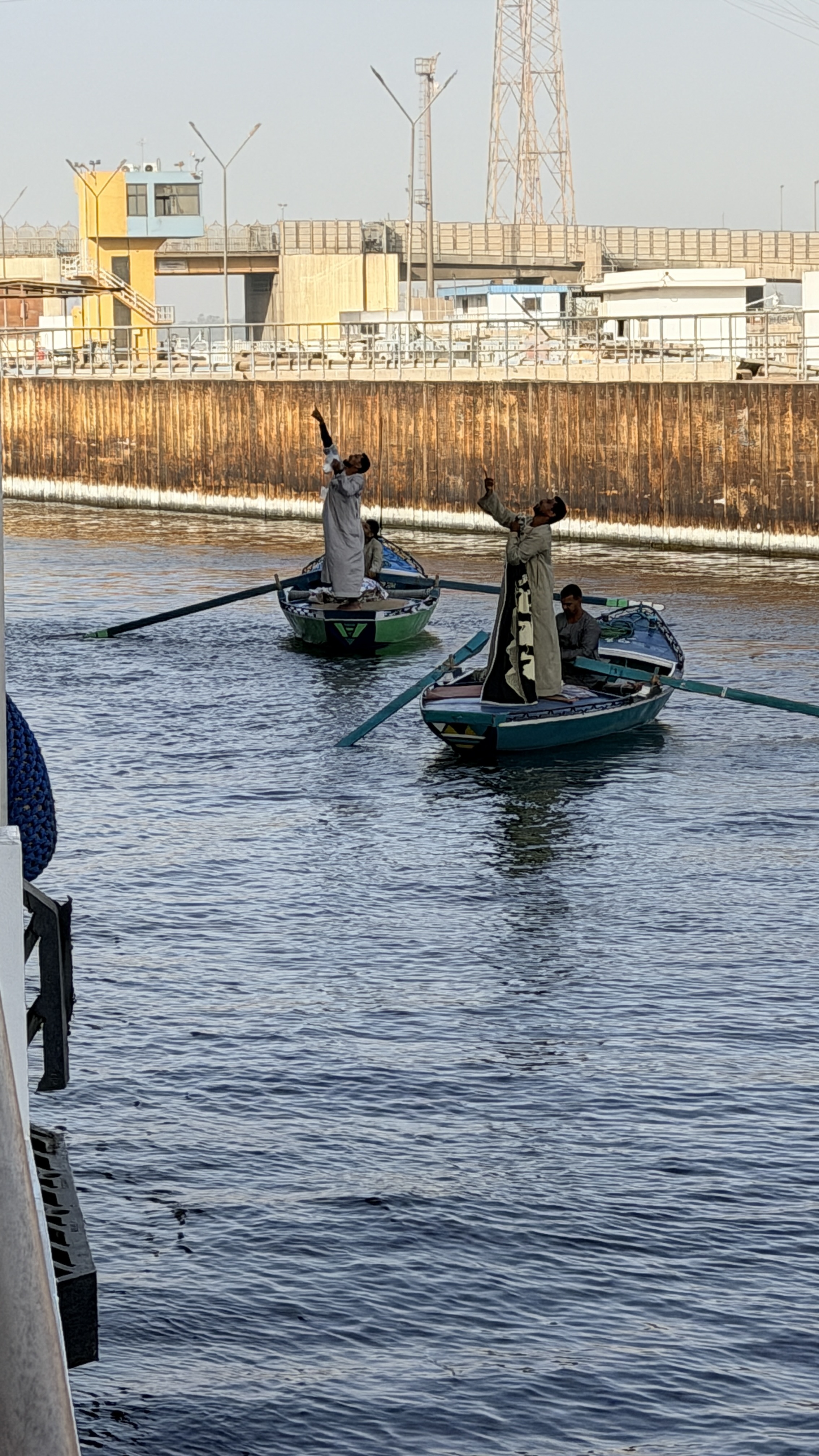
Back on board, the day unfolded gently. Disembarkation briefings. Lunch. Packing. Long stretches of quiet. We passed through the lock once more, river traders calling out, tying their boats briefly to our ship, calling “Hello, hello, Mr, Mrs,” hoping for attention. Along the lock walls, people stood and watched us pass asking for gifts, money, water. This is their way of life. Ours is different. Both exist. Both are real.
That evening, we gathered for our final dinner on board. It was one of those moments that is both happy and sad at the same time. Happy for everything we had seen. Happy that I was able to do this with Mardi, with my brother, with Kerrie. Happy to have walked through history together, learned together, shared awe together. And sad because it was ending. Sad because this chapter was closing.
Egypt has a way of doing that to you.
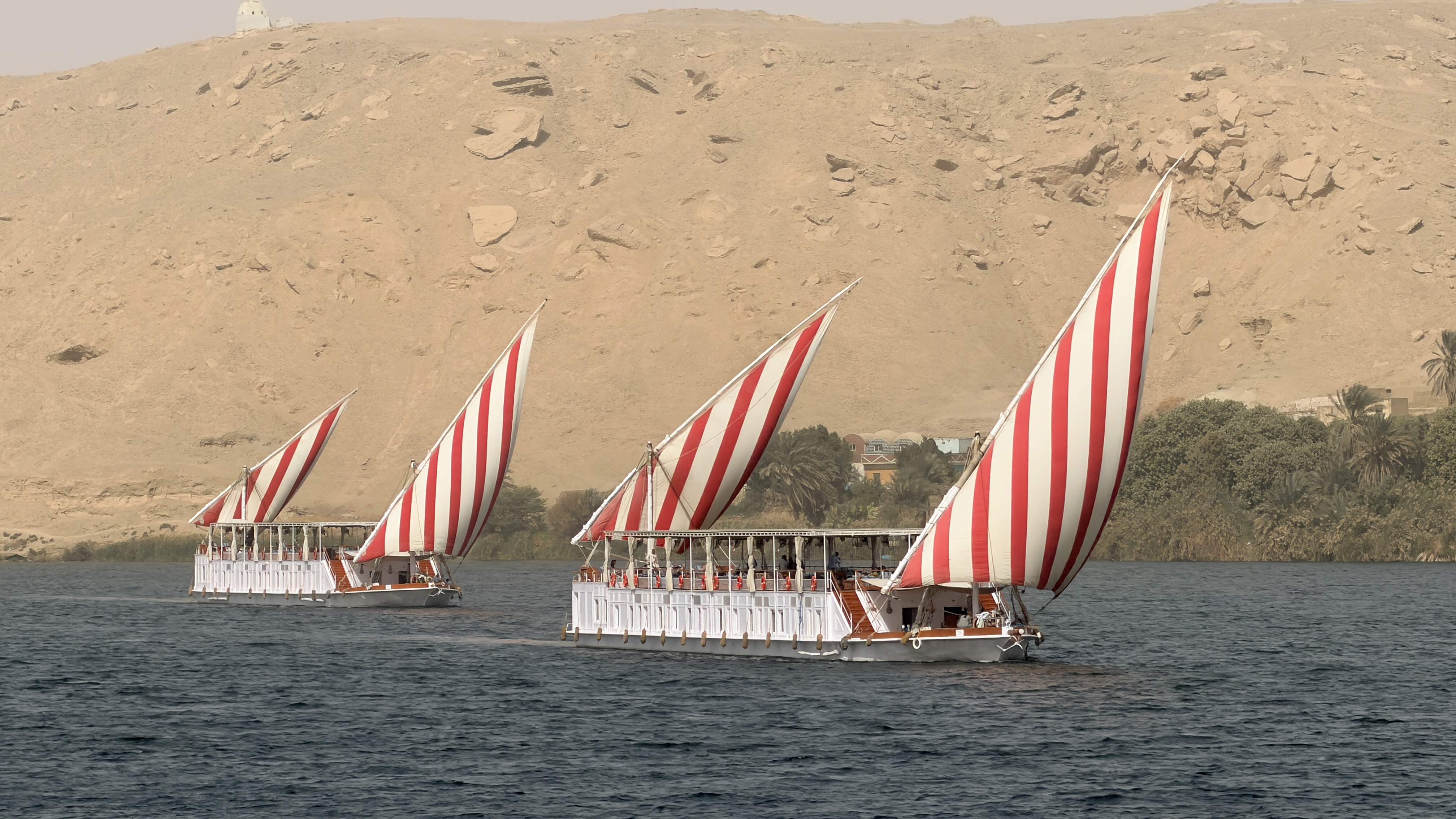
As the ship moved quietly along the Nile, I sat on our balcony and watched the sunset. The sound of water slipping past the hull. The low hum of the engine. The occasional toot of a ship’s horn as we passed others heading north. Palm trees drifted by. Small villages appeared and disappeared. Children waved. Life went on, as it has here for thousands of years.
And that’s when it settled.
This land has stayed with me.
It hasn’t just stayed, it moves through me now, like the Nile moving through Egypt.
Egypt has crept under my skin the way sandstorms do here, finding their way into everything. It pressed me deep into the earth, into tombs where kings waited for eternity, and then lifted me up again, standing beneath the Great Pyramid of Giza, overwhelmed, humbled, and alive with wonder.
Some places you visit.
Others become part of you.
Egypt is one of those places.
Egypt came to me as a dream and leaves as something written permanently into who I am.