The early mornings keep coming. Today it was a 4.00am wake-up for a 4.45 departure. The prize at the end of the effort was meant to be a hot air balloon ride over the Valley of the Kings at sunrise.
We boarded the bus right on time and headed to the pier, where a small river taxi took us across the Nile to the balloon launch site. It felt calm, almost too calm. Sitting low in the water, I noticed the breeze. Not strong, but persistent. Was it too strong for a balloon? I had no idea.
We waited.

And waited.
Still an hour until sunrise. Plenty of time.
We waited some more.
Eventually, an official-looking man boarded the boat and spoke quietly to Ibrahim in Arabic. The tone wasn’t heated, but it was unmistakable. Bad news. A minute later Ibrahim turned to us and announced the flight had been cancelled. Wind direction and gusts at altitude made it unsafe.
Gutted.
Deeply disappointing. But as a few people said quietly to each other, it is what it is. Safety first.
We disembarked and headed back towards the ship. And that could have been the end of the story.
But Egypt had other ideas.
I turned to David and said, “We could go back to Karnak.”
“It opens at six,” he replied.
A quick check confirmed it. Sunrise photos. Golden light. Almost no crowds if you timed it right.
We looked at each other, grabbed our camera gear, and headed out. Mardi sensibly stayed on board. The three of us walked the 14 minutes to the temple as dawn approached.
Partway there, we were joined by three large, boisterous dogs. Not aggressive, but very present. Rabies is a real risk here, so we were cautious. They barked and howled, not at us, but around us. It felt less threatening and more… ceremonial. As if they were escorting us. After about 200 metres, they peeled away and disappeared behind us.
Another small, unexpected Egypt moment you won’t find in a guidebook.
We entered Karnak just as the sun began to rise.
Wow.
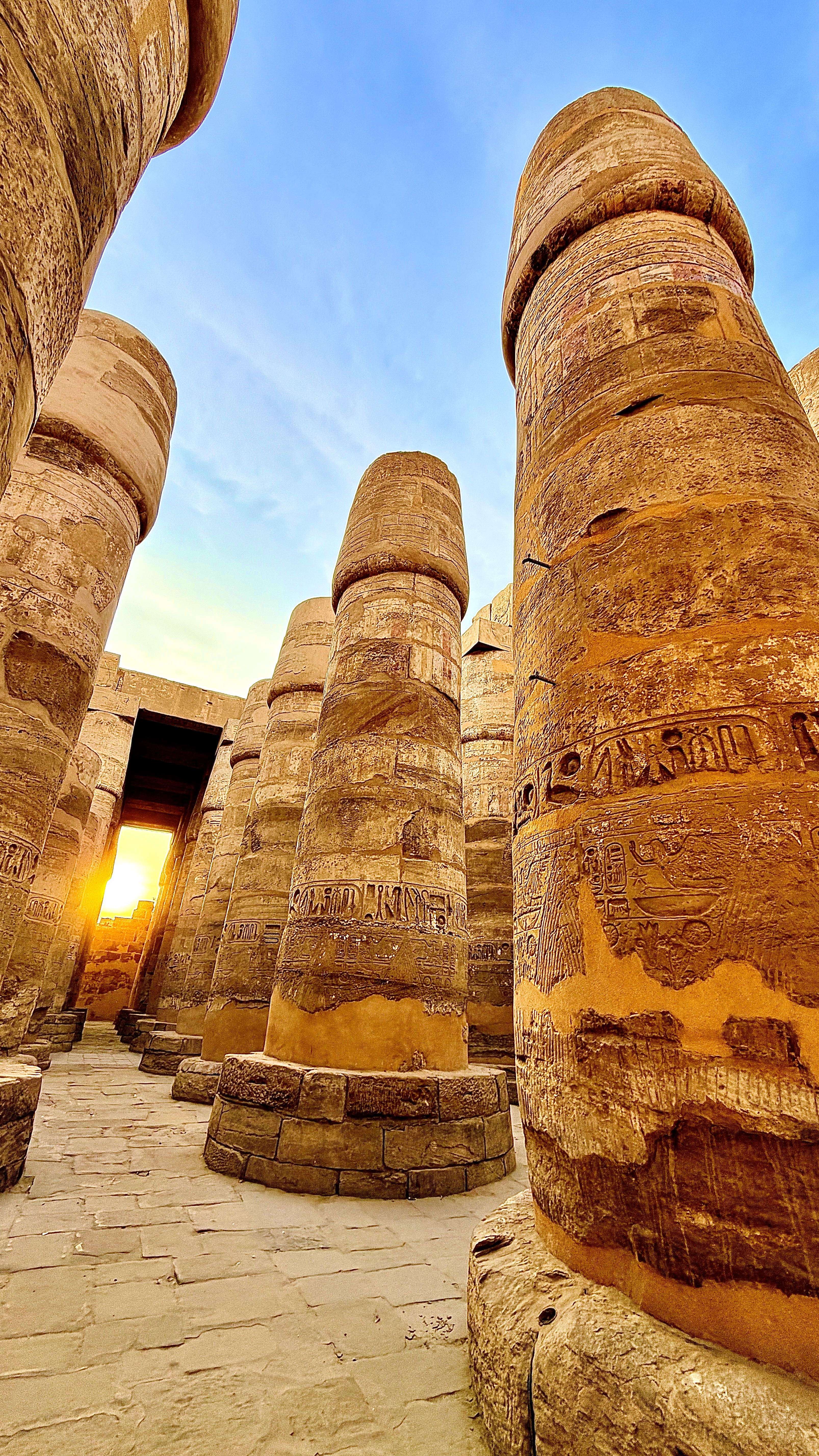
Golden hour does extraordinary things to ancient stone. The light crept across the columns, catching hieroglyphs, warming the colour of the walls from grey to amber. It was completely different to the previous day. No crowds. No noise. Just space, light, and time.
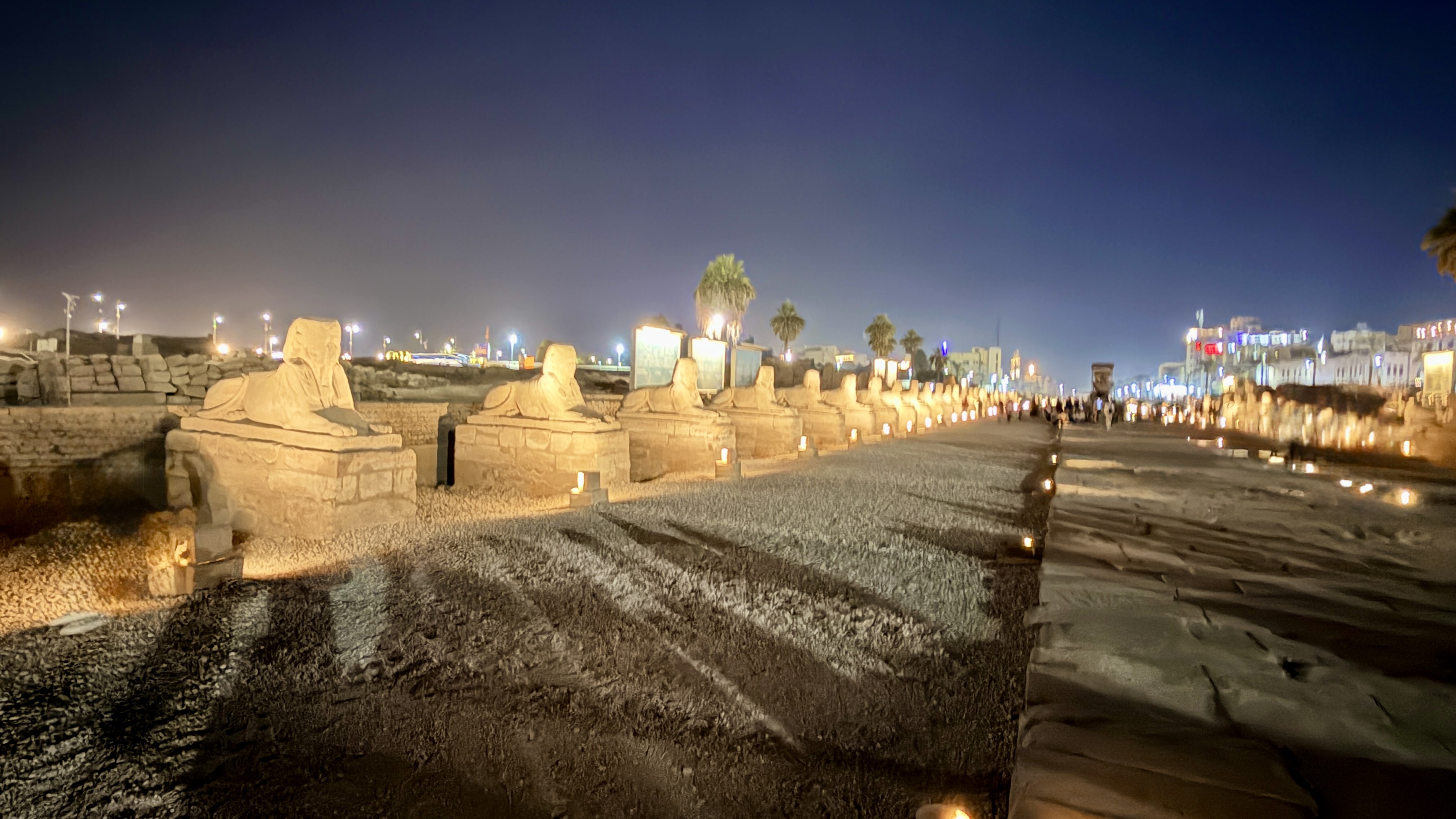
Because we’d visited the day before, we knew where we were. We moved deliberately. Slowly. The obelisks glowed. The sphinx-lined avenues felt almost alive. Light streamed between the giant columns, casting long shadows that shifted as we walked.
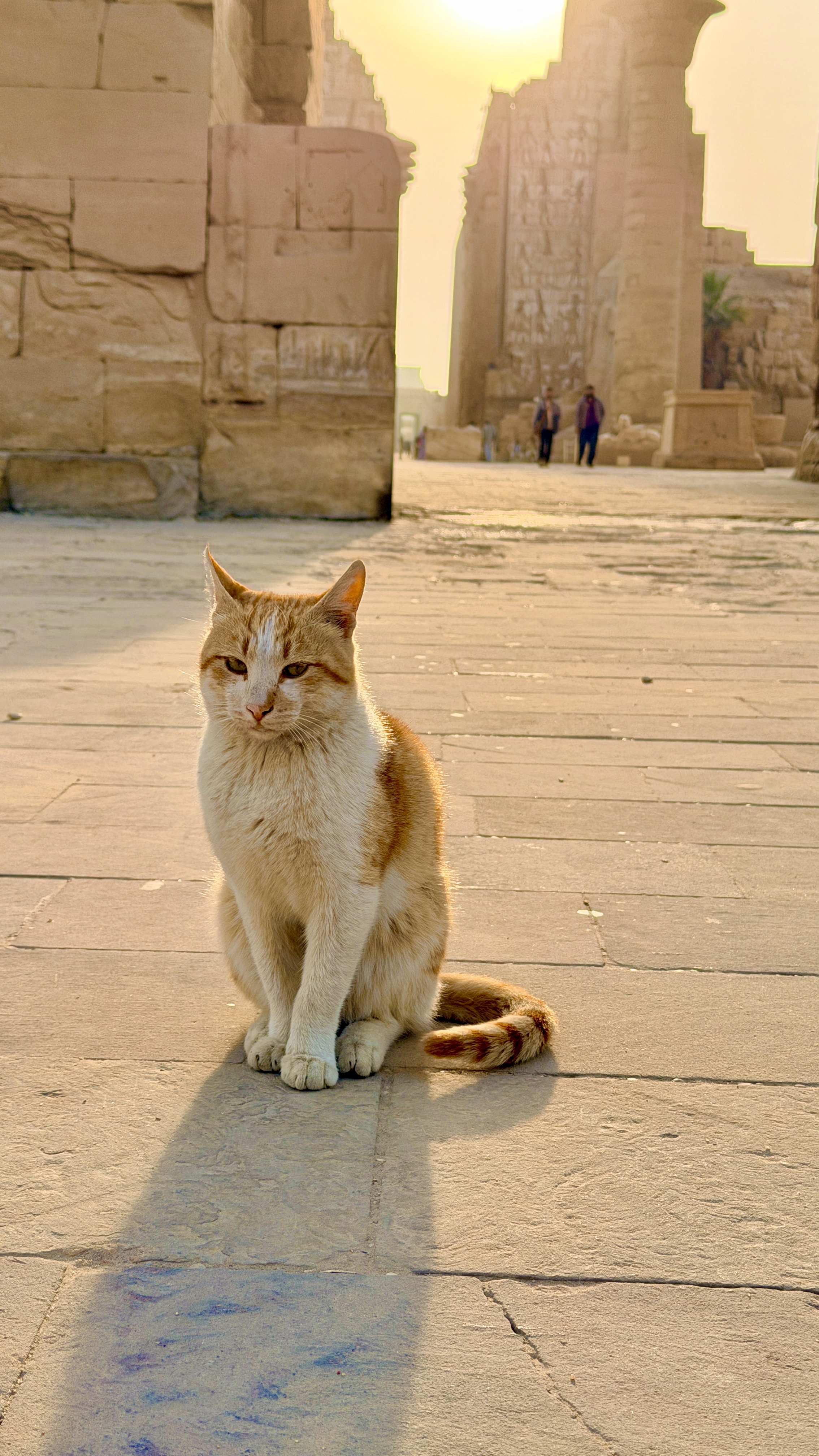
It was magical. A cat started to follow me. And then as if on queue it posed in the Sun‘s morning glow enjoying the moment itself and presenting me with a wonderful opportunity for another great picture. 
After about an hour, we reluctantly made our way towards the exit and braved the line of souvenir shops. Haggling here is part of the experience. Friendly, playful, and often over amounts that barely cover a cup of coffee back home. The traders are trying to make a living. We chatted, laughed, bargained, and picked up a few small gifts.
To get back, we opted for a horse and cart. David nodded to a driver among the sea of offers and helped us climb aboard. The horses, sadly, were painfully thin. It hit me hard. A civilisation so rich in human history struggles badly with animal welfare.
As we trotted back, I wrestled with it. Should we even be doing this? And yet, the fare we paid would help feed the man, his family, and perhaps the horse. There are no simple answers here.
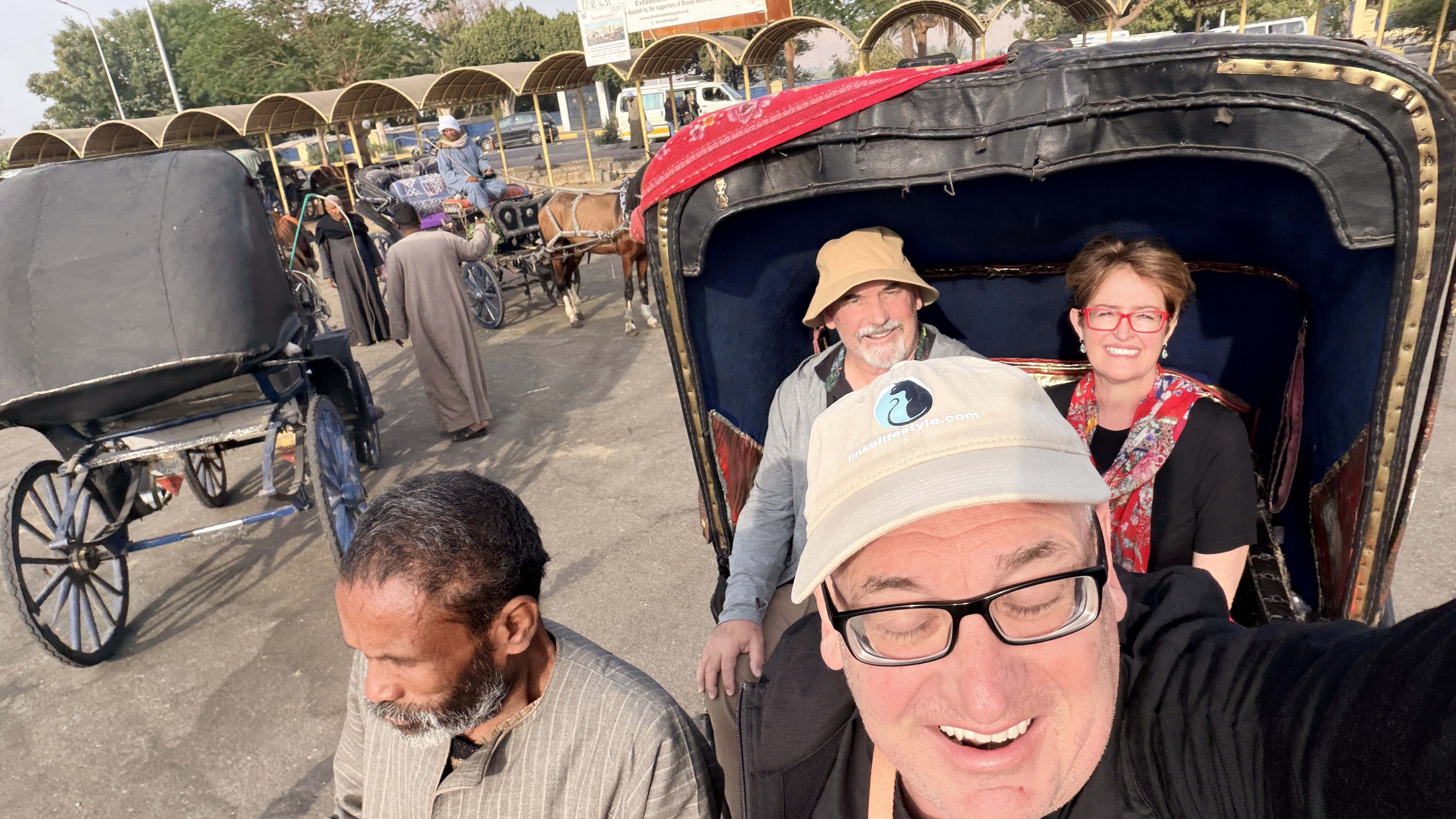
The driver, however, was delighted. Chanting “Aussie, Aussie” all the way back, grinning from ear to ear, and very pleased with his USD $5 tip.
Back on board, breakfast tasted even better than usual. Oats. Eggs. Tea. Hot chocolate. Comfort food after an emotional morning.
Later, we attended a lecture on the Nile, and it tied everything together.
The Nile is Egypt. Without it, Egypt would not exist.
Stretching roughly 6,650 kilometres, the Nile flows north through one of the driest regions on Earth. It is fed primarily by two sources: the White Nile, rising from the Great Lakes of East Africa and providing steady year-round flow, and the Blue Nile, which begins in the Ethiopian Highlands and delivers the annual floods that historically replenished Egypt’s soil.
To the east and west of the river lie vast deserts. Life hugs the Nile tightly, a green ribbon through sand. For thousands of years, the river dictated planting seasons, religious calendars, settlement patterns, and political power. Even today, over 95 percent of Egyptians live within a few kilometres of its banks.
Lunch followed. Shawarma. Chicken tucked into flatbread pockets. Or as someone rightly called them, Egyptian tacos. Delicious.
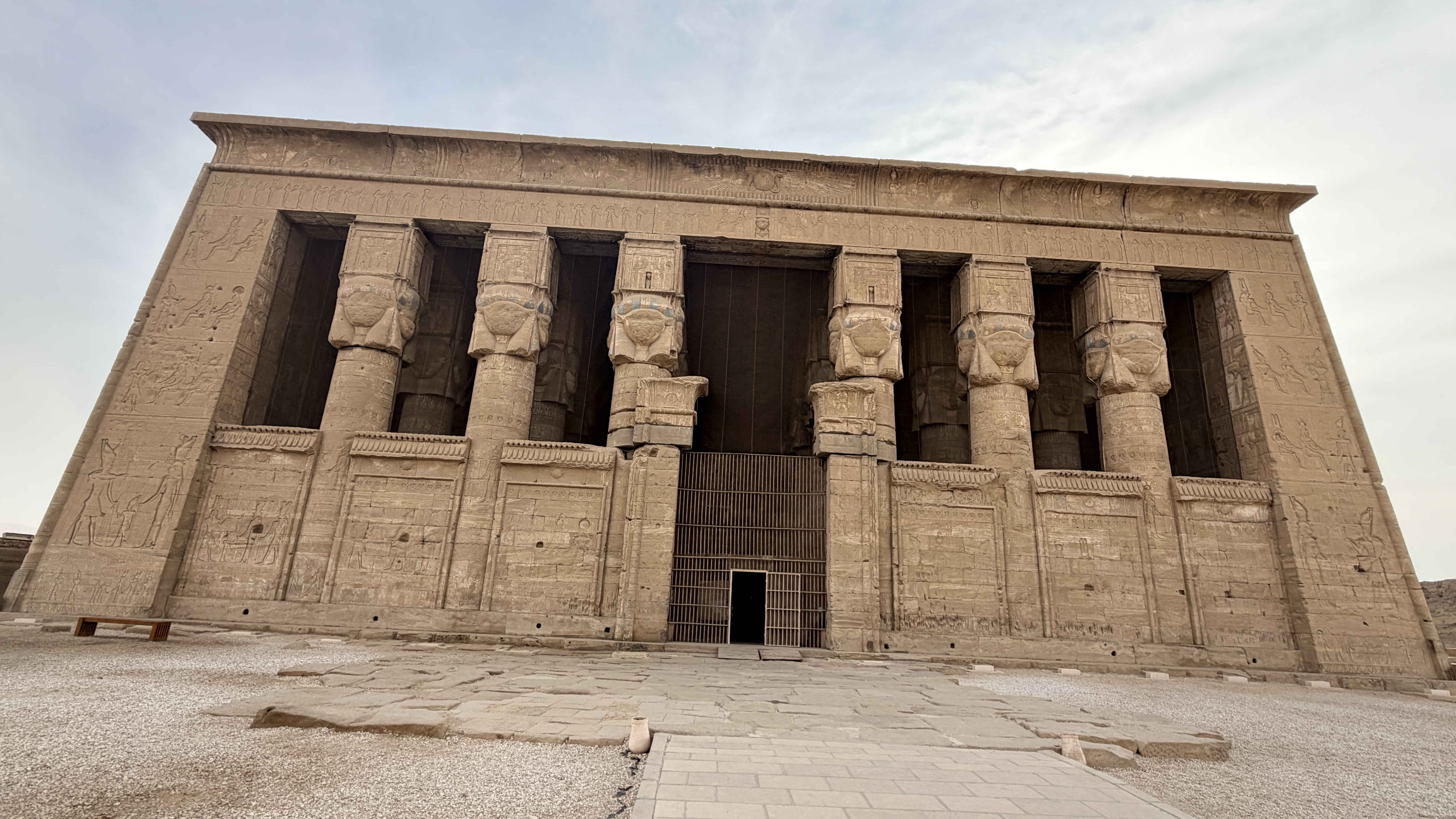
In the afternoon we travelled to Qena and visited the Dendera Temple Complex, dedicated to the goddess Hathor, deity of love, joy, music, and motherhood. The temple we see today was largely built during the Ptolemaic (Greek) period, beginning around the 1st century BCE, though it sits atop much older foundations.
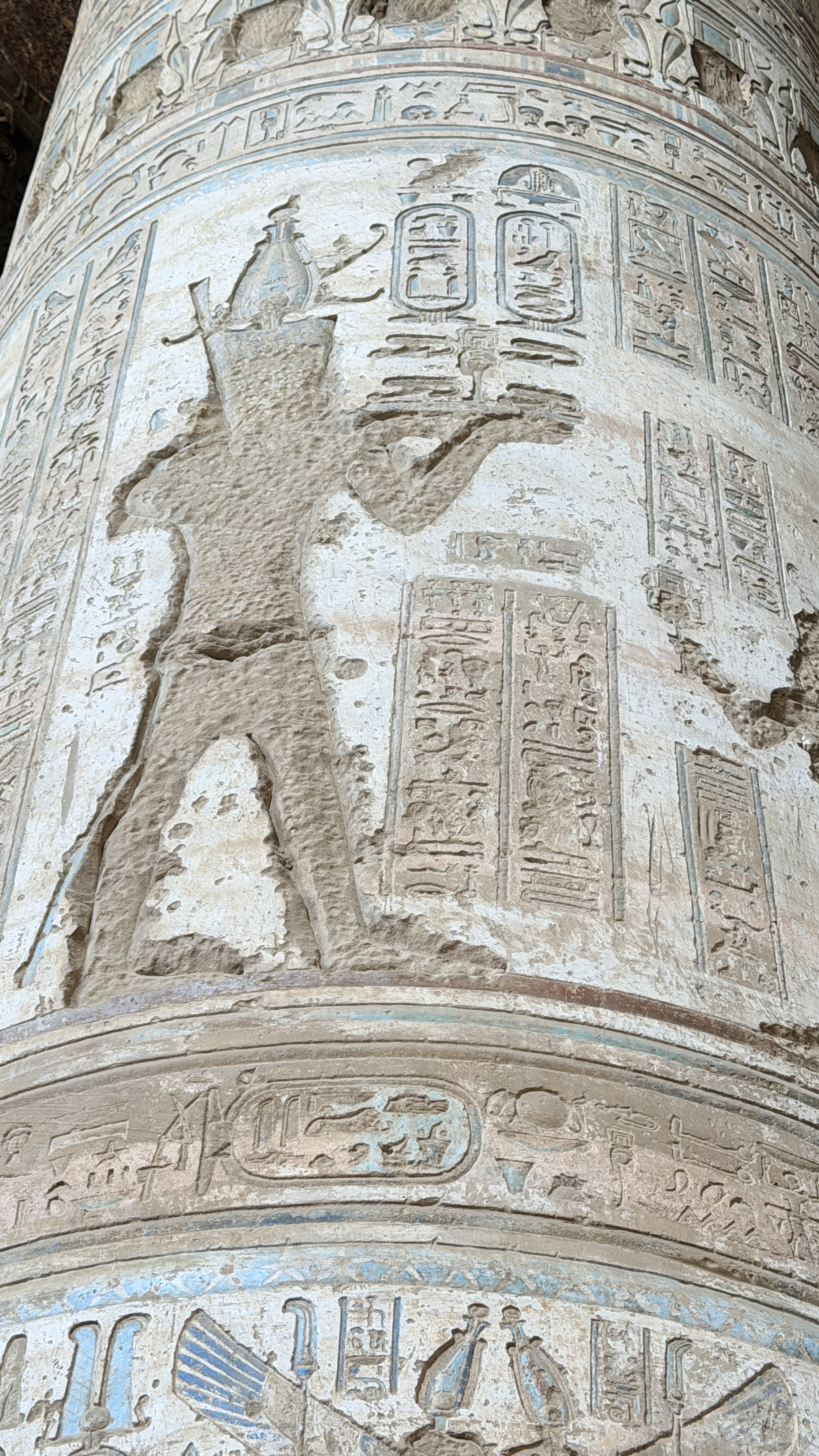
Dendera is fascinating for its contradictions. Grand in scale, yet uneven in execution. Greek rulers commissioned it, promising resources and support that often didn’t materialise. Egyptian craftsmen did the work, but shortages show. Some cartouches are left blank. Stone quality varies. Pillars don’t always align perfectly. It feels unfinished, compromised.
And yet, it’s extraordinary. The ceilings are covered in deep blue astronomical reliefs. Columns are topped with Hathor-faced capitals. One of the best-preserved temples in Egypt, despite its flaws. Or perhaps because of them. It feels human.
The drive back took nearly two hours. The bus was quiet. Everyone exhausted.
Back on board, we had just enough time to freshen up before the Captain’s welcome and crew introductions. The 82 guests onboard erupted into applause as the crew were presented. Well deserved.
Mohammed Younis then briefed us on tomorrow’s excursion: the Valley of the Kings and Queens. Another highlight, he promised. And he’s been right so far.
Egypt’s story, in the broadest strokes, unfolds like this:
- Pre-dynastic Egypt (before 3100 BCE)
- Early Dynastic Period (c. 3100–2686 BCE): unification of Upper and Lower Egypt
- Old Kingdom (c. 2686–2181 BCE): pyramids, central authority First Intermediate Period: fragmentation
- Middle Kingdom (c. 2055–1650 BCE): stability, literature, administration Second Intermediate Period: Hyksos rule
- New Kingdom (c. 1550–1070 BCE): empire, Valley of the Kings, major temples
- Late Period: decline and foreign rule
- Ptolemaic (Greek) Period (332–30 BCE)
- Roman Egypt
- Christian (Coptic) Egypt
- Islamic Egypt from the 7th century onward
Each layer still visible, still influencing the next.
Dinner tonight matched the theme. Traditional Egyptian cuisine.
We started with Shorbat Lisaan Asfour, often called “bird tongue soup” because of the pasta shape. Thankfully no birds were harmed. A clear, rich broth with minced beef.
The main course was a Beef Tagine, slow-cooked with sweet potato, roasted vegetables, cinnamon, and warm spices. Comforting and deeply satisfying.
Dessert was Muhallabia, a milk-based custard with cardamom and caramel sauce.
Perfect.
It’s time for bed. Tomorrow we don’t rise quite as early. After seven days of extraordinary experiences, tomorrow also marks a shift. After the Valley of the Kings, we finally set sail south on the Nile towards Aswan.
The pace will slow. The river will carry us.
And the journey continues.