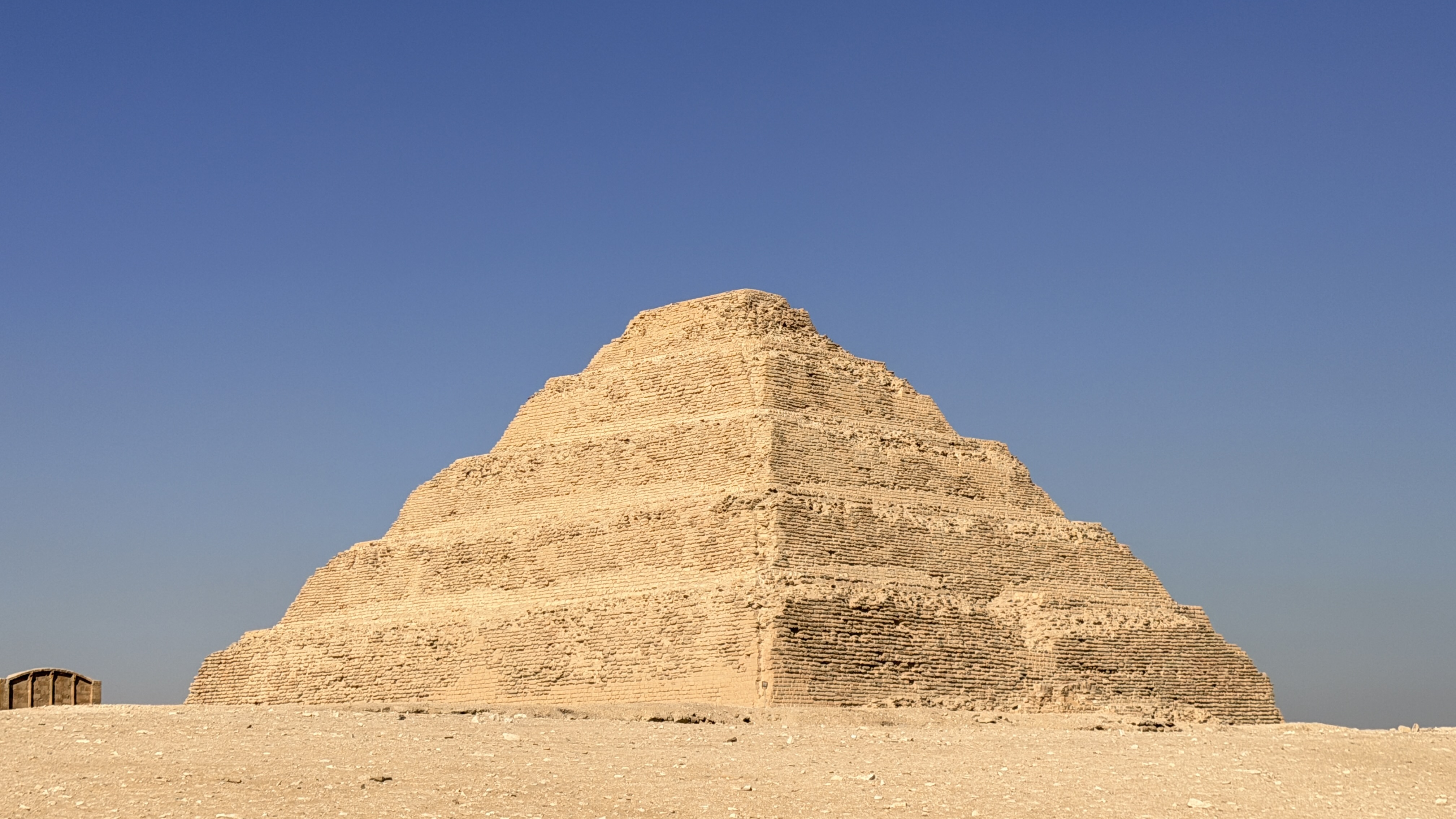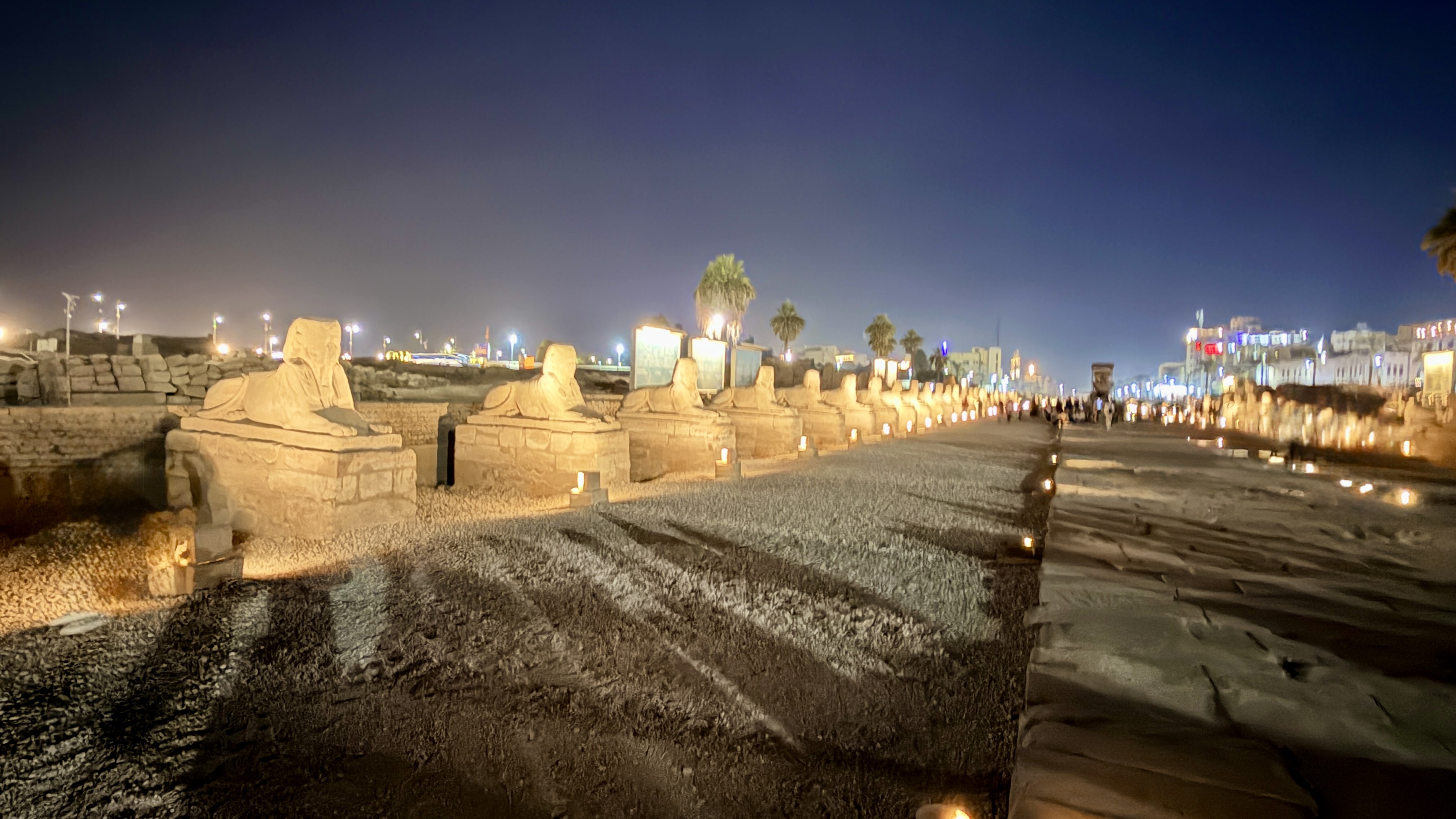
Today, I touched the Great Pyramid of Giza.
I stepped off the raised wooden walkway and moved slowly, almost hesitantly, towards its base. There was no rush. No need for words. I felt humble, small6, and deeply aware of where I was. Standing at the foot of this ancient wonder, I gently raised my hand and rested it on one of the foundation stones.
Four and a half thousand years surged through me.
The stone was cold to the touch, despite the full sun. Smooth and rough at the same time. Smooth from millennia of weathering. Rough where the limestone had pitted and eroded. My fingers traced its surface, following the subtle undulations shaped by time, wind, and history. I stood there longer than I expected, quietly connecting with a place I have dreamed of my entire life.
It was magical.
And that moment came at the end of the day.
Now the full story…
The day itself began early, and not quite as you might imagine. At 6.45am, I was on a job interview. A brief return to reality before one of the most extraordinary days of my life. Once that was done, we gathered our things and met David and Kerrie for our 8.30am departure.
The excitement on David’s face mirrored my own. It was almost comical. Two grown men barely containing decades of anticipation. This wasn’t sightseeing. This was pilgrimage.
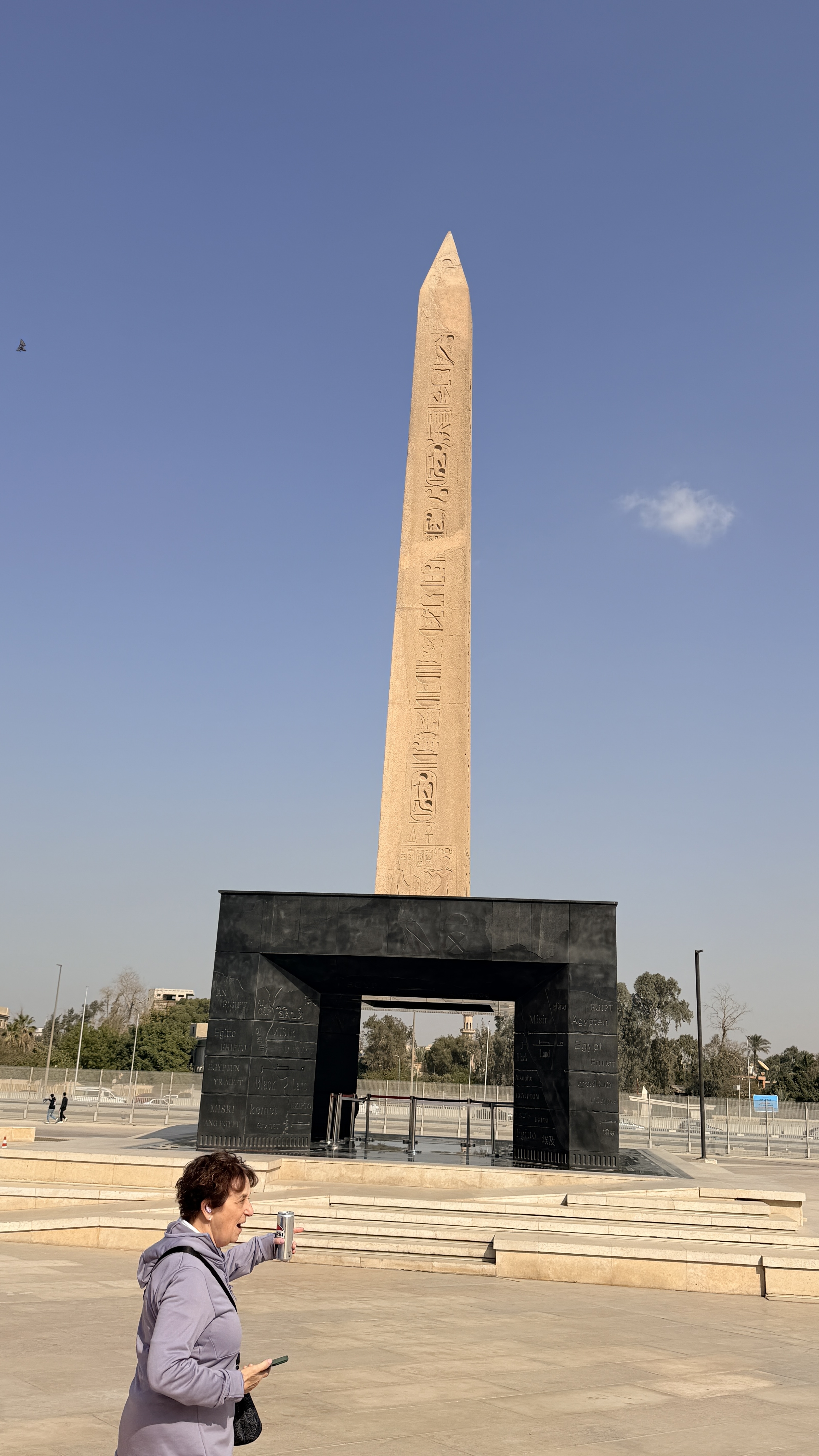
Our first destination was the Grand Egyptian Museum, or as it so perfectly calls itself, the GEM.
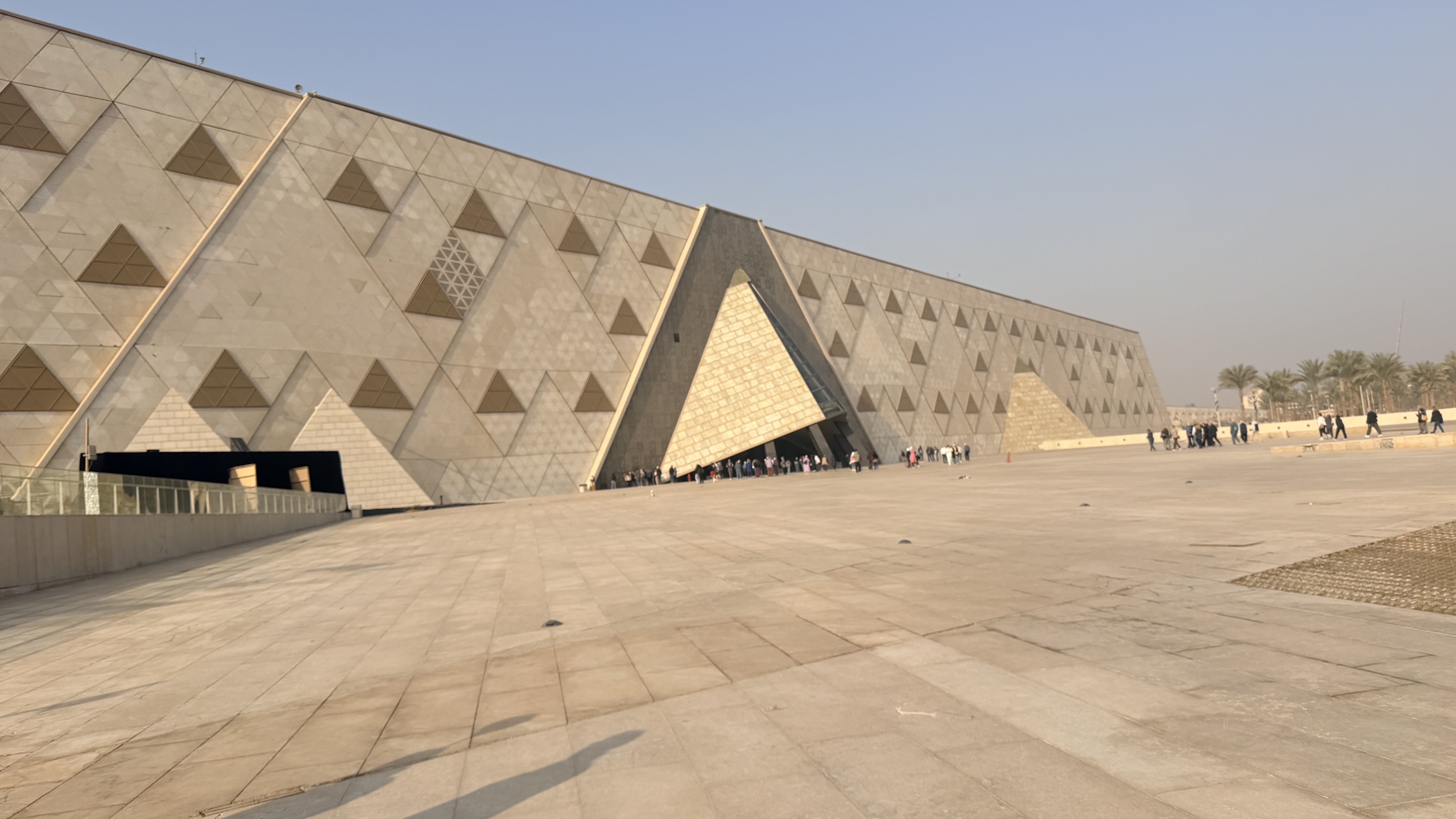
Just thirty minutes later, we arrived. Ibrahim, our Viking Program Director, gathered us at the entrance and spoke about the museum’s long and complex journey to opening. Conceived in 2008, delayed repeatedly by political upheaval, global events, and a pandemic, the GEM finally opened its doors just six weeks ago. You could feel the significance of that moment standing there.
David and I were twitchy. Like children taken to the gates of Willy Wonka’s factory and told to wait.
Eventually, we entered.
And our minds were blown.
Towering before us stood Ramesses II, colossal and commanding. A welcome, a challenge, an invitation all at once. From that moment on, we spent four solid hours immersed in one of the most astonishing museum spaces ever created.

The scale is hard to comprehend. The GEM is the largest archaeological museum in the world dedicated to a single civilisation. Over 480,000 square metres. Purpose-built galleries. Sightlines aligned directly with the pyramids themselves. This is not a building filled with artefacts. It is an experience designed to honour an entire civilisation.
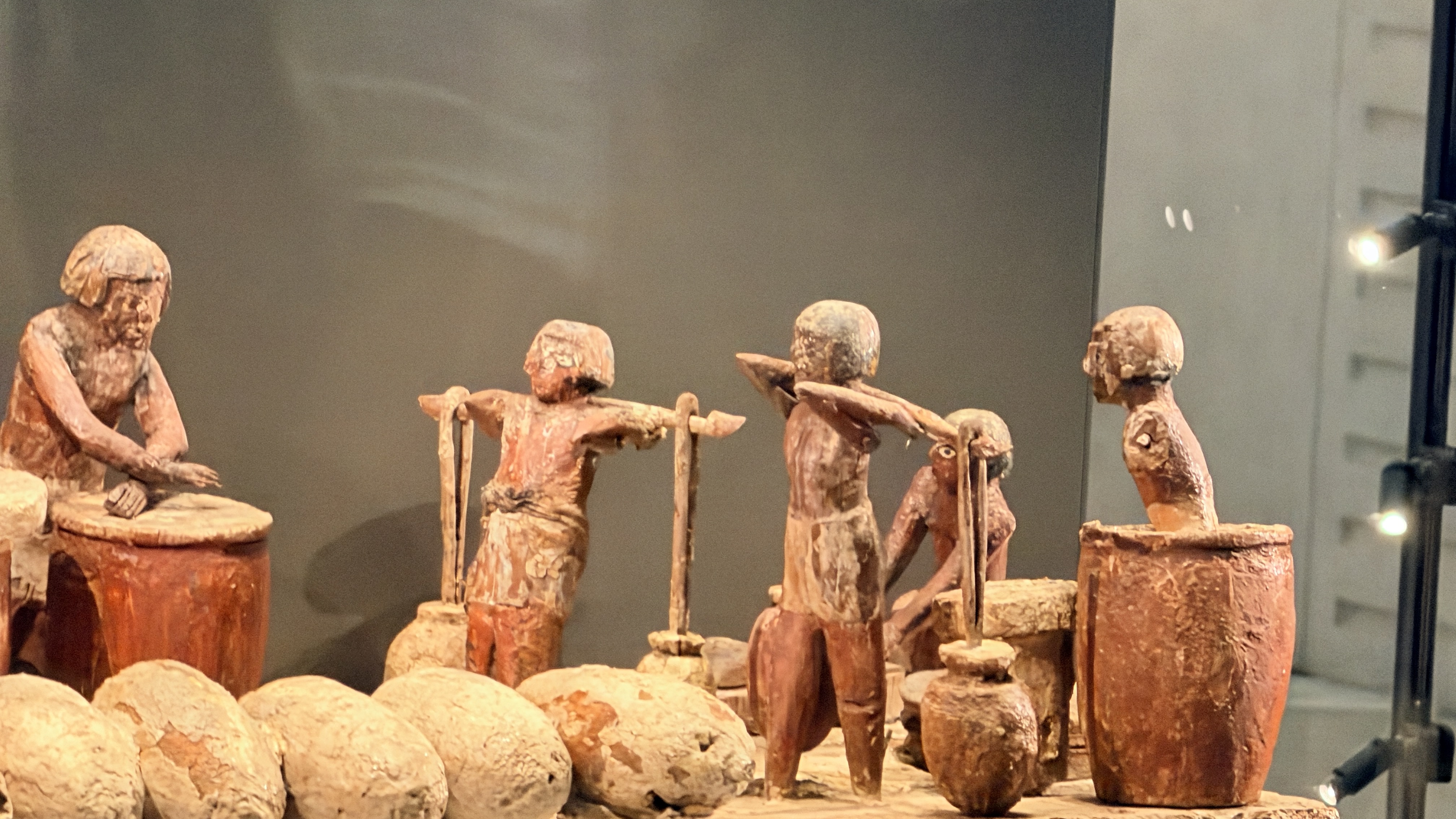
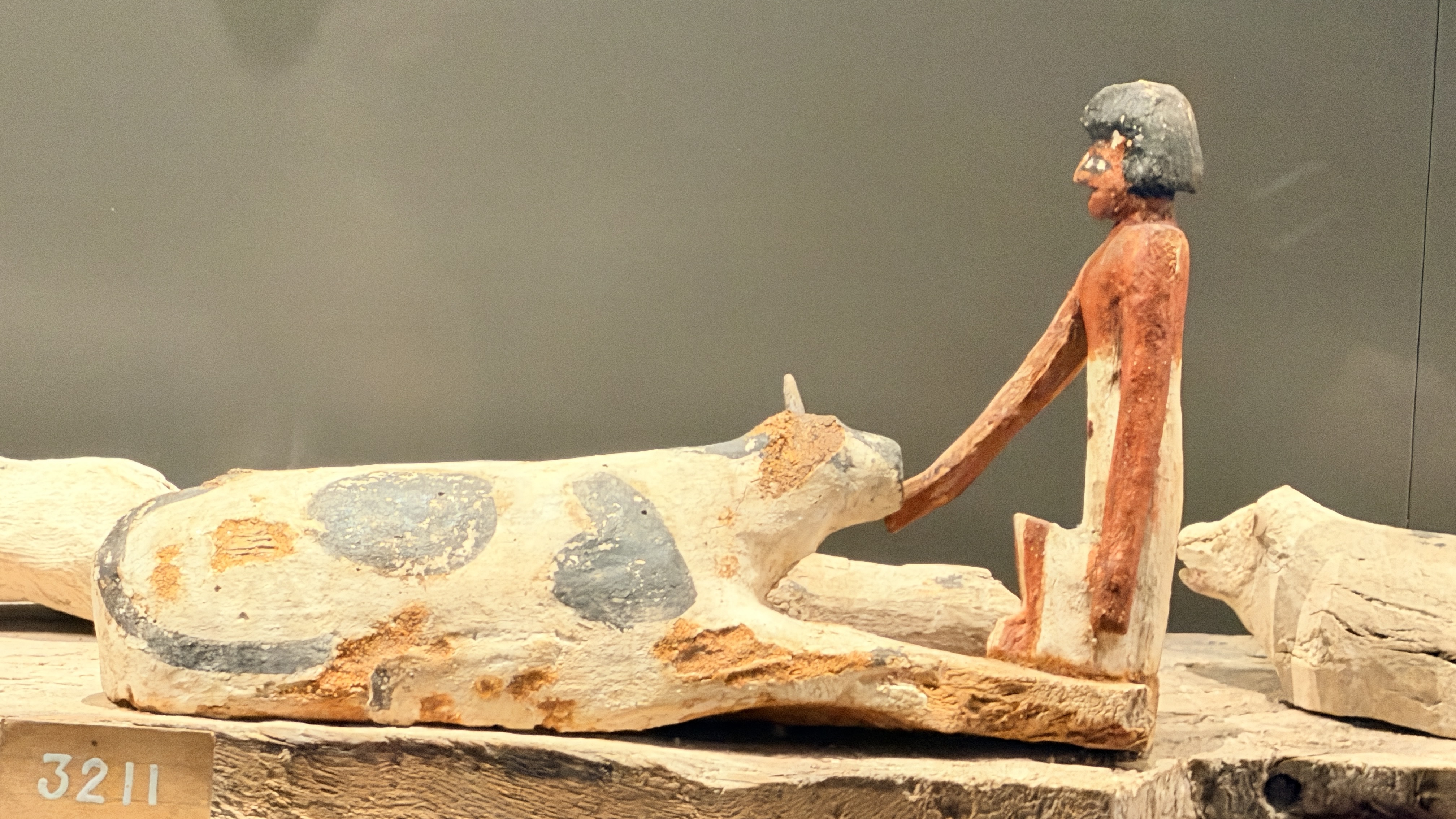
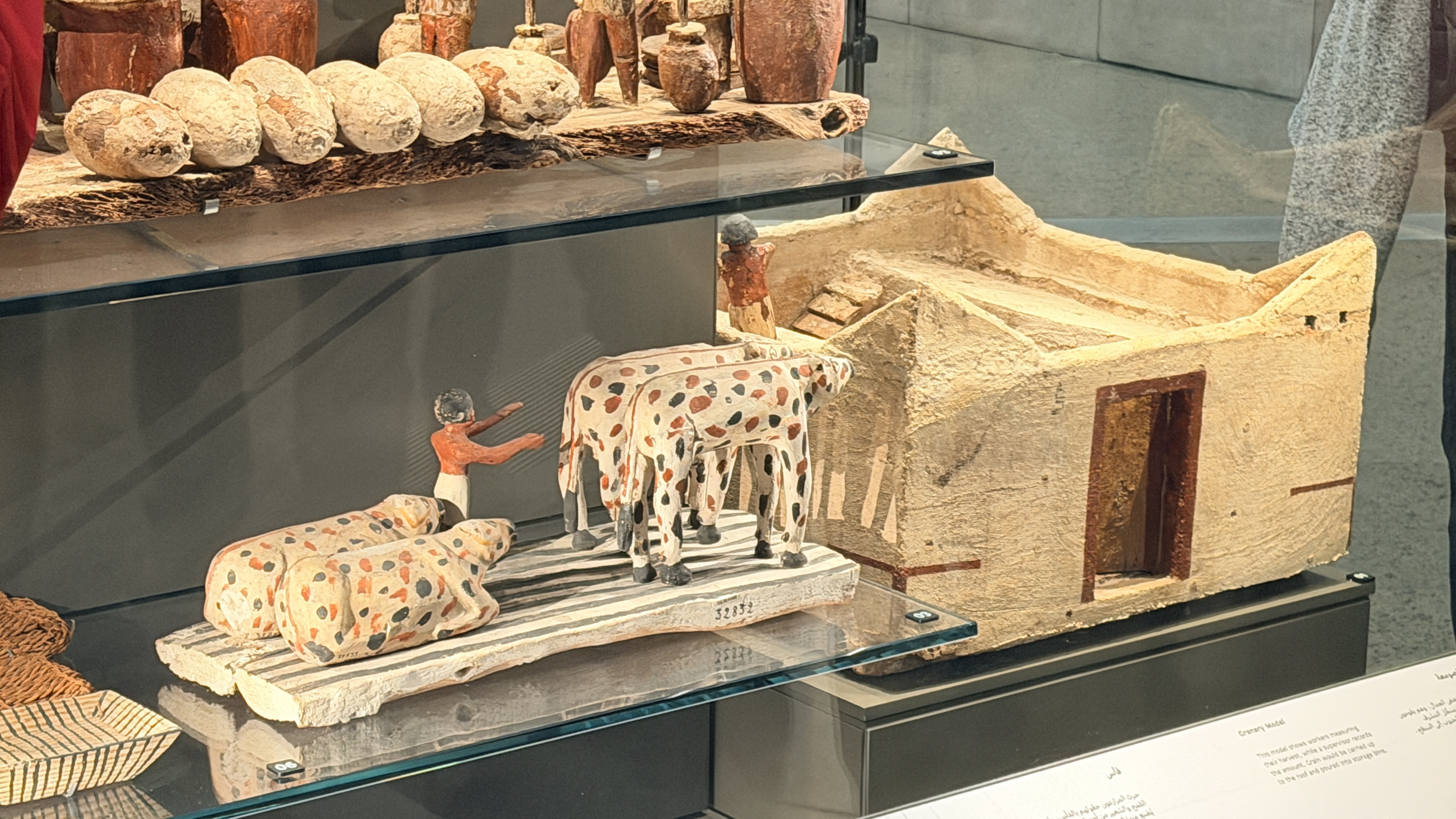
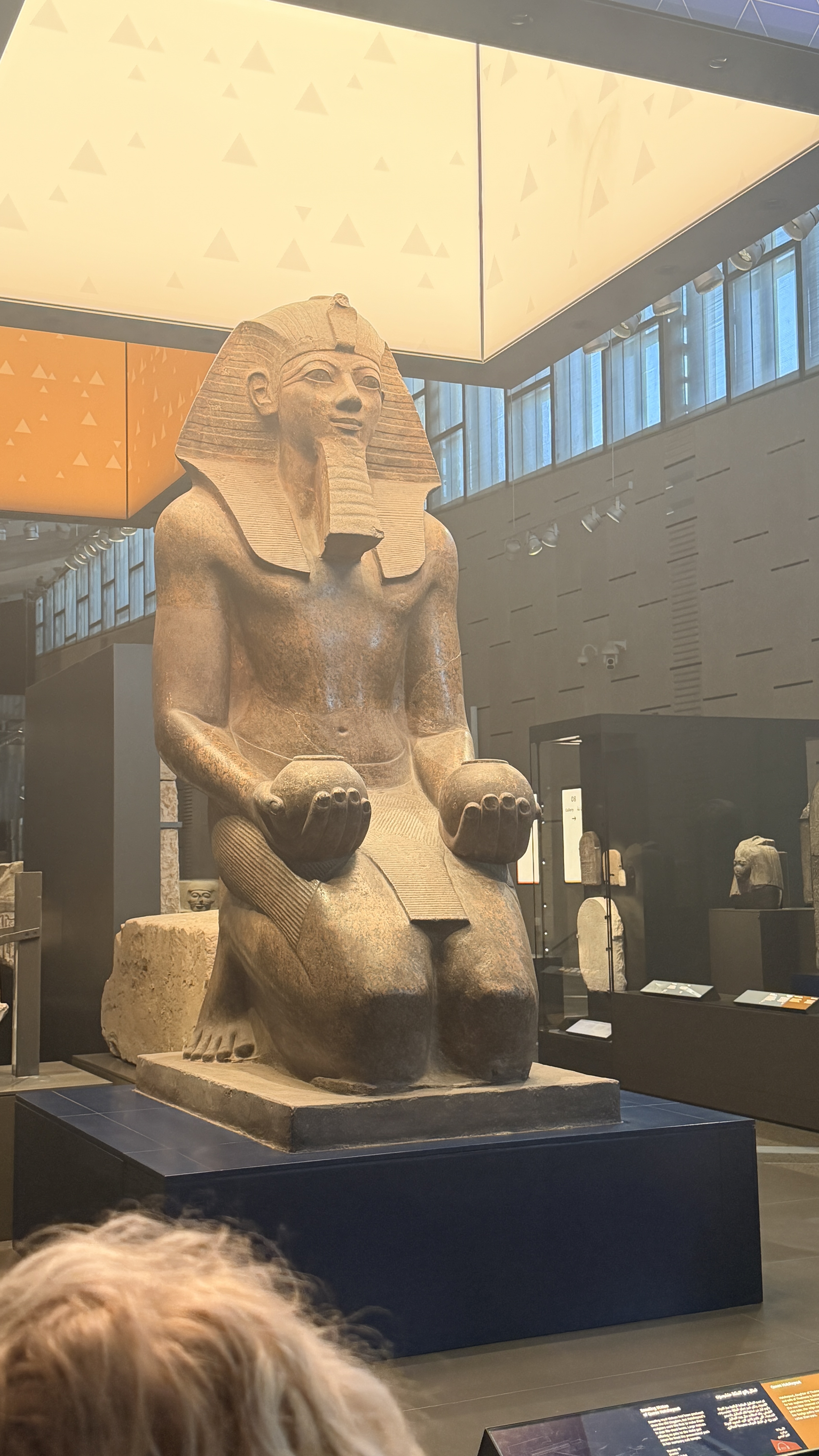
Ibrahim guided us through the initial galleries, orienting us within the space. Everywhere you turned there was something extraordinary. Statues over four thousand years old. Kings and queens. Gods and goddesses. And then, in contrast, scenes of ordinary life: miniature figures of brewers, cattle herders, bakers, veterinarians. Tiny worlds carved and preserved to tell us how these people lived, worked, and understood their place in the universe.
And then we reached the heart of it all.
Tutankhamun.
Two galleries. One dedicated to his life. The other to his afterlife.
Before entering, Ibrahim told the story of the discovery. In 1922, British archaeologist Howard Carter, funded by Lord Carnarvon, uncovered a sealed doorway in the Valley of the Kings. When Carter peered inside by candlelight and was asked what he could see, his response became legend: “Yes, wonderful things.”
What followed was the most complete royal tomb ever discovered.
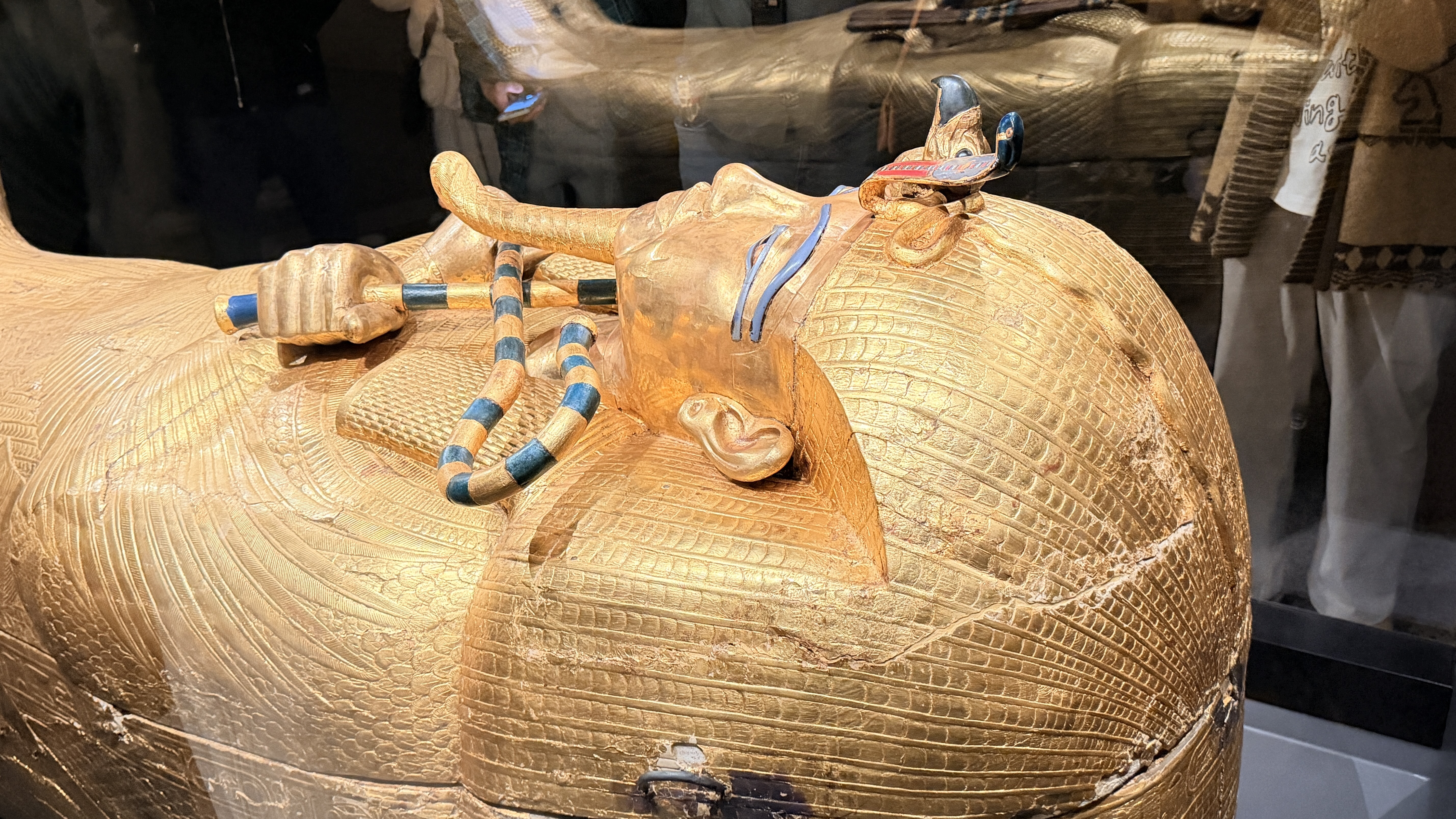
We entered the afterlife hall first.
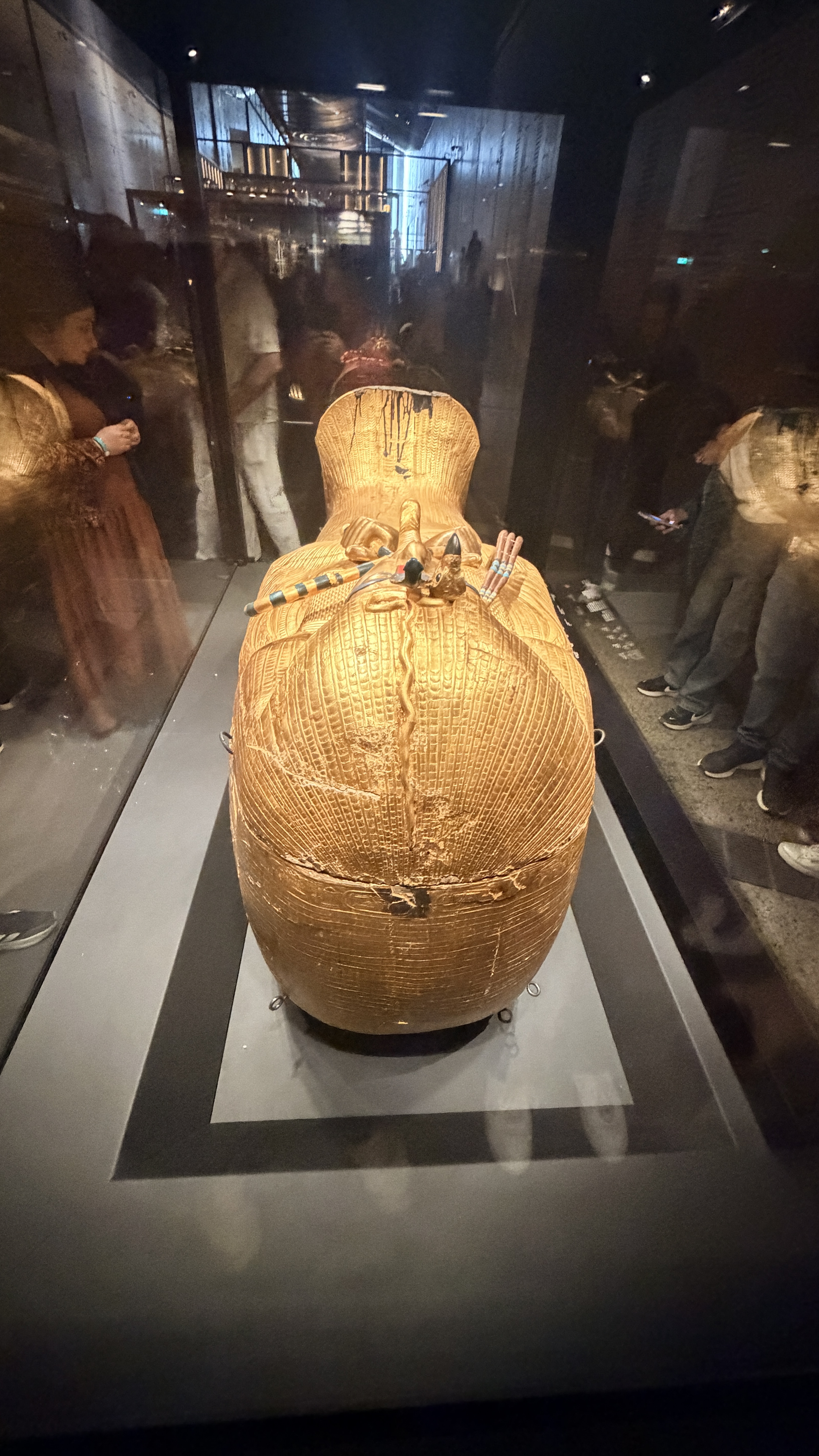
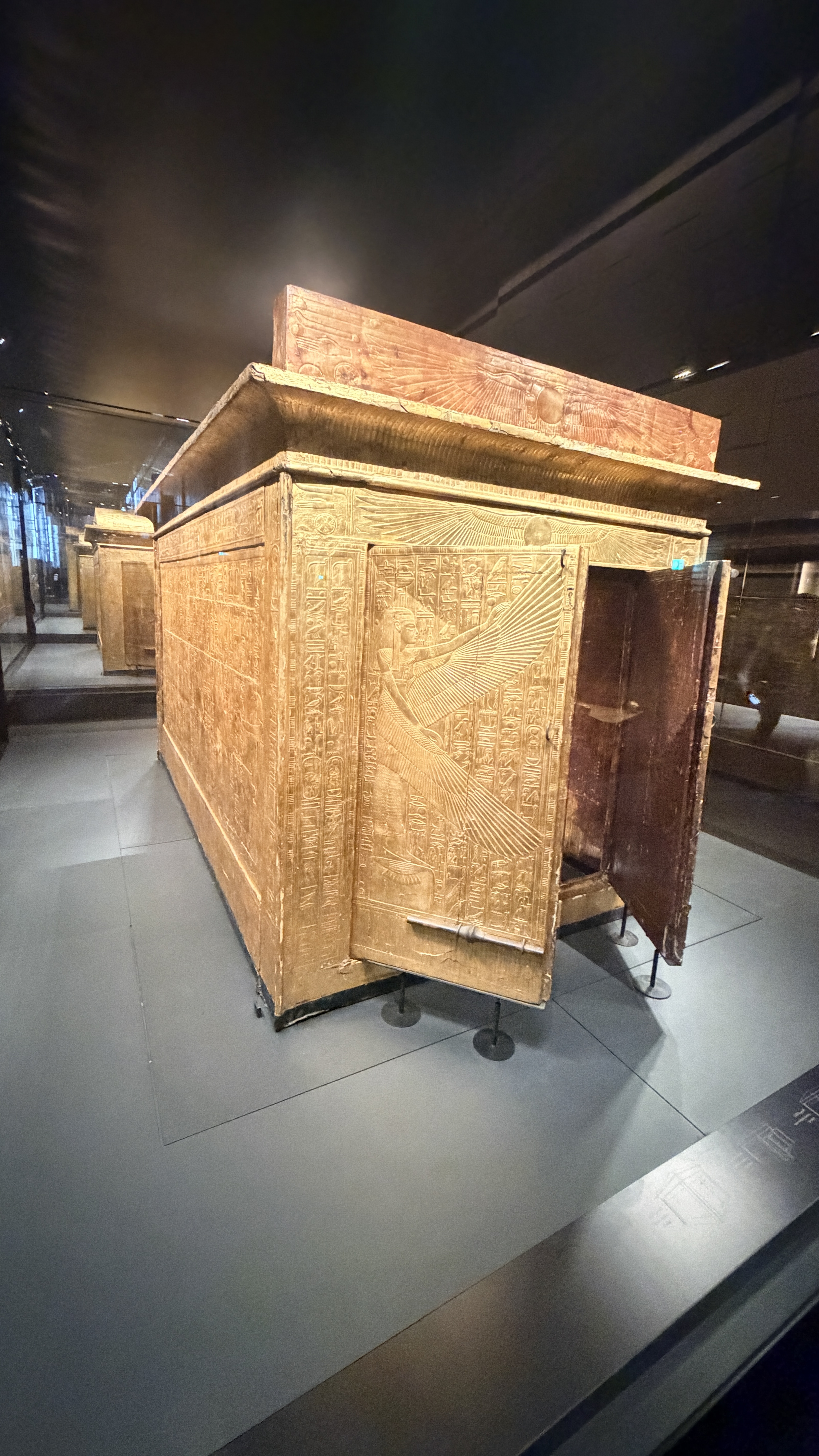
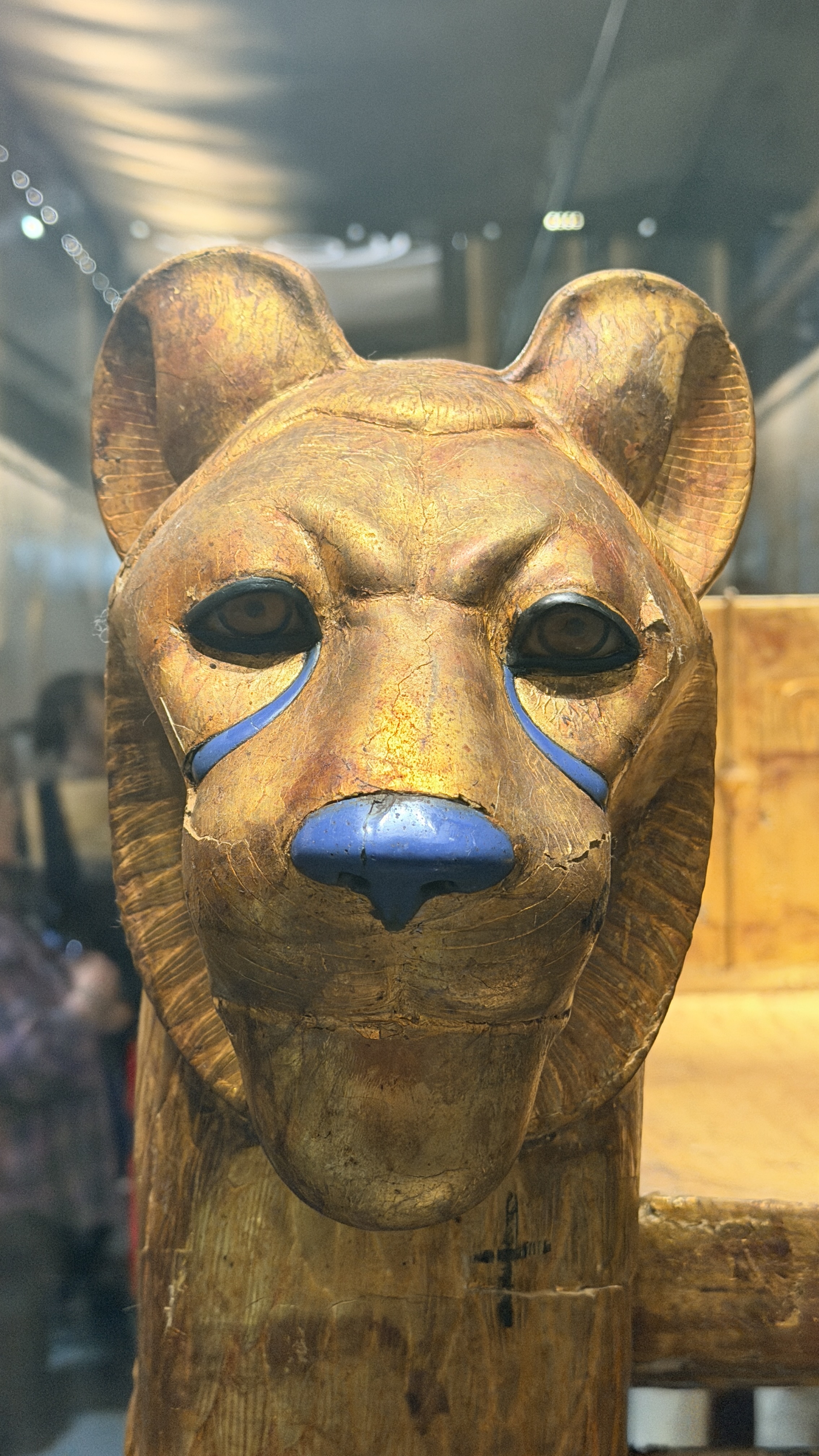
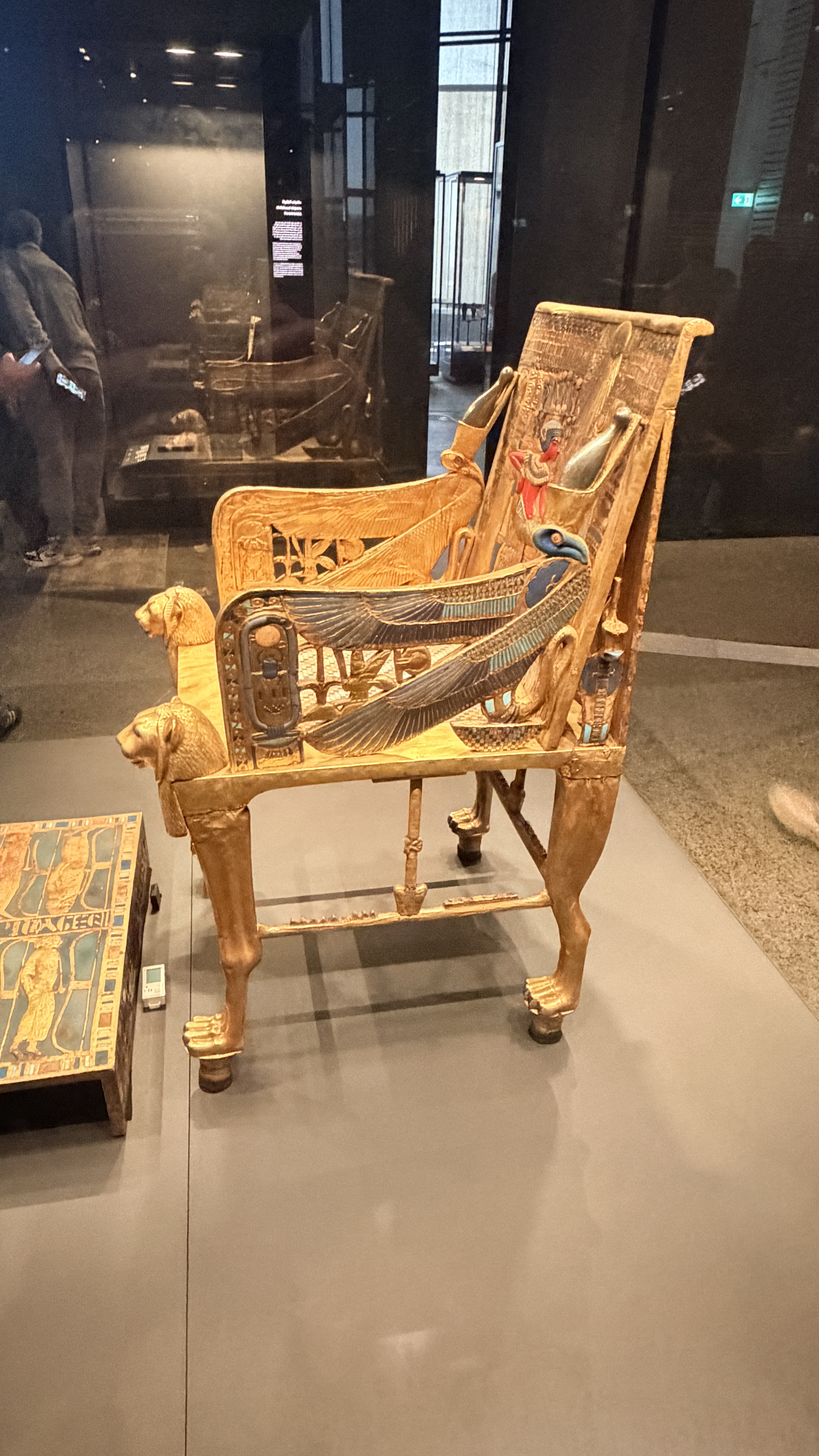
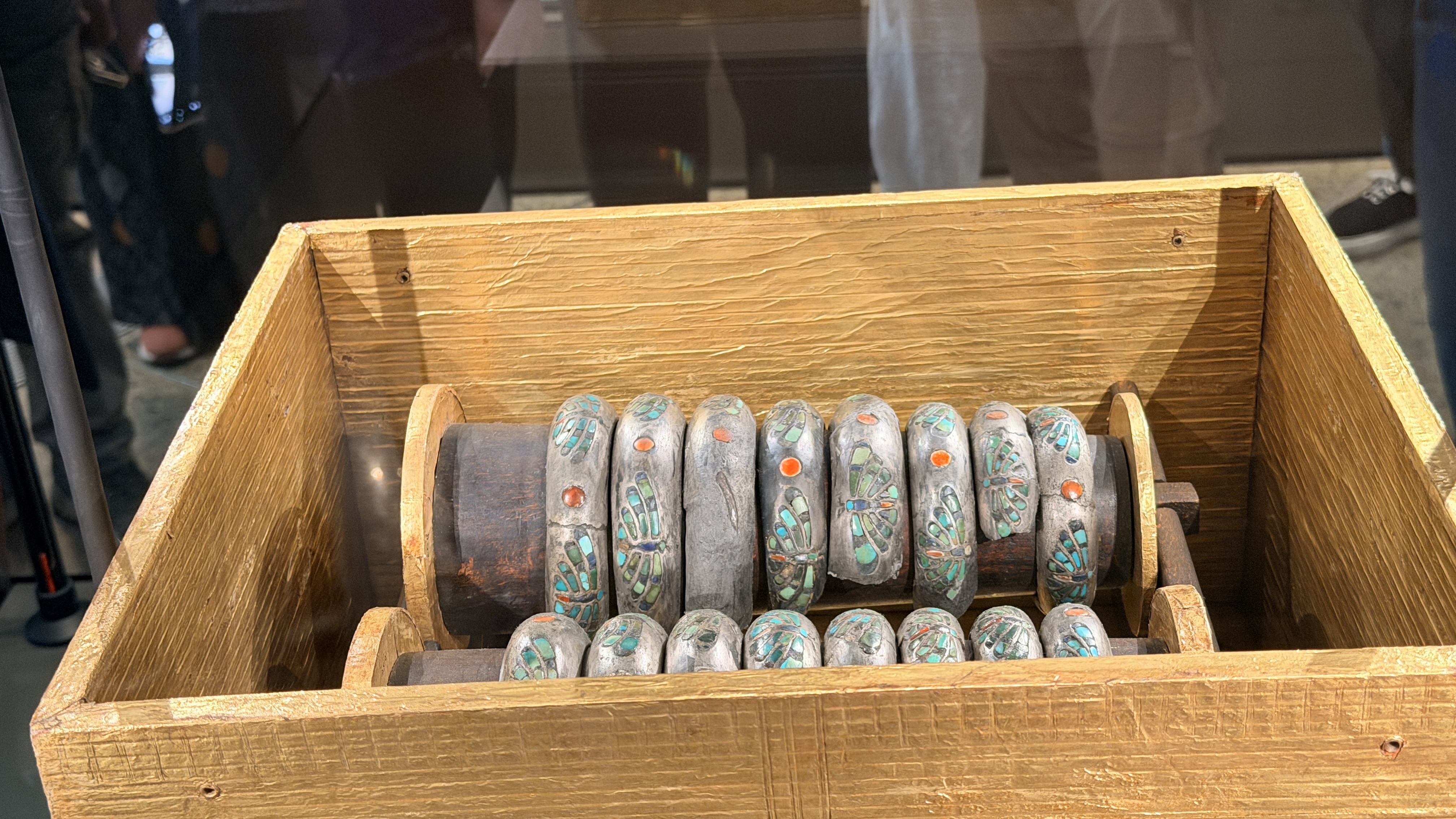
Layer by layer, the story unfolded. Four nested wooden shrines. Three anthropoid coffins. One solid gold inner coffin weighing over 110 kilograms. The mummy itself, adorned with amulets, jewellery, and protection for the journey beyond. Chariots. Thrones. Weapons. Food. Clothing. Musical instruments. Everything a young king might need for eternity.
And then, the mask.
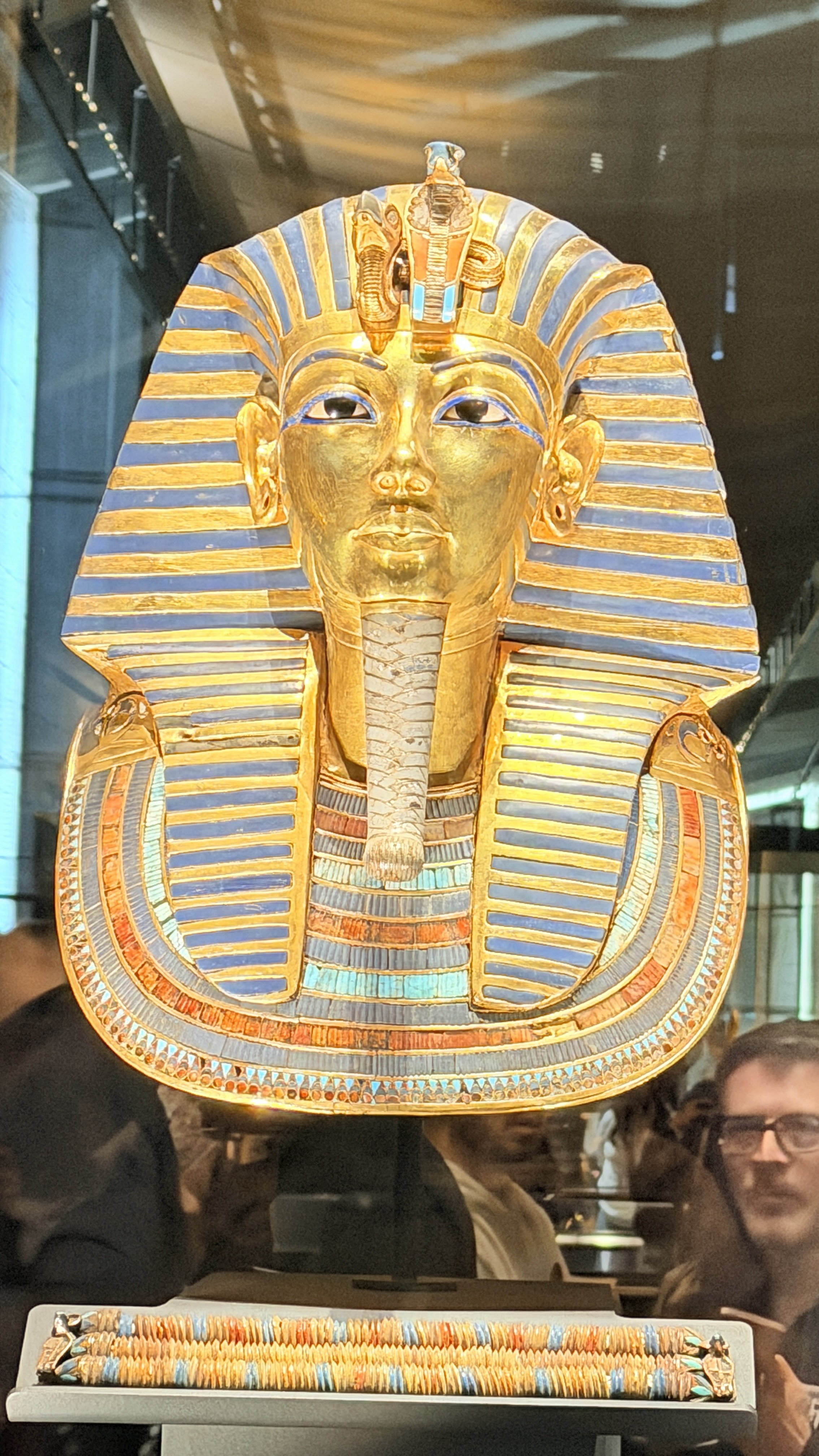
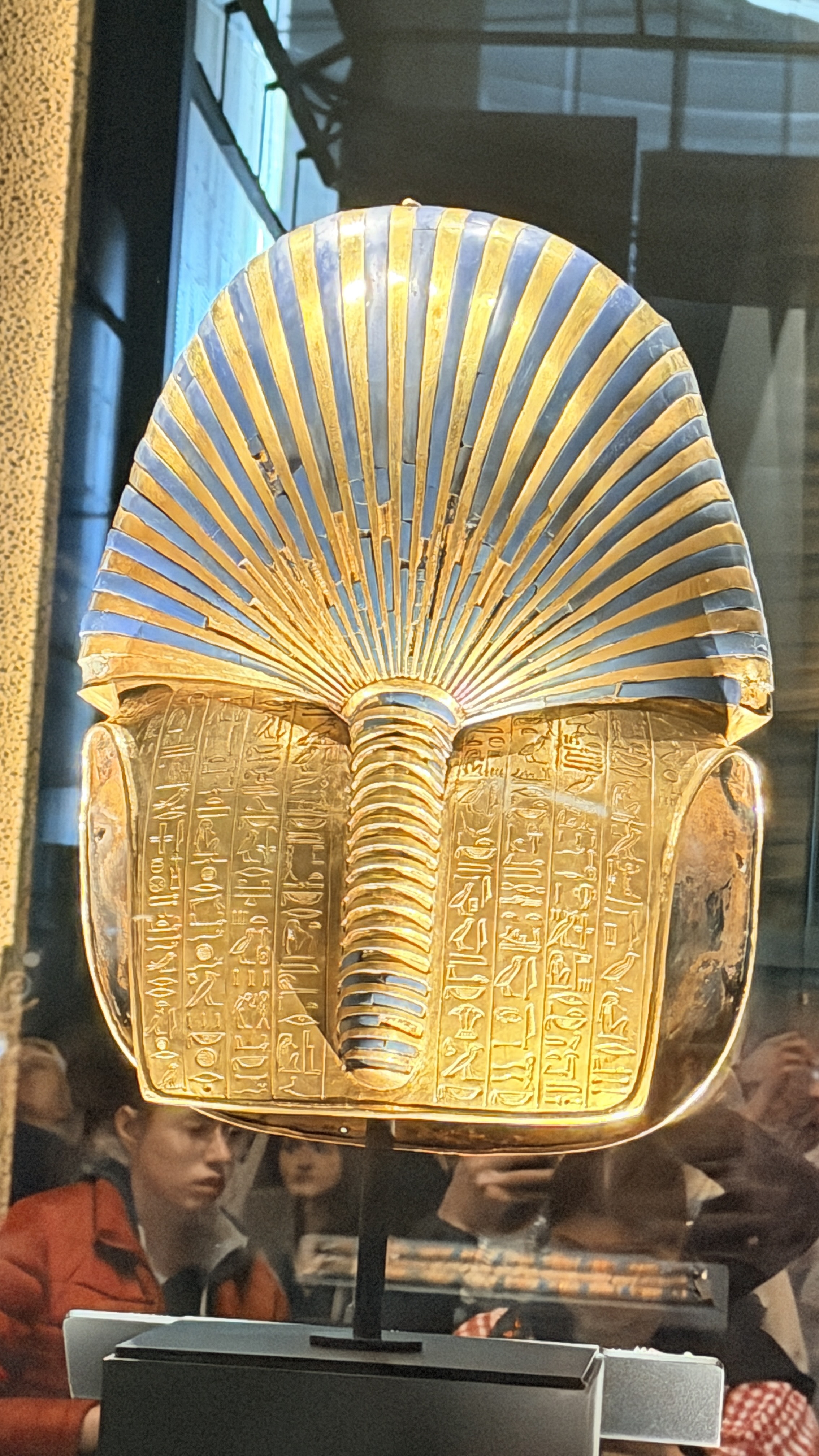
We queued slowly, surrounded by hundreds of people, inching closer from every angle. When I finally stood in front of it, time seemed to pause. Seven kilograms of solid gold. Inlaid with lapis lazuli, turquoise, carnelian, and glass. The calm expression. The nemes headdress. The cobra and vulture symbols of Upper and Lower Egypt united.
No photograph prepares you for it.
It is perfection.
We moved next into the Solar Boat Gallery, where we walked beneath the reconstructed Khufu ship, discovered in 1954 in a sealed pit beside the Great Pyramid. Over 43 metres long, built from Lebanese cedar, assembled without nails. This vessel was designed to carry the pharaoh across the heavens with the sun god Ra.
It felt symbolic. From a modern marvel of a museum, we were now about to move into the ancient world itself.

Ten minutes later, we arrived at the Giza Plateau.
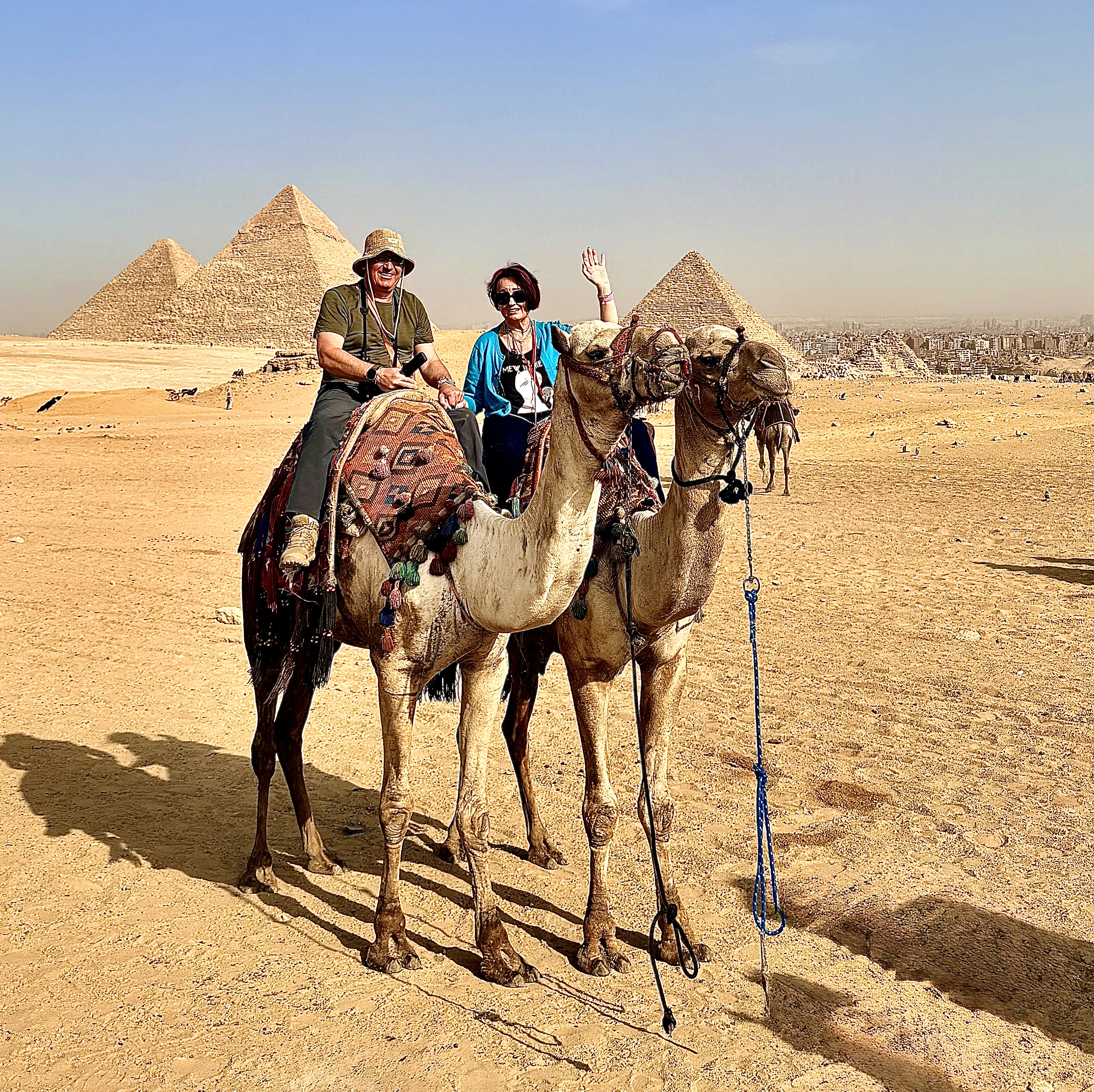
Our first stop was the panoramic viewpoint. Three pyramids stretched before us:
Khufu (Cheops), the Great Pyramid.
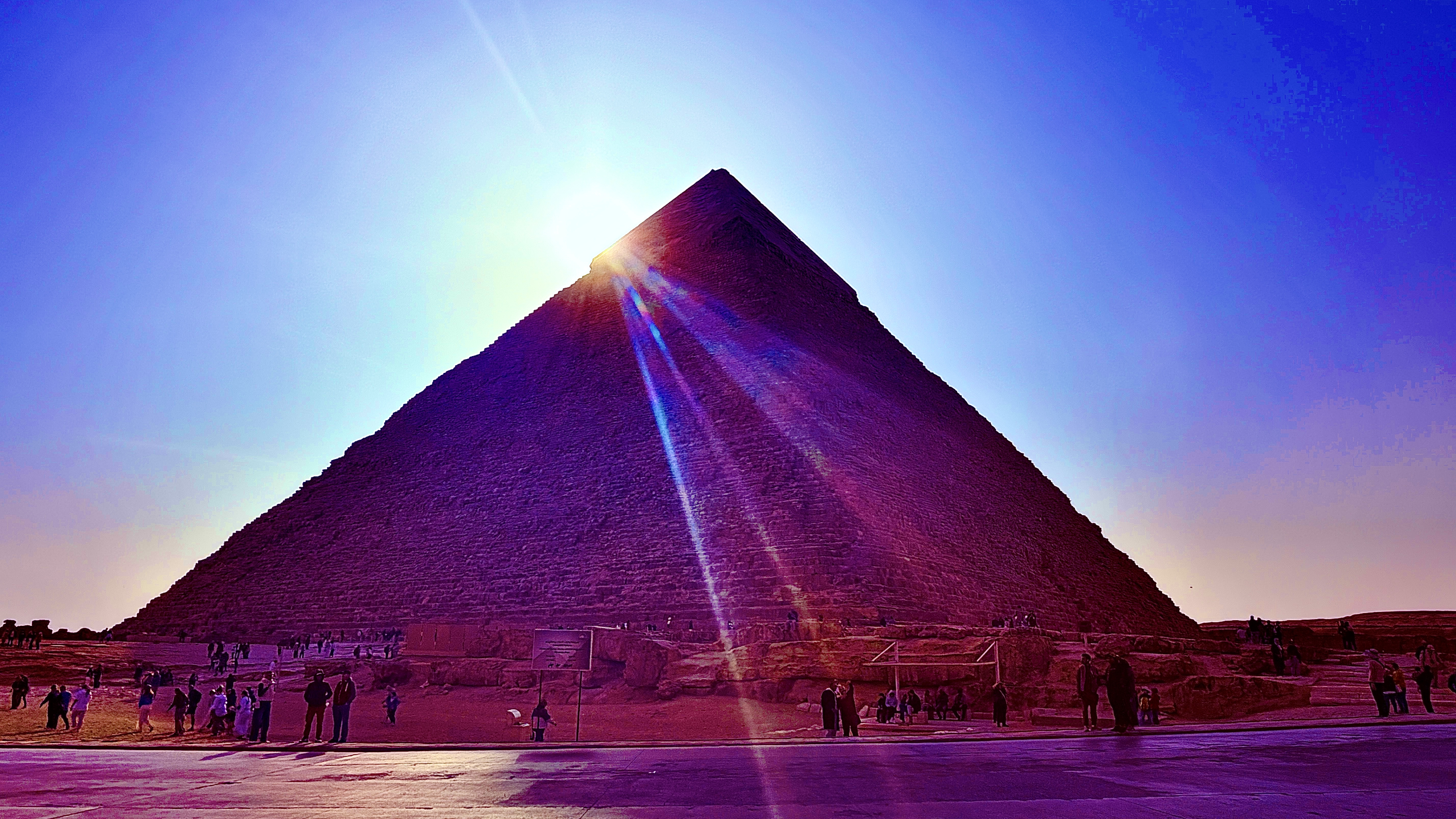
Khafre (Chephren), his son’s pyramid, still capped with remnants of original casing stones.
Menkaure, smaller but no less elegant.
We opted for a short camel ride. Each of us climbed aboard, somewhat awkwardly, and were led out across the sands. The scene was alive. Camels everywhere. Birds picking for scraps. Cats lounging. Stray dogs basking in the sun. A light breeze kept the sky crystal clear. The pyramids rose sharply from the desert, their angular forms cutting cleanly into a perfect blue sky.
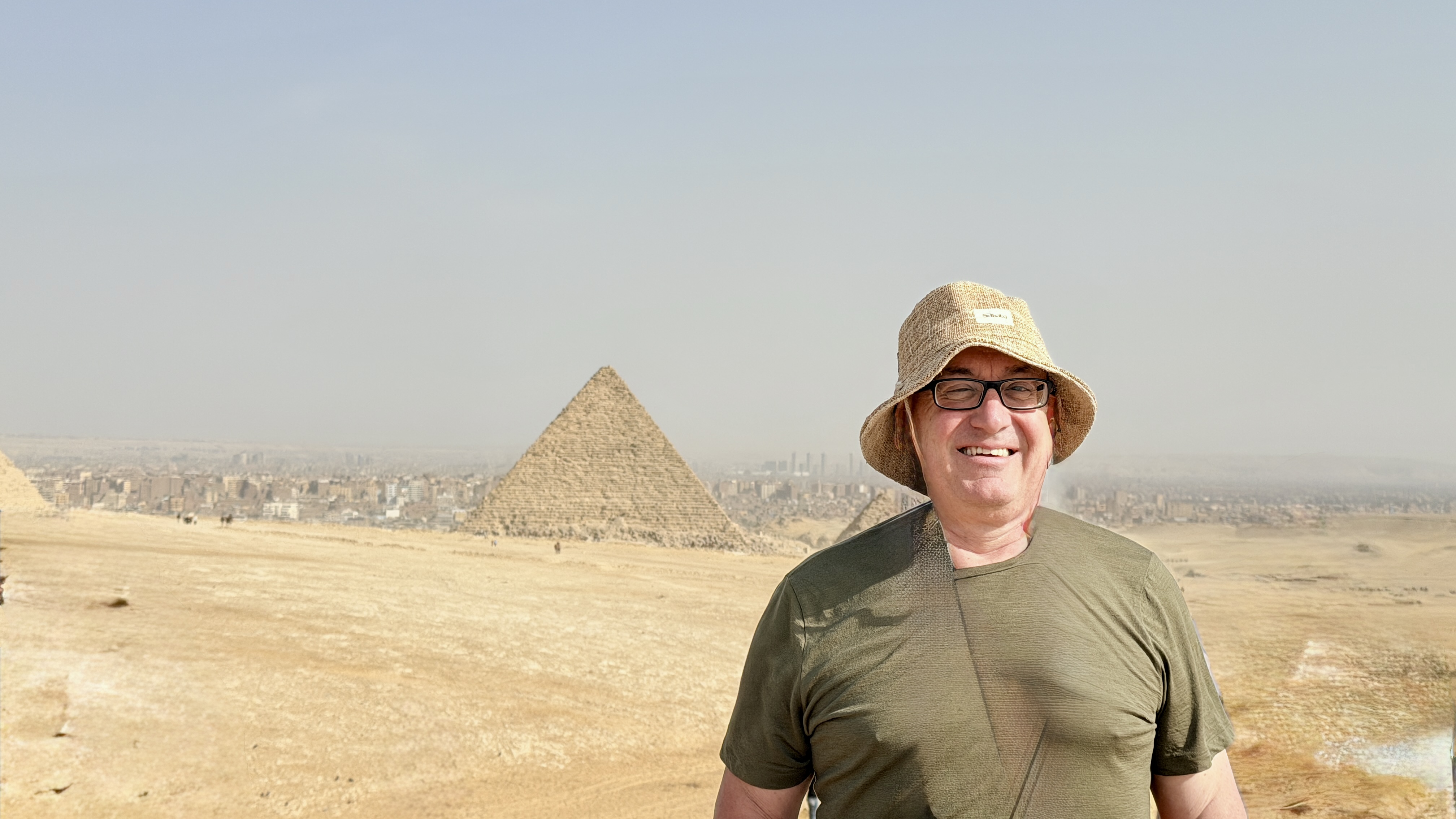
I stepped away from the group and stood alone for a moment.
And again, the tears came.
Mardi gave me space. She always knows when to do that. I took it all in, unable to put the feeling into words. When I finally turned back to her, I hugged her tightly and quietly sobbed. Gratitude. Love. Fulfilment. This moment existed because of her.
Our second stop placed us between the two largest pyramids. Here, perspective plays tricks on the mind. Khafre’s pyramid appears taller because it stands on higher ground, though Khufu’s is the largest ever built. Originally standing at 146.6 metres, constructed from around 2.3 million limestone blocks, some weighing up to 80 tonnes. Built by an estimated workforce of 10,000–20,000 skilled labourers over roughly 22 years.
Standing there, it’s staggering to realise that despite all of that effort, the pyramid was never fully finished. It falls around 9 metres short of its intended height. An eternal work, perhaps by design.
We walked the full length of its base, sometimes stepping off the platform to get closer. Up close, each stone tells its own story. Step back, and the scale overwhelms you again. As we returned to the bus, the sun struck the peak of Khafre’s pyramid, shimmering like a star atop a Christmas tree. A perfect final image.
Our final stop was the Great Sphinx.
Carved from a single outcrop of limestone, aligned with Khafre’s pyramid, the Sphinx represents royal power and divine protection. A lion’s body with a human head. Time has not been kind to it. The face is damaged, its nose long gone, often wrongly attributed to Napoleon. Yet it remains imposing.
The area was crowded. Very crowded. People pushing for selfies, trying to “hold” the Sphinx in their hands. David and I sought higher vantage points, more interested in seeing than posing.
We walked along the full length of the Sphinx, all the way to its tail curled at the rear like a resting cat. That detail struck me. Even here, in monumentality, there is something familiar, almost domestic.
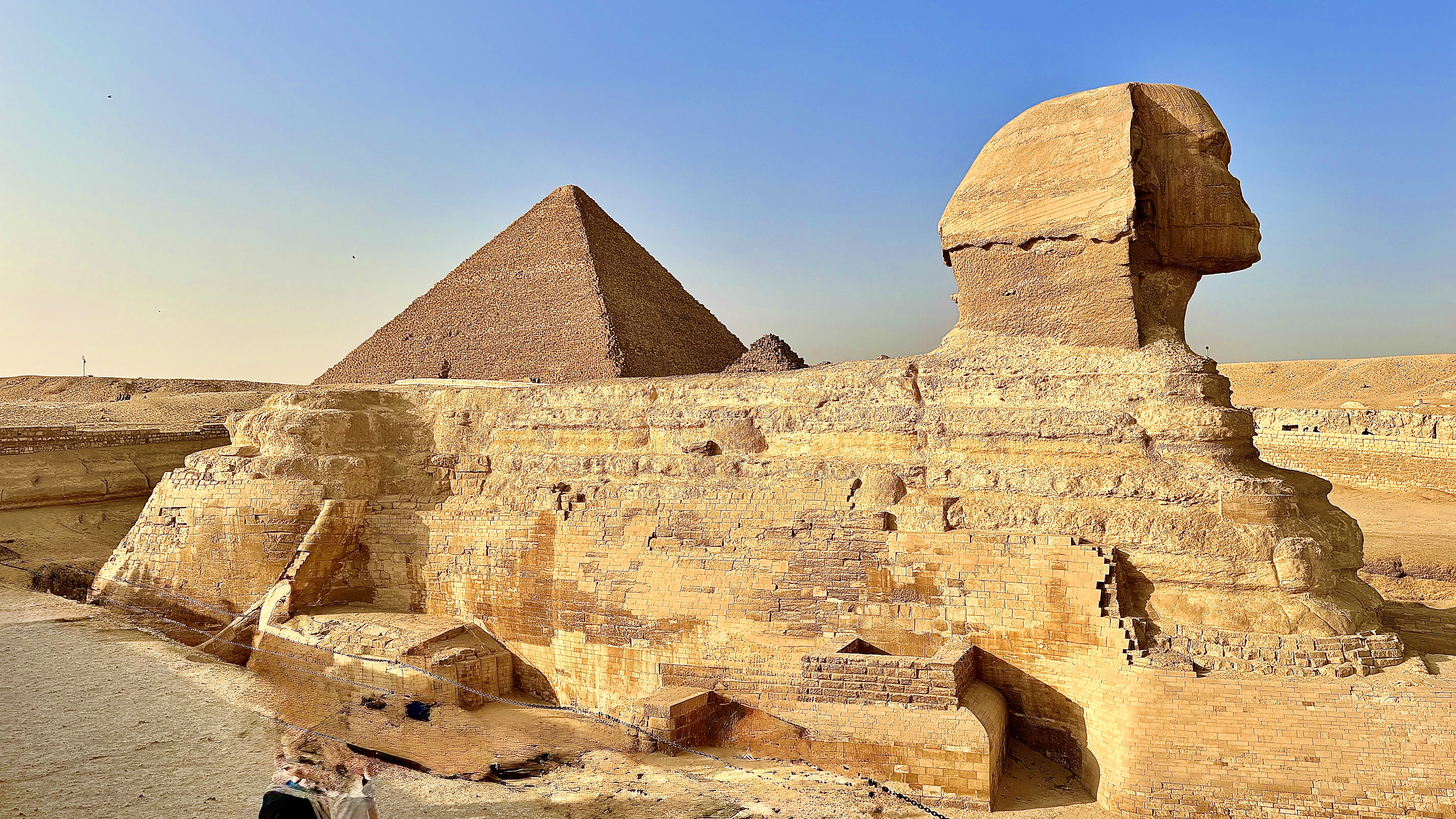

The Great Sphinx of Giza sits deliberately and powerfully in the landscape, aligned with the middle pyramid, that of Khafre (Chephren). This is no coincidence. Most Egyptologists agree the Sphinx was commissioned during Khafre’s reign, around 2500 BCE, and was designed as part of his wider funerary complex. When viewed from certain angles, the Sphinx appears to guard the causeway leading up to Khafre’s pyramid, acting as both protector and symbolic extension of the pharaoh himself.
The Sphinx is carved directly from the bedrock of the Giza Plateau, not built block by block like the pyramids. Its body is that of a lion, symbolising strength, kingship, and solar power. Its head, widely believed to be that of Khafre, represents human intelligence and divine authority. Together, the lion’s body and human head embody the idea of the pharaoh as both ruler of the physical world and intermediary with the gods. This hybrid form was meant to project eternal power, not just in life, but in the afterlife.
The Sphinx is also closely associated with the sun god Ra, particularly in later periods when it was known as Horemakhet, meaning Horus of the Horizon. In this role, the Sphinx was seen as a manifestation of Horus, the sky god, fused with solar worship. Positioned facing east, it greets the rising sun each morning, reinforcing its role as a guardian of rebirth, renewal, and cosmic order. This solar alignment ties the Sphinx not just to Khafre, but to the wider religious belief that the pharaoh was reborn daily with the sun.
While time has damaged the Sphinx, eroding its body and destroying its nose long before Napoleon ever set foot in Egypt, its presence remains immense. It was not built as a standalone monument, but as a spiritual and symbolic anchor for Khafre’s pyramid complex. The Sphinx does not dominate the landscape through height or mass, but through meaning. It watches. It guards. And after more than 4,500 years, it still does exactly what it was intended to do: command attention and invite reflection on power, divinity, and eternity.
Eventually, we tore ourselves away.
Back at the hotel, we rested briefly before dinner. That evening we tried the Italian restaurant at the Fairmont. It was exceptional. Steak. Vegetables. Burrata salad. Pizza. Soup. David finished with flourless chocolate cake. I had a hazelnut chocolate mousse with ice cream and berries. Kerrie’s panna cotta didn’t quite wobble. Solid as a pyramid, we joked.
David and I talked endlessly about the day. It was simply too much to absorb in twelve hours. We’re already serious about returning to the GEM when we’re back in Cairo. You could spend a week there and still not see everything.
Later, back in our room, we packed for an early start. Tomorrow, Luxor. The Valley of the Kings. Another chapter.
But tonight, I sit quietly with the memory of a cold limestone block beneath my hand.
What a day.