I’m about to write about something that millions, possibly billions of people do every day without giving it a second thought.
Reading.
This isn’t a call to arms. It’s not an argument for why people should read more, read less, or read differently. It’s simply a reflection. Mine.
I’ve loved reading. I’ve fallen out of love with reading. And, somewhat unexpectedly, I’ve fallen back in love with it again.
To explain why that matters to me, I need to go back to the beginning.
Reading was never easy
Most people know I’ve been vision impaired since birth. Reading never came naturally. I had too much sight to learn Braille and not enough sight to read comfortably or quickly. I sat in that awkward middle ground where effort was constant and speed was always against me.
School reading lists didn’t help. The Catcher in the Rye. Animal Farm. Lord of the Rings. Shakespeare. Chaucer’s Canterbury Tales, which I was convinced at the time were written specifically to test the patience of teenage boys.
I enjoyed many of those books. I really did. But they were hard work. Teachers would assign a novel and give us a week. Five or six days. I’d manage two or three chapters. Class discussions were uncomfortable. I was always behind.
I had support. Magnifiers. Strip magnifiers. Extra lighting. But speed mattered, and speed affected comprehension. Boredom crept in faster when every page felt like a small endurance test.
And yet, I loved reading.
The black nose giveaway
At home, reading was constant. I devoured Sunday papers. Mum and Dad always knew I’d been reading because I’d wander into the kitchen with a black smudge on the end of my nose.
That was the giveaway.
I had to get so close to the page that the ink rubbed off. Newspapers. Magazines. Later, novels. There was always evidence.
As I got older, I discovered fiction that really grabbed me. Heinlein. Asimov. Stephen King. It was still slow. Always slow. But the enjoyment outweighed the effort.
I remember reading Jaws at 12. It captivated me and sparked a lifelong fascination with sharks and wildlife. I reread it nearly 50 years later and discovered a very different book to the film. Subplots everywhere. Politics. Affairs. Greed. Obsession.
At its heart, though, it’s the story of three men on a shared but uneasy quest. Martin Brody, driven by duty and an unshakable need to do the right thing. Matt Hooper, guided by science, curiosity, and a respect for the natural world. Quint, haunted, obsessed, and seeking his own version of redemption. Three paths converging on the same problem, each man believing his way is the only way forward.
That tension stayed with me. It fed both my fascination with sharks and a deeper appreciation for moral choice. Doing the right thing is rarely clean or comfortable. Sometimes it’s lonely. Sometimes it pits you against powerful interests. But Brody’s single-minded determination to protect his town showed me, even at 12, that purpose matters, and that standing your ground is often the hardest and most necessary choice.
That sense of purpose hooked me.
Stephen King did the same. Christine. Archie Cunningham. A possessed red Plymouth Fury and an obsession spiralling out of control. From there, I went backwards and forwards through King’s early work. Carrie. ’Salem’s Lot. Cujo. The Shining and the slow, creeping terror of isolation. The Dead Zone. It. Misery. Firestarter and the frightening consequences of power misunderstood. The Stand and its epic battle between good, evil, and human frailty. Needful Things, where temptation always comes at a cost. The Long Walk, relentless, brutal, and haunting. The strange density of The Dark Tower. The beauty of The Talisman. The macabre Pet Sematary.
Evidence, belief, and Contact
In 1985, one of my favourite books of all time was released, and I devoured it. Contact by Carl Sagan.
I’d always been a fan of Sagan. I’d watched Cosmos, stared at the night sky, and wondered what lay beyond it. But Contact captivated me for a deeper reason.
I’m an atheist. I’ve been one since I was about 12. I remember Mum writing me a note so I could be excused from scripture class. My mind was already made up.
What drew me to Contact wasn’t just the science or the vastness of the universe. It was Ellie Arroway’s internal struggle. The tension between faith and evidence. Science and belief. Proof and trust.
That battle resonated deeply with me.
Like Ellie, I’m evidence-based. I don’t believe in one god, or two thousand gods, or any version in between. I try to understand blind faith, pun very much intended, but I can’t make that leap myself. I need data. I need proof. I need something I can interrogate, test, and question.
Contact didn’t mock faith, but it didn’t surrender science either. It sat in the uncomfortable middle, asking hard questions and refusing easy answers. That’s what stayed with me long after I turned the last page.
In addition to Contact and my fascination with science fiction in the late 80s, I also read a number of cricket biographies, specifically the Chappell brothers. I remember queuing and meeting Alan Border as well and getting him to sign his autobiography as well as Greg Chappell.
Trains, big print, and persistence
In the 1990s, reading found its rhythm on Sydney trains. Living in Penrith and working in Chatswood meant an hour and a half each way. On a good day.
That time mattered. I could read a chapter or two, slowly, steadily.
Big-print books became essential. Bigger text, wider spacing. They cost more. A lot more. John Grisham’s The Firm, for example, cost me $30 in 1991 when standard paperbacks were selling for $7 to $10. Bigger text meant fewer words per page and slower progress, but it kept reading accessible as my eyesight declined through the 1990s and early 2000s.
The 90s brought The Green Mile, released in monthly instalments. I waited for each one like clockwork. Insomnia, where sleeplessness peeled back the fabric of reality. Hearts in Atlantis, nostalgic, political, and quietly heartbreaking. Rose Madder, raw, violent, and unflinching. Dolores Claiborne, a single voice unraveling truth, memory, and survival. Gerald’s Game, claustrophobic and relentless. Bag of Bones, grief, ghosts, and the weight of memory. And, of course, more Dark Tower, deeper, stranger, and increasingly obsessive.
Reading was still part of my life.
When reading quietly disappeared
Somewhere along the way, it faded.
Career. Life. Responsibility. Long hours. Executive roles. Seven-day weeks. When I did read, it was often a James Patterson crime novel. The Maximum Ride series. Alex Cross. Michael Bennett. Easy to dip into. Easy to put down.
Then around 2013, reading stopped altogether.
A detached retina in New York took away what remaining vision I had. An implanted lens changed everything. Even with an iPad, concentration lasted ten minutes at best. Reading novels became exhausting. Audiobooks didn’t work for me. I’d fall asleep or lose the thread.
You can read the full story of that episode here:
https://www.linke.com.au/TB/2013-new-york/day-06-detached/
So I stopped.
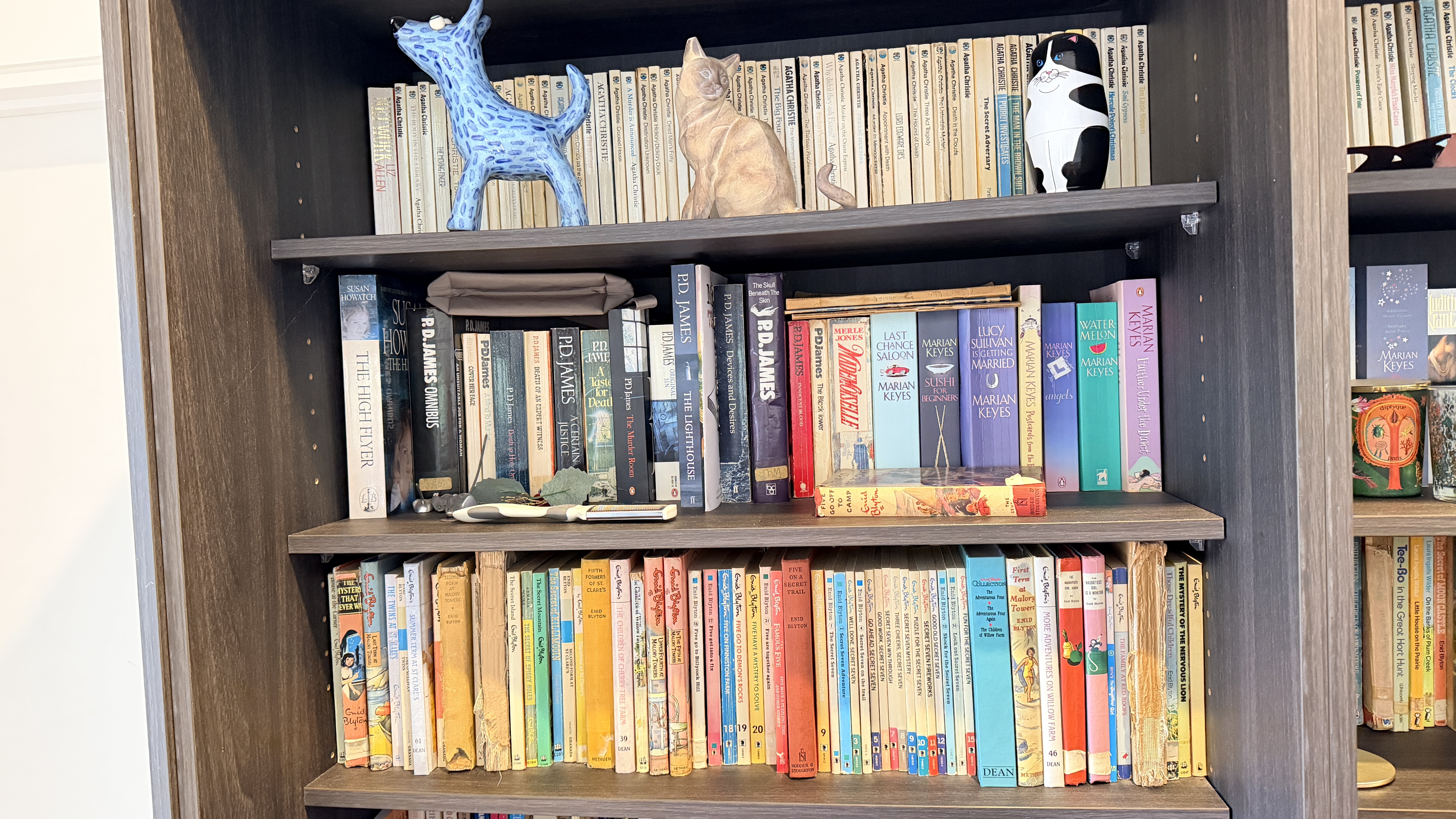
For twelve years, I didn’t read a book. In fact, I gave away thousands of dollars worth of hardcovers. Every Stephen King hardback, every John Grisham, every Lee Child, and dozens of books in between: Ludlum, Connelly, Brown and Patterson.
I did keep Jaws and I did keep Contact. I also held on to my autographed biographies of Alan Border and Greg Chappell.
A simple gift at the right time
A week ago, I turned 60. A milestone. And as always, Mardi knew exactly what I needed.
She knows a thing or two about me.
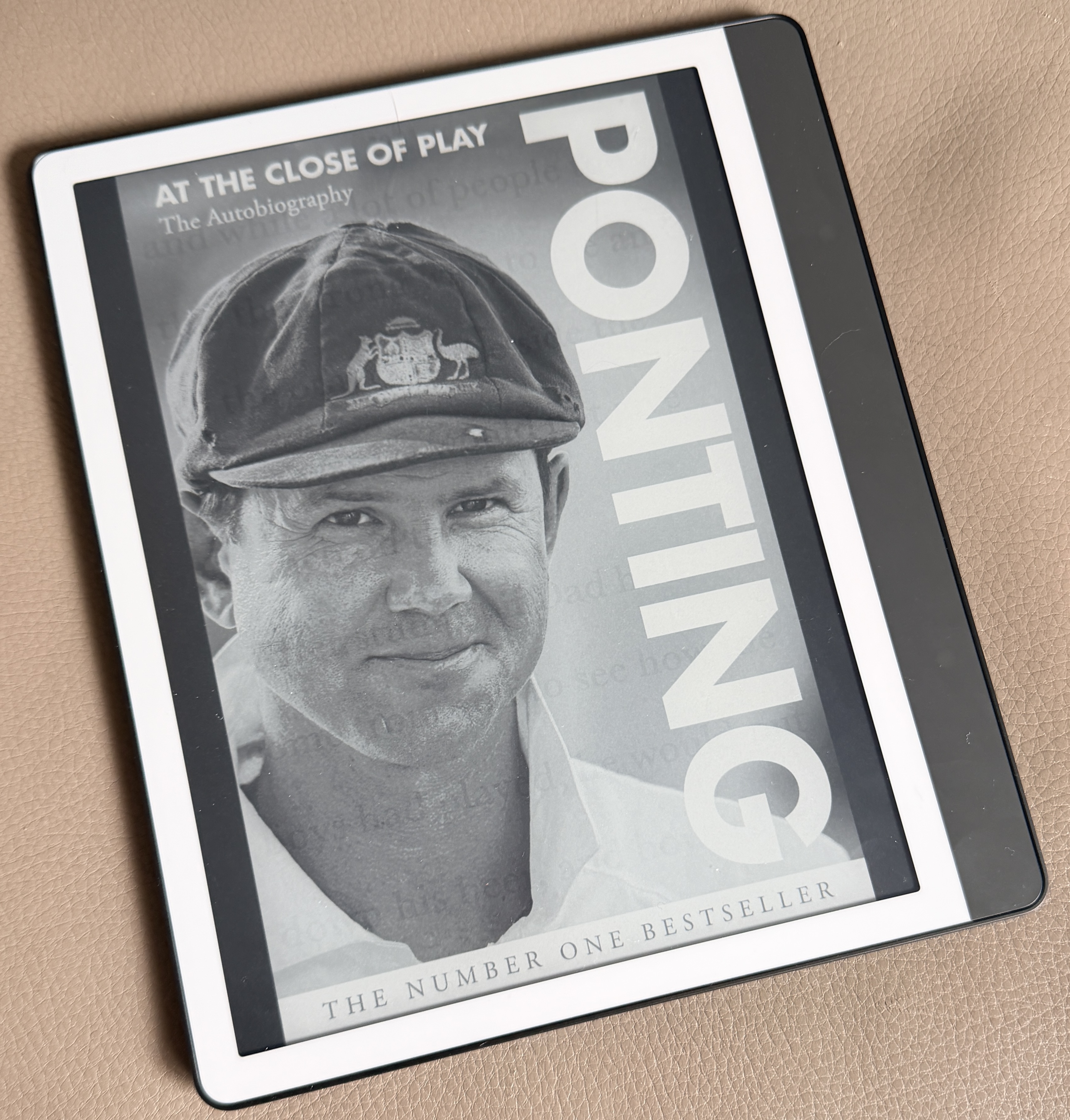
She knew I loved reading. She knew I hadn’t read in years. So she gave me a Kindle.
Simple.
This isn’t a review. There’s no sales pitch coming. This isn’t about devices.
It’s about finding a way back.
We were cruising the Tasman Sea on our way to New Zealand when I picked up Glenn Maxwell’s autobiography. I’d tried before and failed. This time, I finished it in seven days. Not in marathon sessions, but an hour here, an hour there. Between trivia, shows, wandering the ship, and catching up with friends.
Comfortable. Enjoyable. Familiar.
The joy was back.
Coming home to books
I went back to something I’d always wanted to do. Lee Child’s Jack Reacher series.
I’d read one Reacher novel years ago and loved it. Now there are more than 30. I started at the beginning with Killing Floor and finished it in a week. No eye strain. No fatigue.
I’m reading again.
And I realised something.
Life isn’t linear. We drift away from things we love. Sometimes through choice. Sometimes through necessity. But the core of who we are doesn’t disappear.
Sometimes we just need to find a new way back.
2025 was hard. A job I loved ended. My father died in horrific circumstances that rocked our family. I’ve written often about noticing the small things. Sunrises. Aircraft taking off. The gentle hum of a cruise ship at night.
In December 2025, I rediscovered something simple.
Reading.
And I’m deeply grateful to my darling wife Mardi for helping me find that way again.
Now, if you’ll excuse me, it’s time to stop writing and start reading.
Jack Reacher, Die Trying awaits. So does Ricky Ponting.